
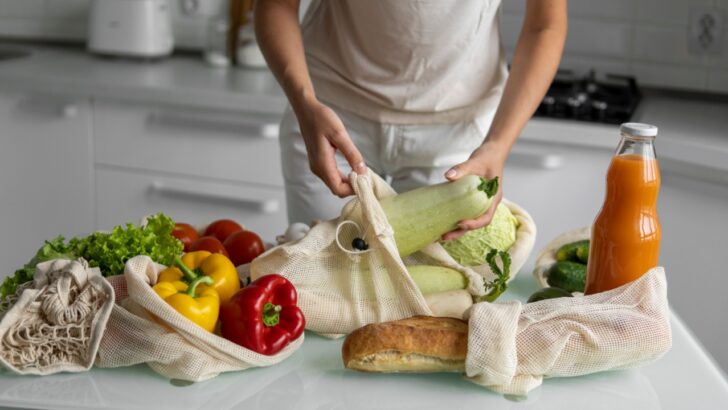
Here’s a statistic that will blow your mind: about 60 million tons of food go to waste every year in the USA! Wasting food is as bad for the environment as it is for our wallets. Mastering the art of keeping food fresh longer will undoubtedly benefit your wallet (and your belly) for years to come.
There’s the type of pain that comes with hitting your small toe on furniture, but it doesn’t come close to the pain of cutting a recently bought avocado only to find it’s gone brown inside. Buying fresh produce only to see it spoil within days is terribly frustrating.
Wondering how to keep your potatoes from going soft and growing sprouts before they’re cooked? Imagine the satisfaction of biting into a crisp apple that you’ve managed to keep fresh for weeks. Here are 17 proven tips to help you maximize your food purchases.
1. Keep Bananas Separated and Stems Covered

Image Credit: Depositphotos.com.
Bananas release ethylene gas, which speeds up ripening. Keeping the stems uncovered and together allows this gas to build up, making them spoil faster. You end up with more overripe bananas for your banana bread than you’d like.
Instead, separate each banana from the bunch. This small step will slow the ripening process and keep your bananas fresh longer. To further reduce ethylene exposure, wrap the stems with plastic wrap.
2. Store Potatoes Away From Sunlight

Image Credit: Depositphotos.com.
Potatoes are root vegetables, so their natural habitat is in the dark. Exposing them to sunlight causes them to sprout and turn green. If you’ve ever cooked with old potatoes, you know they’re not as tasty, and peeling them isn’t fun either.
Keep your potatoes away from the sun in a cool, dark place like a pantry or cabinet. Avoid storing them near onions as well, since these two don’t get along. Onions release gases that cause potatoes to spoil faster.
3. Keep Apples Away from Other Fruits

Image Credit: Depositphotos.com.
Apples and other fruits are like cats and fish—they cannot live together (unless your fish tank has a very tight lid). The ethylene gas apples produce can cause other fruits to ripen and spoil faster. If you store your apples together with bananas, you’ll soon be trashing the bananas.
To keep your fruits fresh, store apples separately in a designated fruit bowl or drawer. This separation will help extend the shelf life of your other fruits. Better yet, store apples in a perforated plastic paper bag.
4. Dip Limp Lettuce in Ice Water

Image Credit: Depositphotos.com.
Limp lettuce can be a real downer in your salads. To revive it, simply dip the leaves in ice water for about 30 minutes. The cold water will rehydrate the leaves, making them crisp and fresh again.
This trick works wonders and can save you from tossing out perfectly good lettuce. Plus, you can add a dash of vinegar to the ice water for an extra refreshing taste.
5. Store Onions in Tights

Image Credit: Depositphotos.com.
Storing onions in tights may sound odd, but it’s an excellent way to keep them fresh. Cut the legs of an old pair of tights, drop an onion into the foot, and tie a knot above it. Repeat this process, separating each onion with a knot. Hang the tights in a cool, dry place.
How does this help the onions? The airflow will prevent mold and sprouting, keeping your onions fresh for months. While it might not be what you expected for your tights, your onions will be juicy and grateful.
6. Don’t Refrigerate Raw Avocados

Image Credit: Depositphotos.com.
If you have an unripe avocado and want to enjoy it sooner rather than later, storing it in the fridge is not the best option. Refrigerating raw avocados can slow down the ripening process, leaving you with hard, unripe fruit. There isn’t much you can do with that.
Instead, store them at room temperature until they ripen. You’ll know they’re ripe when they’re easy to squeeze. Once they’re ripe, you can refrigerate them to keep them fresh for a few more days. This way, you’ll always have perfectly ripe avocados ready to eat.
7. Store Herbs in a Glass of Water
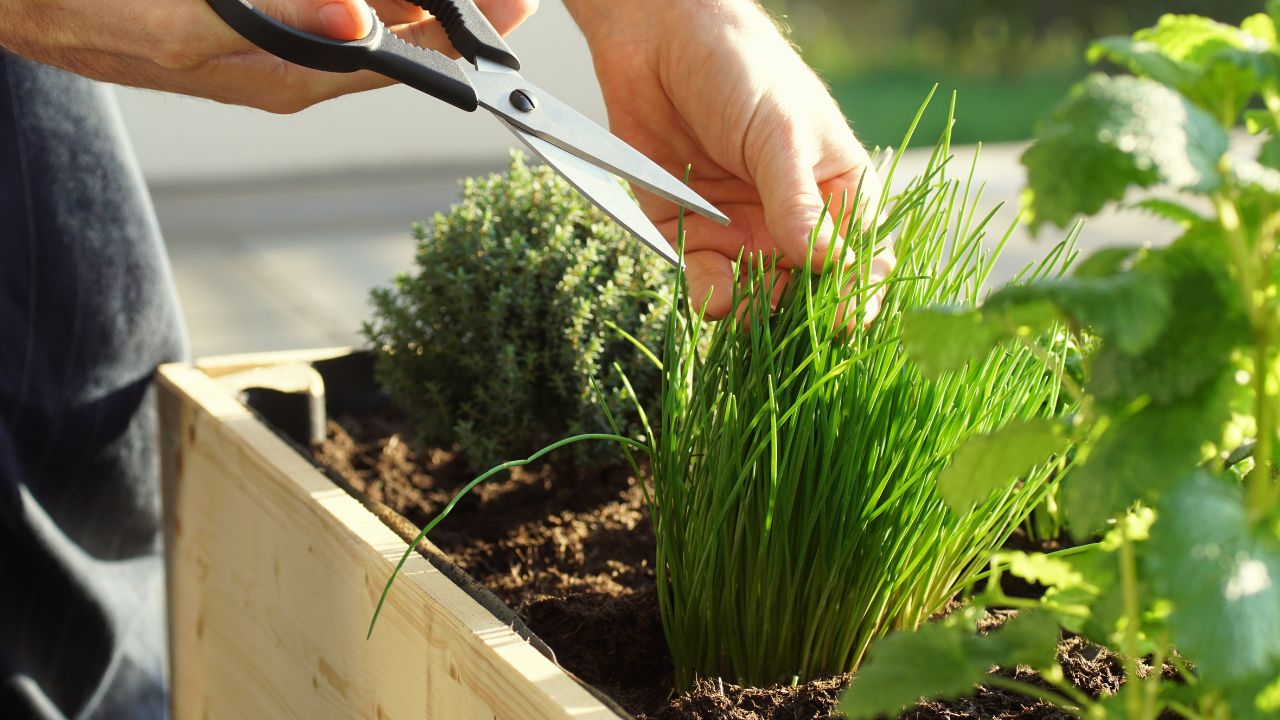
Image Credit: Shutterstock.
Good herbs are an excellent addition to your salads or soups. However, herbs will not be of much use if they dry or rot. To keep herbs like parsley and cilantro fresh, treat them like a bouquet of flowers. (Or better yet, grow them at home!)
Trim the stems and place them in a glass of water. Cover the herbs loosely with a plastic bag and store them in the refrigerator. This method will keep your herbs fresh and vibrant for weeks, adding a burst of flavor to your dishes.
8. Thou Shall Not Put Tomatoes in the Fridge

Image Credit: Depositphotos.com.
Tomatoes should go from the market to the fridge, right? Maybe not. Refrigerating tomatoes can alter their texture and flavor. If you bought them slightly unripe, it may also slow their ripening process.
Instead, store them at room temperature, away from direct sunlight. Place them in a single layer with the stem side up to avoid bruising. This approach will keep your tomatoes juicy and flavorful, perfect for salads and sandwiches.
9. Rub Olive Oil or Lemon Juice on Halved Avocados

Image Credit: Depositphotos.com.
Sometimes, finishing an entire avocado is just not possible, leaving you with a halved fruit. The challenge, however, is that cut avocados tend to turn an unsightly brown. To prevent halved avocados from browning, rub a little olive oil or lemon juice on the exposed flesh.
The oil creates a barrier that slows oxidation, while the lemon juice’s acidity helps preserve the color. For the best results, store the avocado halves in an airtight container in the refrigerator.
10. Wrap Celery in Aluminum Foil

Image Credit: Depositphotos.com.
Celery might not be the most flavorful vegetable in the produce aisle, but it offers numerous health benefits, including boosting heart health. How do you store the wonder vegetable? Wrapping celery in aluminum foil can keep it fresh and crisp for weeks.
The foil allows the ethylene gas to escape, preventing the celery from becoming limp. Store the wrapped celery in the refrigerator’s crisper drawer for maximum freshness.
11. Store Carrots in Water

Image Credit: Depositphotos.com.
To keep carrots fresh and crunchy, store them in a container filled with water. This method prevents them from drying out and becoming limp. Change the water every few days, and your carrots will remain fresh for several weeks.
You can also store other root vegetables like radishes, beets, and turnips in a similar way. Trim the greens from these vegetables before storing them to prevent moisture loss. This method is especially useful if you buy your produce in bulk.
12. Use Paper Towels On Top of Salad Greens

Image Credit: Depositphotos.com.
Moisture buildup can cause salad greens to wilt and spoil. To keep them fresh, place a paper towel in the storage container or bag. The towel will absorb excess moisture, keeping your greens crisp and fresh.
Just remember to change the paper towel every few days to prevent it from becoming soggy. This trick also works for other leafy greens like spinach and kale.
13. Store Mushrooms in a Paper Bag

Image Credit: Depositphotos.com.
Plastic bags can trap moisture, causing mushrooms to become slimy. Instead, store them in a paper bag in the refrigerator. The paper bag allows air to circulate, keeping the mushrooms fresh and dry.
You can also store them in a brown paper bag at room temperature, but they may dry out more quickly. If you have leftover cooked mushrooms, store them in an airtight container in the fridge for later use. Proper storage will keep your mushrooms fresh and ready to add to any dish.
14. Keep Berries Dry

Image Credit: Depositphotos.com.
Berries are delicate and prone to mold. To extend their shelf life, store them unwashed in a single layer on a paper towel-lined tray. Cover the tray loosely with plastic wrap and refrigerate. Wash the berries just before eating to keep them fresh and mold-free.
If you have leftover berries, place them in a paper towel-lined container and refrigerate. If the berries are very ripe, consider freezing them for later use in smoothies or baking.
15. Store Milk in the Coldest Part of the Fridge

Image Credit: Depositphotos.com.
The fridge door is the warmest part of the fridge, making it a poor spot for milk storage. Instead, keep milk in the coldest part of the fridge, usually the back of a lower shelf. This placement will help maintain its freshness and extend its shelf life.
Avoid storing milk in the door, where it is exposed to fluctuating temperatures when opened and closed. Keep the milk tightly sealed to prevent absorption of other food odors from inside the fridge. Proper storage will ensure your milk stays fresh for longer, saving you money and frequent trips to the grocery store.
16. Use a Vinegar Solution to Wash Berries

Image Credit: Depositphotos.com.
To keep berries fresh longer, rinse them in a vinegar solution (1 part vinegar to 3 parts water) before storing. The vinegar kills mold spores and bacteria, preventing spoilage. Rinse the berries again with water before eating to remove any briny taste.
Store the berries in a paper towel-lined container or bag in the fridge to keep them dry and mold-free. This method works best with hardier berries like strawberries, blueberries, and blackberries.
17. Wrap Cheese in Parchment Paper

Image Credit: Depositphotos.com.
Tight plastic wrap can cause cheese to sweat and develop mold. Instead, wrap cheese in parchment paper, which allows it to breathe while maintaining the ideal moisture level. Store the wrapped cheese in a loosely closed plastic bag or container in the refrigerator.
For harder cheeses like cheddar and Parmesan, store them in the fridge’s warmer part to prevent them from becoming too hard. Proper storage will keep your cheese fresh and mold-free for longer.