
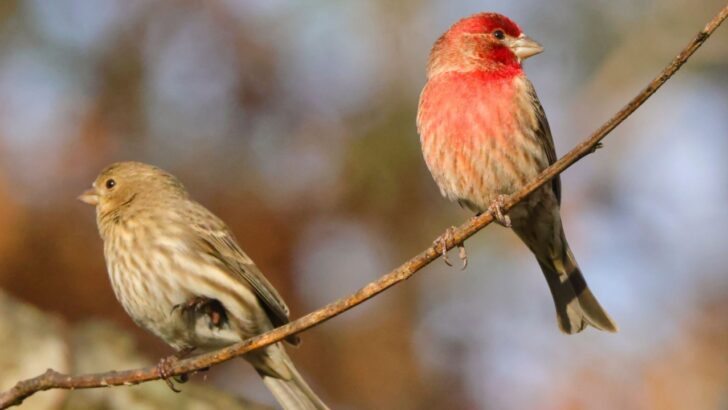
The flash of deep red at the bird feeder might have you guessing. Is it a Purple Finch? Something more exotic? Identifying the small, energetic birds that visit our yards can feel like a puzzle. One of the most frequent and cheerful visitors is the House Finch, a bird that has adapted remarkably well to living alongside people. Learning to recognize them is simple once you know what to look for.
Distinguishing a House Finch from its lookalikes comes down to a few specific traits. From its general size to the specific colors of its feathers, each detail tells a story. Understanding these markers will help you confidently identify this common backyard guest.
Here are the four details that give away a House Finch.
1. Size and Shape
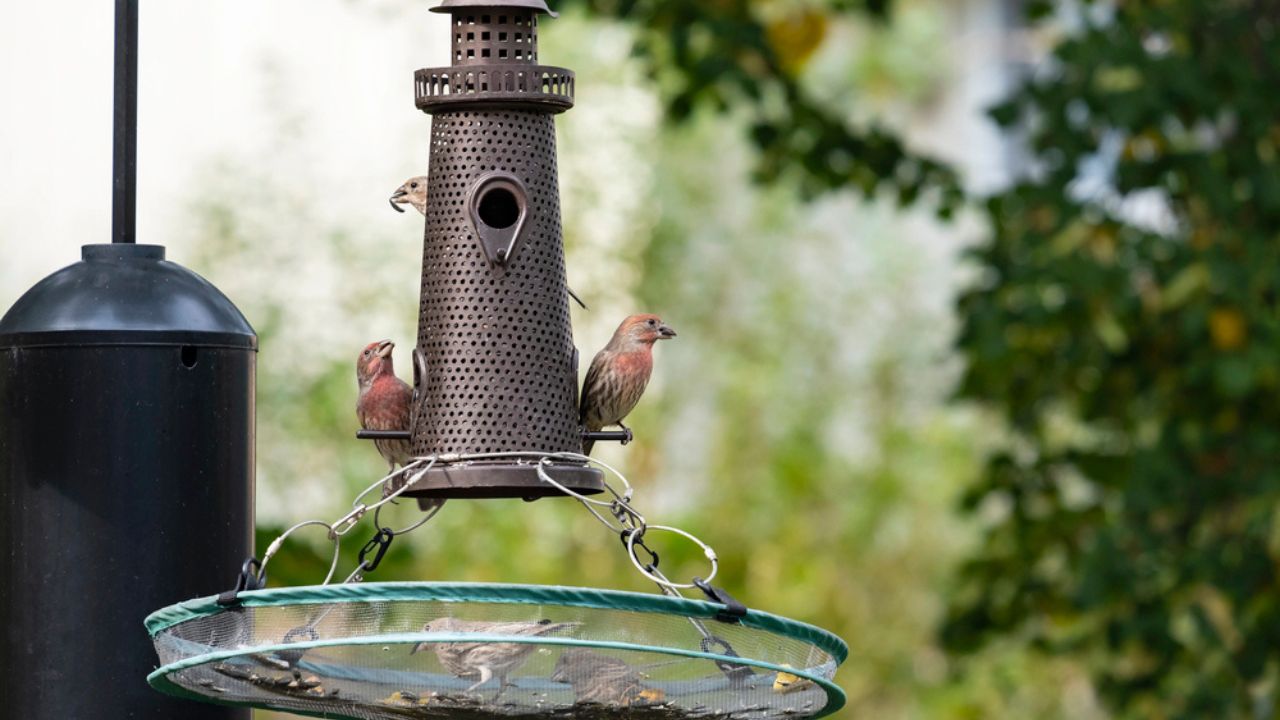
Image Credit: Deposit Photos.
The first clue to identifying a House Finch is its overall build. These are small birds, comparable in size to a common sparrow, measuring around 5 to 6 inches long. Their compact bodies are supported by relatively short wings, which makes their tails appear somewhat long in comparison.
This long, slightly notched tail is a good field mark, giving the bird a streamlined but sturdy silhouette. Pay attention to the bill. The House Finch possesses a stout, conical bill perfectly designed for cracking open seeds.
2. Male Plumage
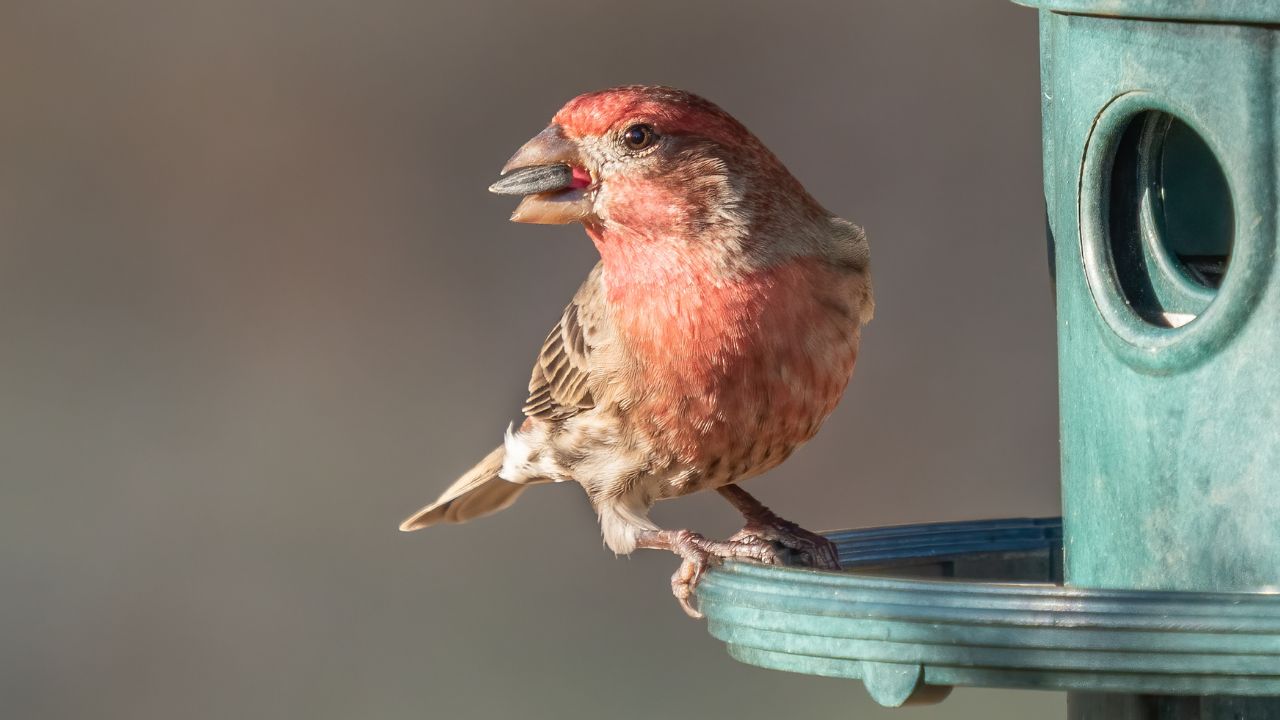
Image Credit: Rhododendrites – Own work, CC BY-SA 4.0/Wiki Commons.
The male House Finch is the showstopper. His most defining feature is the splash of color on his head, throat, and upper chest. This color is most often a rosy red, but it can vary. Depending on diet, you might see males with feathers ranging from bright orange to a muted yellow.
Beyond the colorful front, the rest of the male’s body is more subdued. His back, wings, and tail are a plain brown. His belly and the feathers under his tail are whitish with blurry brown streaks. This pattern helps distinguish him from the Purple Finch, whose raspberry color tends to wash over its entire body, including the back and wings, and whose streaking is less defined.
3. Female Plumage
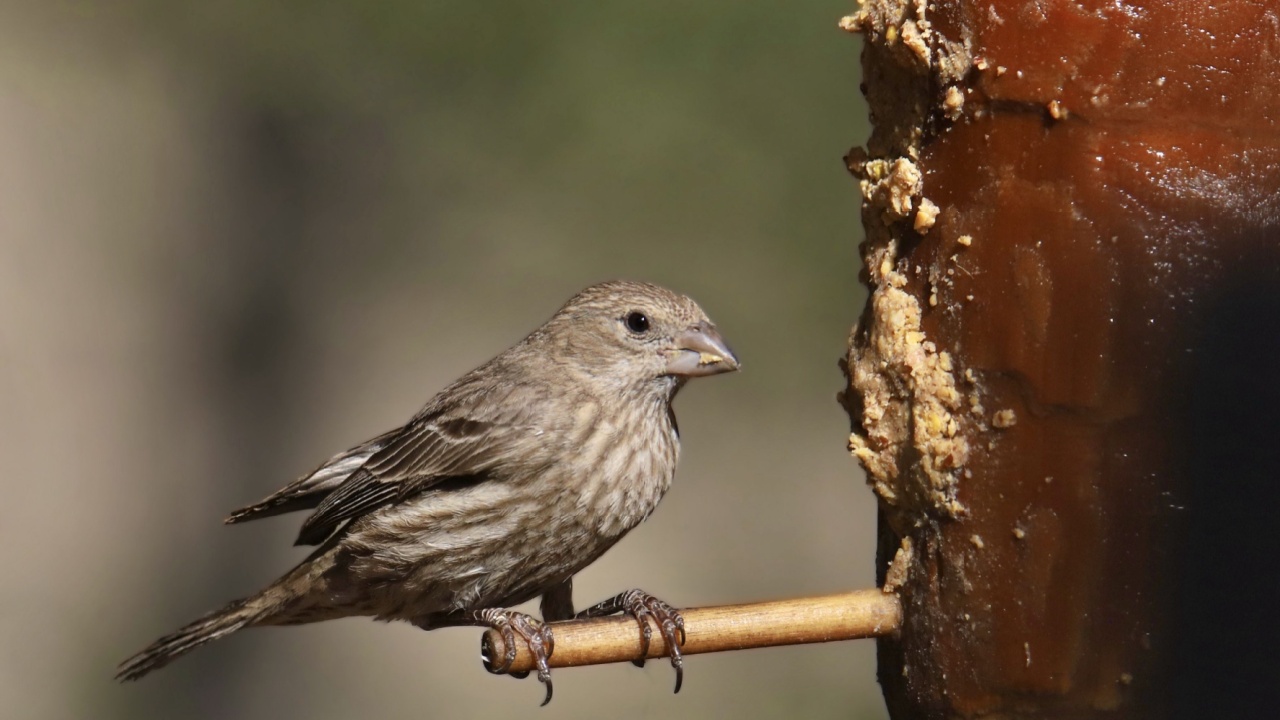
Image Credit: Shutterstock.
The female House Finch presents a more subtle identification challenge. She lacks the male’s bright reds and oranges entirely. Her plumage is a consistent gray-brown or dusty brown all over. While she may seem plain, her markings are distinct.
Her underparts are covered in blurry, smudged streaks, which differ from the crisp, sharp streaks seen on some other sparrows and finches. Her face is another important clue. It is uniformly plain and brown, without any strong patterns, stripes, or the colorful crown of her male counterpart.
4. Behavior and Habitat
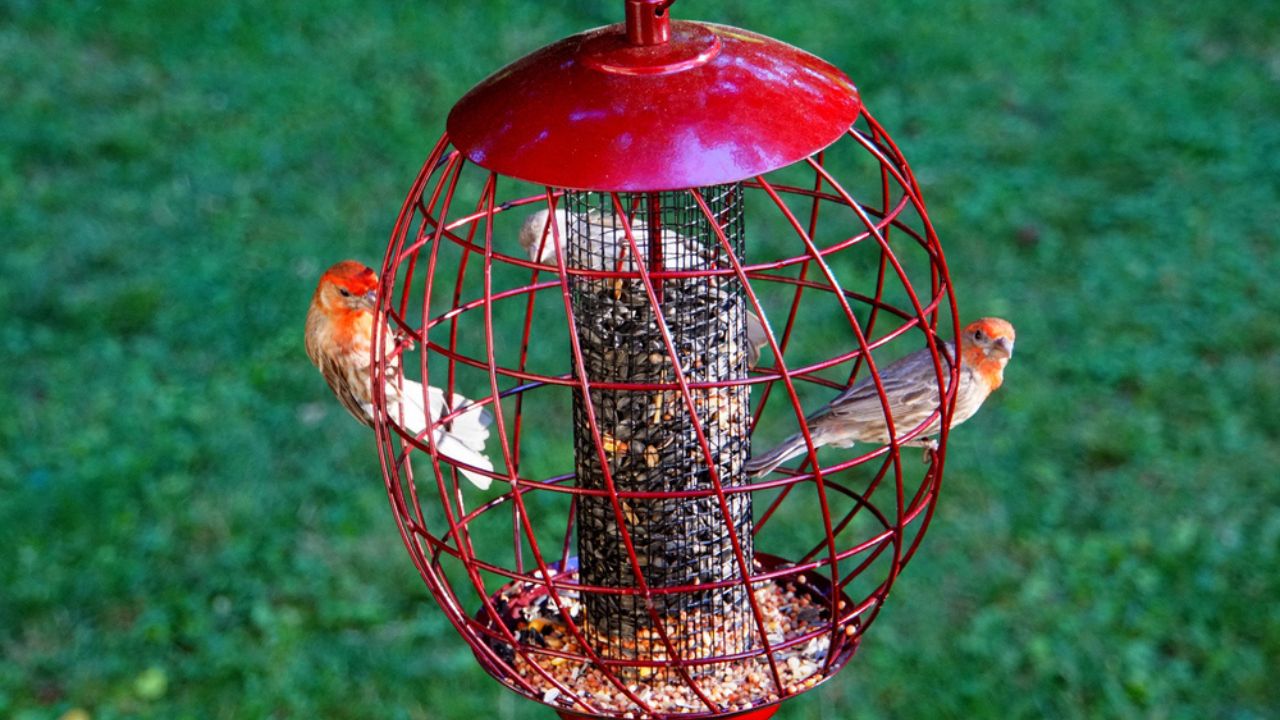
Image Credit: Deposit Photos.
Where you see a bird and what it’s doing can be as informative as its appearance. House Finches are experts at living in human-altered environments. They are common sights in suburban backyards, city parks, and along the brushy edges of fields. They are less likely to be found deep in dense, unbroken forests. If the bird is in a developed area, the odds of it being a House Finch increase.
They are also frequent visitors to bird feeders. House Finches are particularly fond of black oil sunflower seeds and nyjer seeds. Observe how they eat. Instead of grabbing a seed and flying off to eat it in private, a House Finch will often sit at the feeder for a while, cracking open multiple seeds with its thick bill. They are also highly social birds, frequently traveling in lively, chattering flocks.
Enjoy the Wildlife
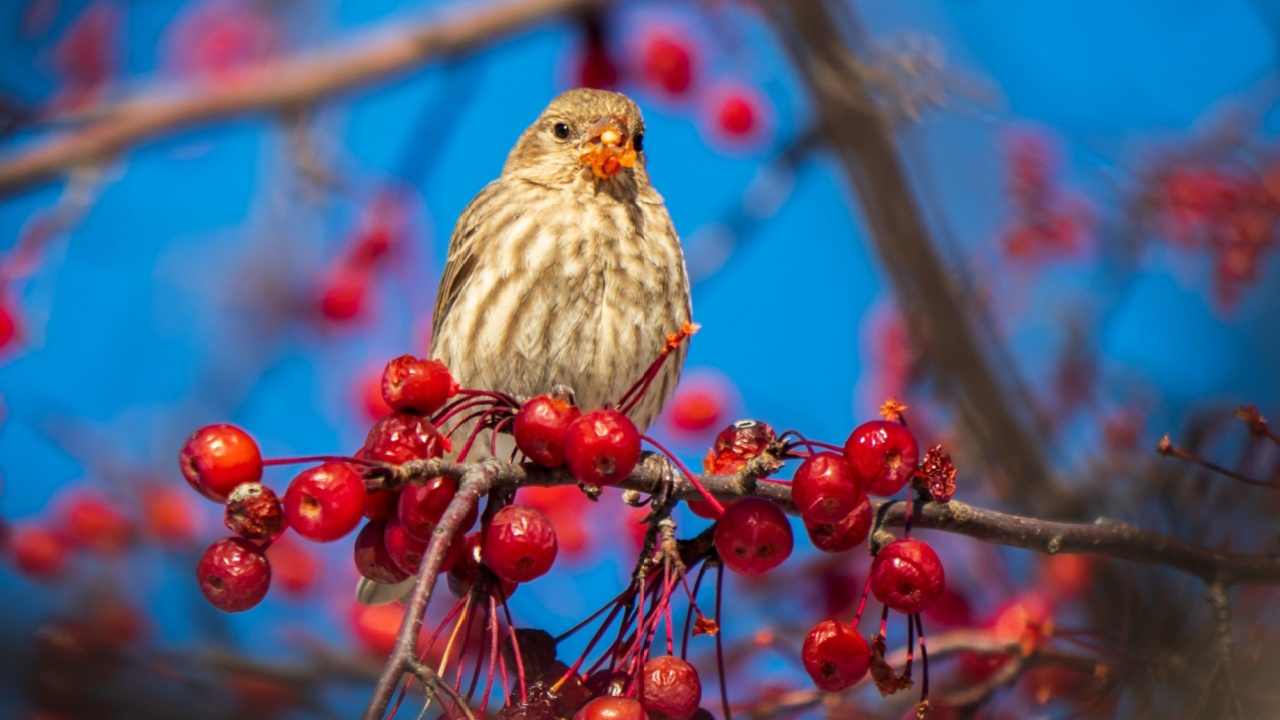
Image Credit: Shutterstock.
Now that you can spot a House Finch among the birds in your backyard, you can better appreciate their role in your local ecosystem. To make your yard more inviting to them, consider setting up feeders with black oil sunflower seeds or nyjer.
Providing a source of fresh, clean water, like a birdbath, is also a great way to attract them and other birds, especially during hot or dry weather. Observing their social interactions and listening to their cheerful, warbling songs can add a new layer of enjoyment to your garden.