Homeowner Says Flock Camera Near Backyard Records Nearly Every Time He Comes and Goes
A Wisconsin homeowner says a camera at the entrance to his subdivision photographs his vehicle virtually every time he leaves home or returns. Now, he plus two citizen groups are asking a court to put new limits on how police search the information collected by those cameras.
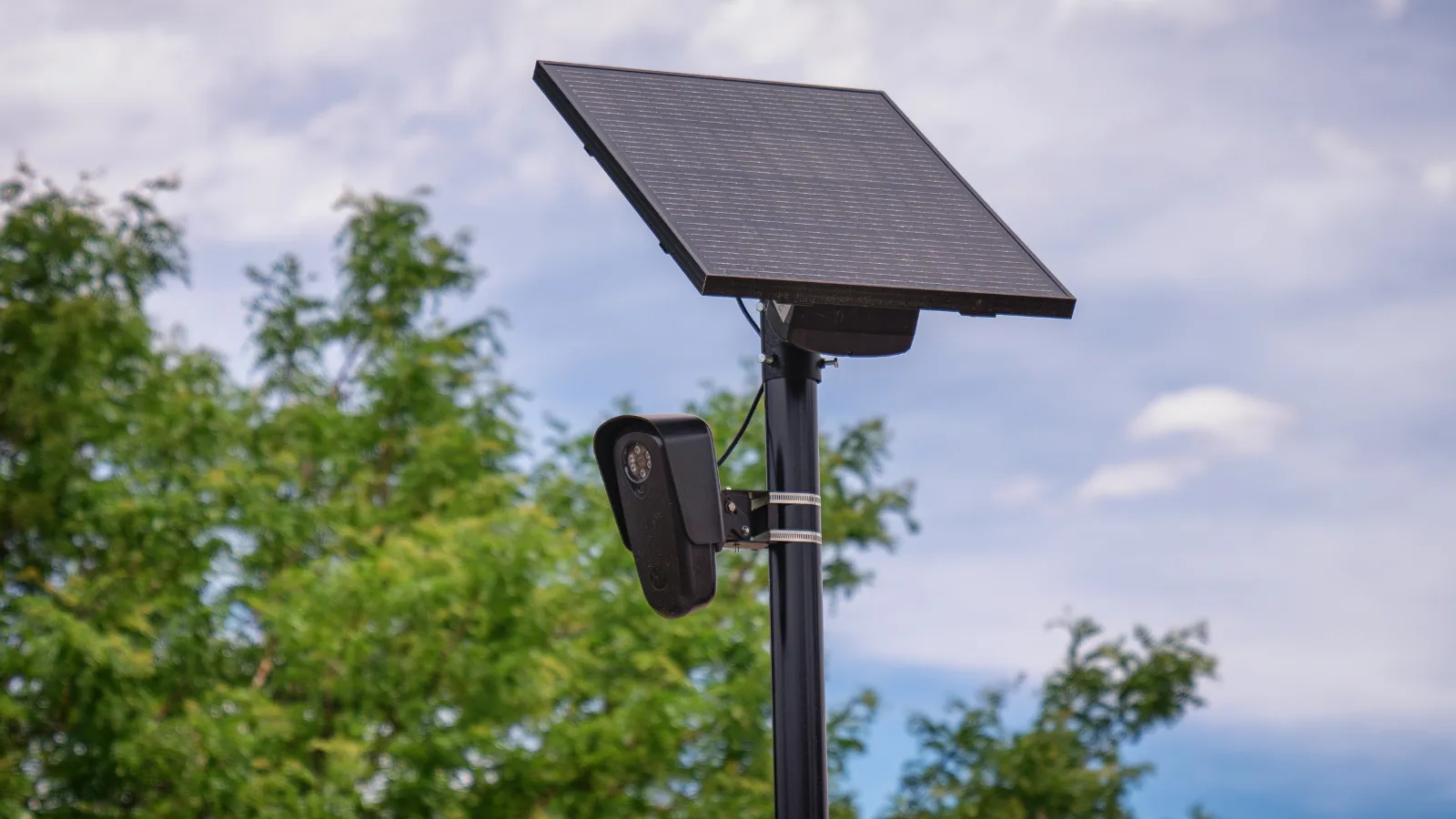
According to the lawsuit filed in Waukesha County Circuit Court, Donavan Haidinger lives in Oconomowoc, where a Flock camera sits at the entrance to his neighborhood and is visible from his backyard. Because of its location, the complaint says, the camera records and photographs his vehicle on nearly every trip into or out of the neighborhood.
Additionally, Haidinger joined NoCams Muskego and Citizens Defending Liberty in suing Waukesha County and 11 cities and villages on Sept. 10. The Wisconsin Institute for Law & Liberty (WILL) is representing the plaintiffs.
They are not asking the court to instate an outright ban on Flock cameras. Rather, WILL says the lawsuit seeks to require police to obtain a warrant, or have a recognized exception to warrant requirements, before searching Flock’s location database.
How Flock Searches Work

Flock cameras are automated license plate readers that photograph vehicles as they pass. According to Flock Safety’s own policy, the system can record a vehicle and license plate image, plate number and state, as well as vehicle characteristics, including color and make, and the date, time, and camera location.
The lawsuit says more than 120 government-operated cameras are located across Waukesha County.
Flock Safety says its system is not an open database anyone can browse. Access is restricted to approved users and searches are automatically logged. Users must provide a reason connected to an investigation.
However, the company also says individual agencies control whether their camera data is shared with other agencies. Sharing is optional, as opposed to automatic, according to Flock’s explanation of its privacy controls.
The plaintiffs nevertheless argue that officers in the defendant communities can search the Flock location database without first obtaining a necessary warrant.
A Supreme Court Ruling is Central to the Case
WILL is relying heavily on the U.S. Supreme Court’s June decision in Chatrie v. United States.
In that case, the Supreme Court held that police conducted a Fourth Amendment search when they obtained a person’s location history from Google because people have a legitimate expectation of privacy in their cellphone location information.
The ruling did not address Flock cameras. It also left another question about the warrant used in the Google case for a lower court to resolve. The Wisconsin plaintiffs are asking the state court to extend that location-privacy reasoning to searches of Flock’s vehicle database.
Waukesha County and New Berlin told TMJ4 they do not comment on pending litigation.
Some Communities Are Already Ending Flock Use
The landscape has already changed since the lawsuit was filed.
Oconomowoc has since voted to end its Flock contracts, and cameras there have been covered as the city winds down the program, TMJ4 reported. Waukesha has also voted not to fund its Flock program beyond 2026, while Mukwonago is transitioning away from the system.
WILL attorney Dan Lennington told TMJ4 that some municipalities have consequently asked to be removed from the lawsuit. The plaintiffs, however, argue that removing local cameras would not necessarily settle their concern if officers continue to be able to access information shared by other Flock users.