Grand Canyon Wants to Remove Historic Telephone Wires That Now Threaten Helicopters
Deep within the Grand Canyon, remnants of an old telephone system still follow trails that wind through the enormous landscape. The wires once connected people living and working miles apart, although some have since become a danger to the very rescue crews they once helped.
Hanging and fallen sections of the historic Trans-Canyon Telephone Line have created hazards for helicopters operating inside the canyon. Wildlife can also become tangled in the aging wires, prompting the National Park Service to consider removing some of them.
The proposed work would affect portions of the telephone line along the Bright Angel and North Kaibab Trails, as well as a branch extending toward the South Kaibab Trail. Its history stretches back more than a century, making preservation an important part of the discussion.
In an Oct. 28 announcement, the National Park Service opened a public comment period on the proposal, giving people until Nov. 11 to weigh in on the changes.
The Park Proposes Removing Dangerous Wires
Embedded media follows. Please allow a moment for it to load.
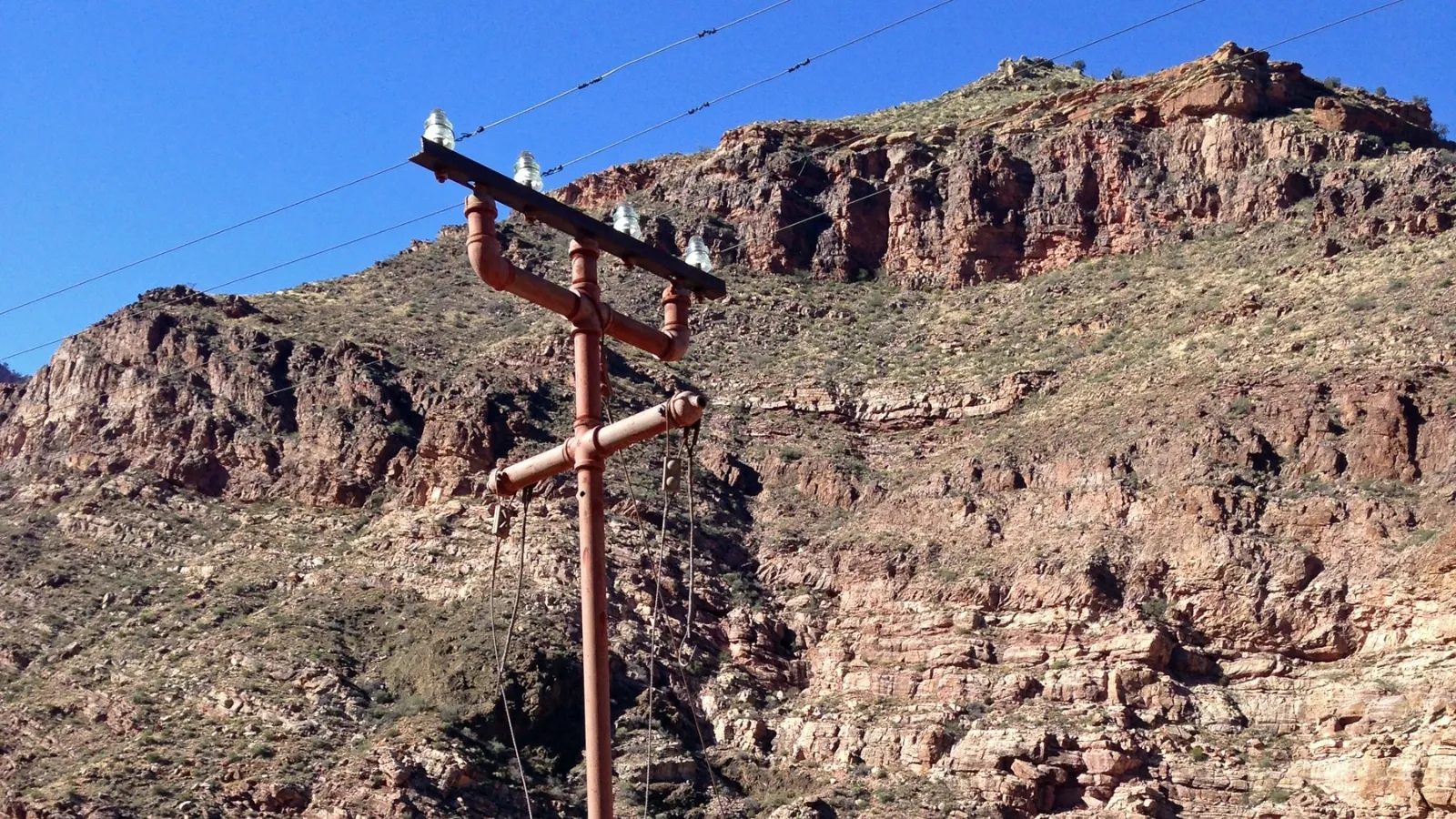
Under the plan, the Park Service would remove sections of telephone wire considered hazardous and install visibility markers on some of the wires left standing. The historic poles, cross-arms, and insulators would generally remain unless they present safety concerns themselves.
The trouble is that the copper wiring is part of what makes the telephone line historically significant. Its removal would alter a property listed on the National Register of Historic Places, requiring the Park Service to address the effects under federal historic preservation law.
Working with the Arizona State Historic Preservation Officer, the agency developed a draft agreement outlining how to proceed. The proposed measures include photographing and documenting the historic line, preserving representative pieces of copper wire in museum collections, and managing the structures left behind.
The National Park Service‘s planning website contains the proposal and supporting documents. The public can submit comments through Nov. 11, after which point the agency will continue its review.
A Telephone System Built to Connect the Canyon
It was 1922 when the Park Service first strung a telephone connection across the Grand Canyon, linking its North and South Rims. For those working in this vast landscape, the new line offered a welcome alternative to the arduous journey across the canyon or the lengthy road trip around it.
By 1935, the telephone system was due for an overhaul, and the Civilian Conservation Corps took on the job of rebuilding it through the rugged canyon. In her 1986 report, History of the Trans-Canyon Telephone Line, Grand Canyon National Park, historian Teri A. Cleeland explained that workers used galvanized iron pipes for the poles, assembling them from four- and eight-foot sections that could be transported by mule.
The rebuilt line included hundreds of poles; then, increasing demand for telephone services saw additional wiring installed in 1938 and 1939. Emergency telephones along the Bright Angel Trail have helped connect injured hikers with rescuers, in addition to the system serving park facilities and remote settlements.
The telephone line was added to the National Register of Historic Places back in 1986, formally recognizing its importance to the Grand Canyon’s early communications network. Decades later, the Park Service is proposing to preserve much of that engineering history while removing wires that present a genuine hazard to helicopter crews and wildlife alike.
Is there a way to strike a balance? What path do you think they should take? You can submit your questions and concerns this week.