Birds May Be the First Animals Humans Can Talk To, According to Researchers
Birdsong. It is a common melody enjoyed by many, a musical chatter that can ease us gently into the day. Now imagine hearing a bird chirping outside your window and actually knowing exactly what that bird is saying, the same way you might understand your friend speaking to you.
Better yet, imagine being able to respond in a way the bird understands.
That possibility may be closer than scientists once believed, thanks to research into the surprisingly sophisticated communication abilities of a small songbird.
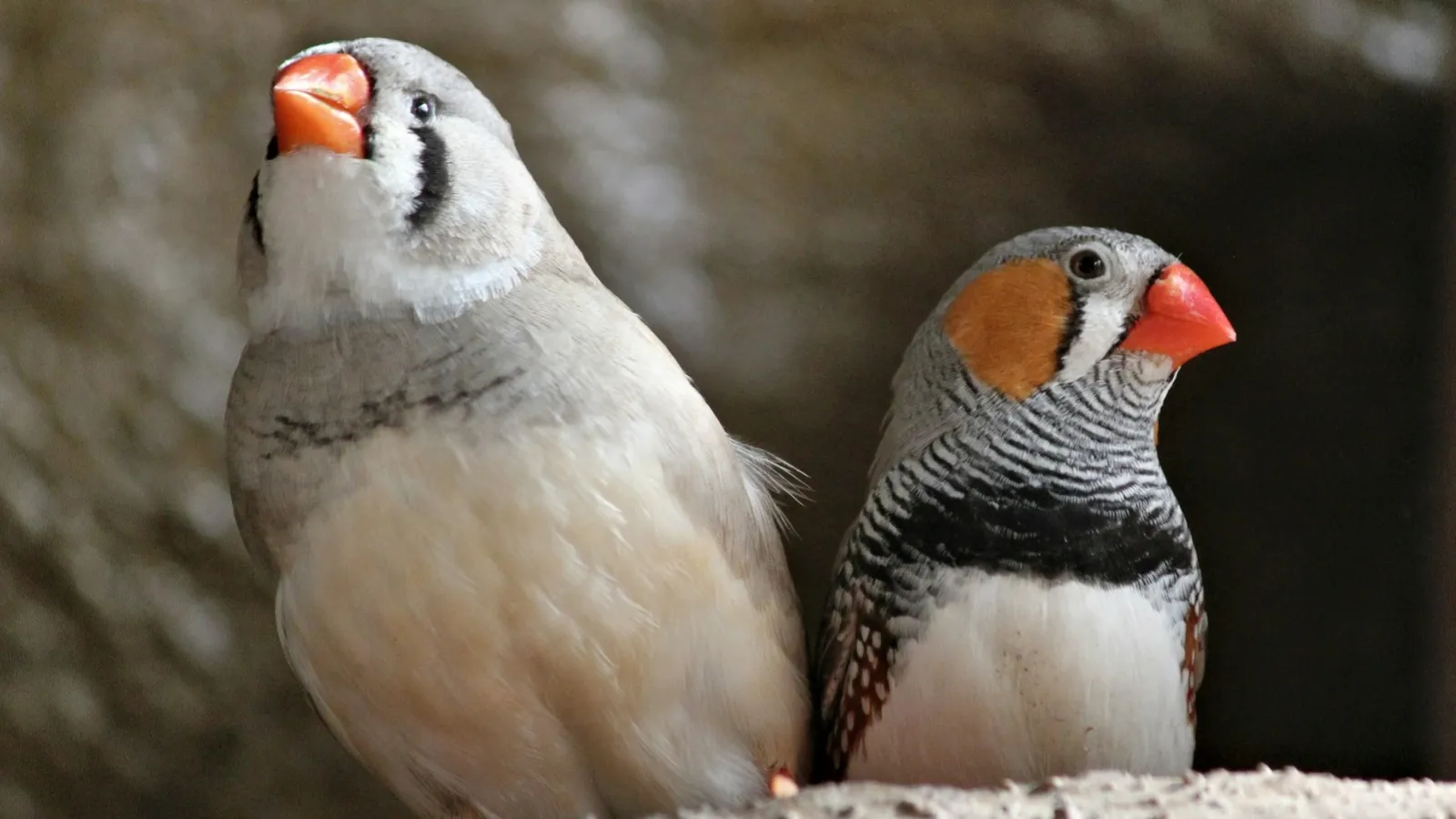
Julie Elie, an animal behavior researcher at the University of California, Berkeley, has spent more than a decade studying zebra finches. Her work has uncovered evidence that the birds recognize the meaning behind different calls. Her findings suggest bird conversations involve much more than instinctive reactions to familiar sounds, and that something much more complex is going on.
Elie and her colleagues have identified 11 distinct types of calls that zebra finches use to communicate. The discovery earned her the $100,000 Coller Dolittle Prize for Two-Way Interspecies Communication in June 2026, an award recognizing progress toward understanding how humans might eventually communicate with other animals.
In a Nov. 10 interview with Live Science, Elie discussed her experiments and why she believes birds could be among the first animals capable of meaningful vocal exchanges with humans.
Scientists Put Bird Communication to the Test
Embedded media follows. Please allow a moment for it to load.
Zebra finches are small, highly social birds native to Australia. They form lasting pair bonds and communicate frequently, using different calls to maintain contact with one another, signal danger, or attract attention. Some of their vocal exchanges are so quiet that people nearby may barely notice them.
Zebra finches are especially useful for studying animal communication because young males learn their songs by listening to other birds, a process that actually, in part, parallels how humans learn to speak. They’re also remarkably vocal, and researchers have spent decades studying how their brains recognize and process sounds. As UC Berkeley explains, that existing knowledge made zebra finches a natural choice for investigating whether birds actually understand the meaning behind one another’s calls.
Elie began her own research by observing how the birds behaved during these exchanges. Over several years, she recorded thousands of calls and studied the circumstances in which they occurred. She eventually developed a classification system identifying the different sounds and their likely meanings.
The next challenge was figuring out whether the finches themselves recognized those distinctions. As explained by UC Berkeley, the research team designed an experiment in which birds listened to recordings of other finches. A particular category of call earned them a seed reward, and they could skip recordings that wouldn’t earn them food.
The birds quickly learned to identify the rewarded sounds. Even more interesting was what happened when they made mistakes. The finches were more likely to confuse calls that served similar purposes, regardless of how different they sounded. Researchers interpreted that pattern as evidence that the birds understood something about what the calls communicated, a finding published in the scientific journal Science in September 2025.
Could We Really Have Conversations With Birds?
Does this represent a major breakthrough in human-animal communications? Certain institutes certainly think so. In June, the Jeremy Coller Foundation awarded her $100,000 for the research, recognizing “the most promising research seeking to develop an algorithm for communication with animals.”
Scientists still have considerable work ahead of them. Identifying individual calls is one thing; understanding how birds combine those sounds during social interactions is considerably more complicated. Elie is also interested in how body movements contribute to their exchanges, since vocalizations alone don’t convey everything.
Speaking to Live Science, Elie suggested that advances in artificial intelligence and robotics could make more sophisticated interactions possible within roughly 10 years. She emphasized that understanding zebra finches would not automatically mean scientists could communicate with crows or other birds. Each species has its own communication system.
Researchers are now examining just how zebra finch brains process the meaning of calls, hoping to better understand what happens when the birds recognize or confuse particular sounds. The next time a finch calls to its partner, we know there may be far more behind that brief exchange than a human listener can recognize.