Americans Are Waiting Until 40 to Buy Their First Home as Older Generations Dominate Homeownership
The typical first-time American homebuyer was in their late 20s during the 1980s. Today, that milestone comes considerably later, with the median age of first-time buyers holding at a record high of 40.
Research published on November 23 by RentCafe found that people in their 30s have replaced those in their 20s as America’s largest group of renters. Among homeowners, people in their 60s have overtaken those in their 40s.
The changes extend well beyond younger Americans facing financial barriers to ownership. A growing number of older households are renting during years traditionally associated with retirement.
Separate research from the National Association of Realtors (NAR) offers insight into the financial divide. Accumulated home equity and inherited wealth are giving some buyers advantages that those relying on personal savings alone may struggle to match.
A Changing Timeline
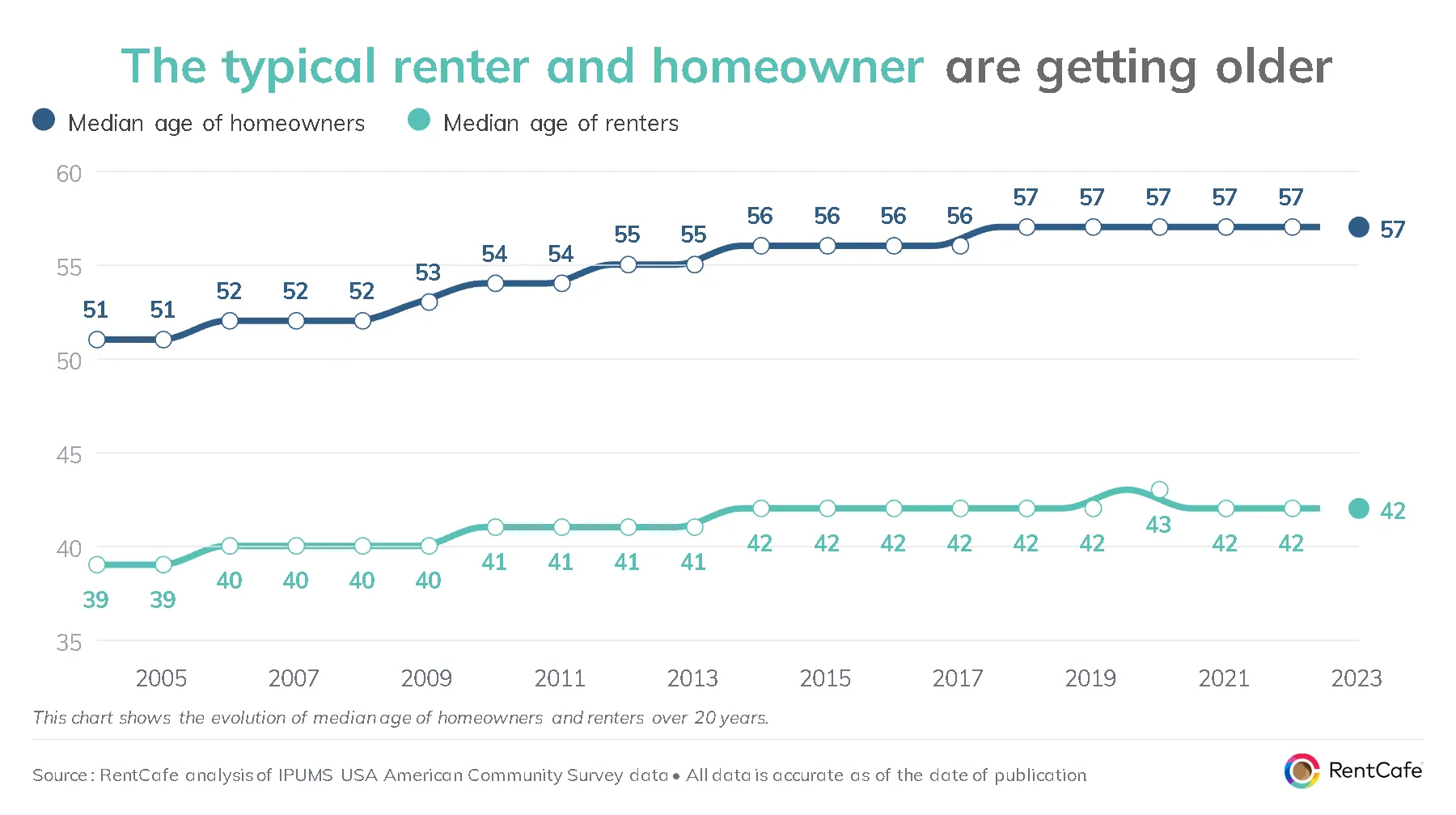
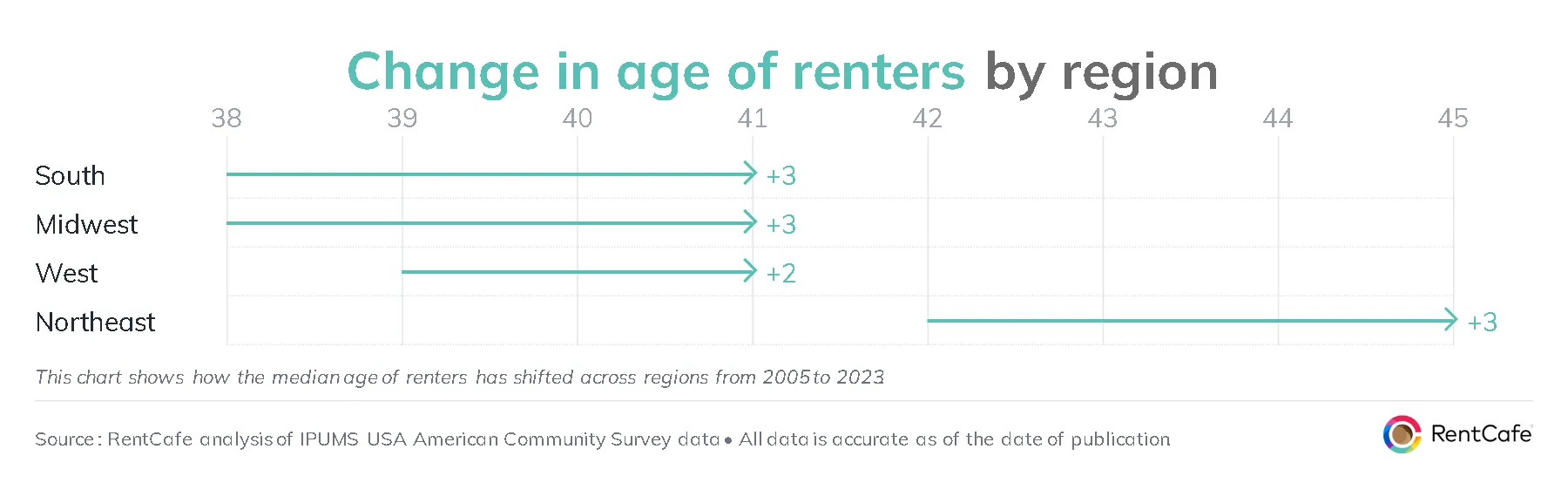
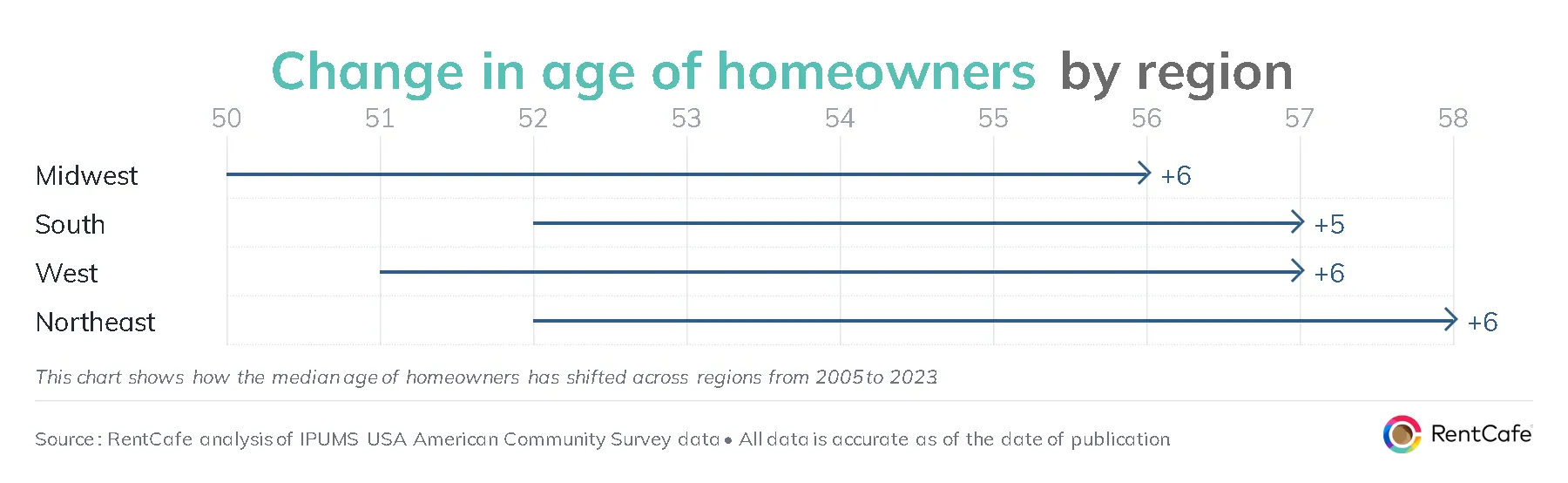
RentCafe’s analysis of American Community Survey data found that between 2005 and 2023, the median age of renters increased from 39 to 42. Among homeowners, the increase was twice as large, with their median age rising from 51 to 57.
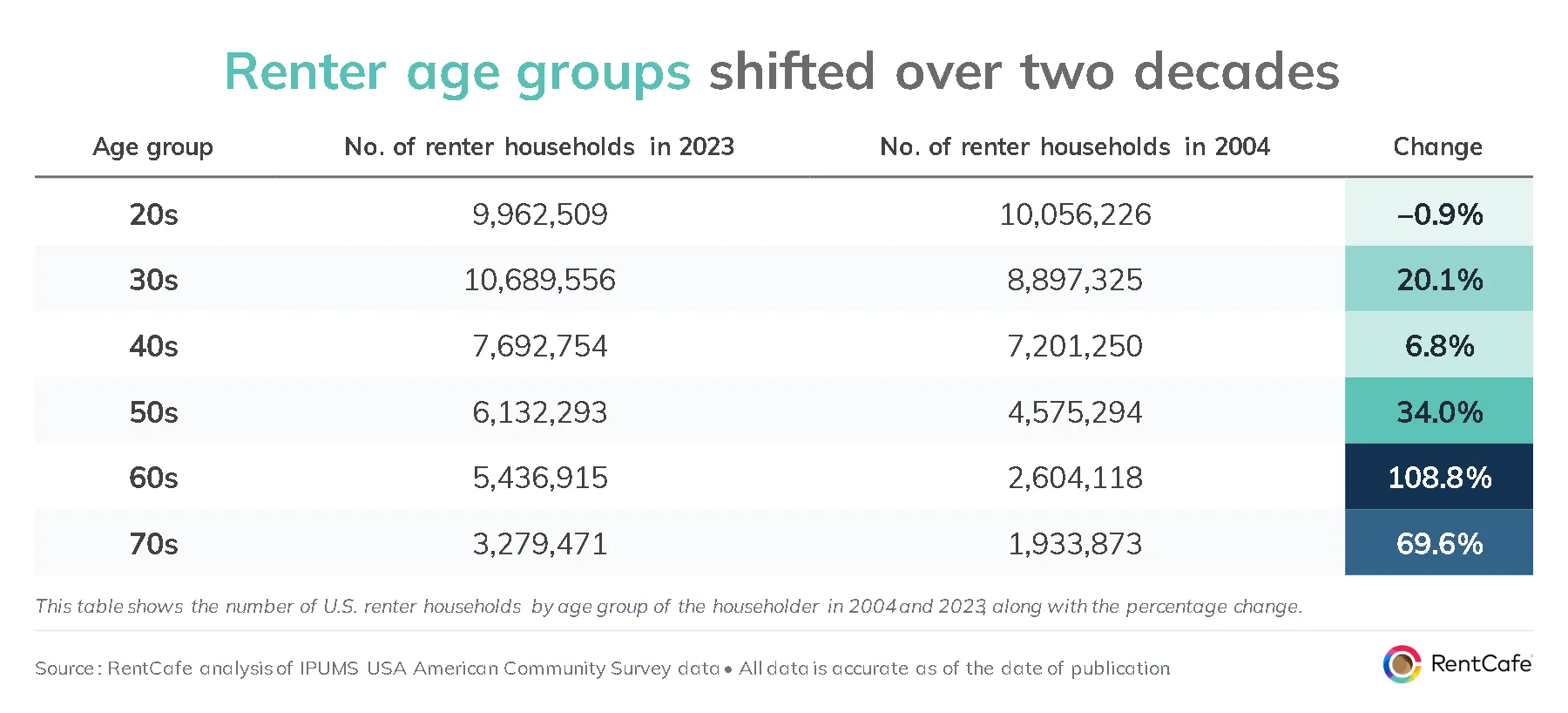
While the number of renter households headed by people in their 20s remained relatively stable, those headed by people in their 30s increased by approximately 20%, reaching nearly 10.7 million.
The growth among older renters was more pronounced. Households headed by people in their 60s increased from approximately 2.6 million to 5.4 million over roughly two decades, while those in their 70s increased by nearly 70%.
RentCafe suggests that some older adults may find renting more attractive when downsizing or looking to reduce home maintenance responsibilities. The research does not, however, establish how many rent by choice rather than financial necessity.
A Generational Shift
Homeowner households headed by people in their 40s fell from approximately 18.3 million to 14.8 million, a decline of 18.9%. Household counts also decreased among homeowners in their 20s and 30s.
Meanwhile, homeowner households headed by people in their 60s increased by 68.5%, reaching nearly 18.7 million. Those in their 70s grew by 61.2%.
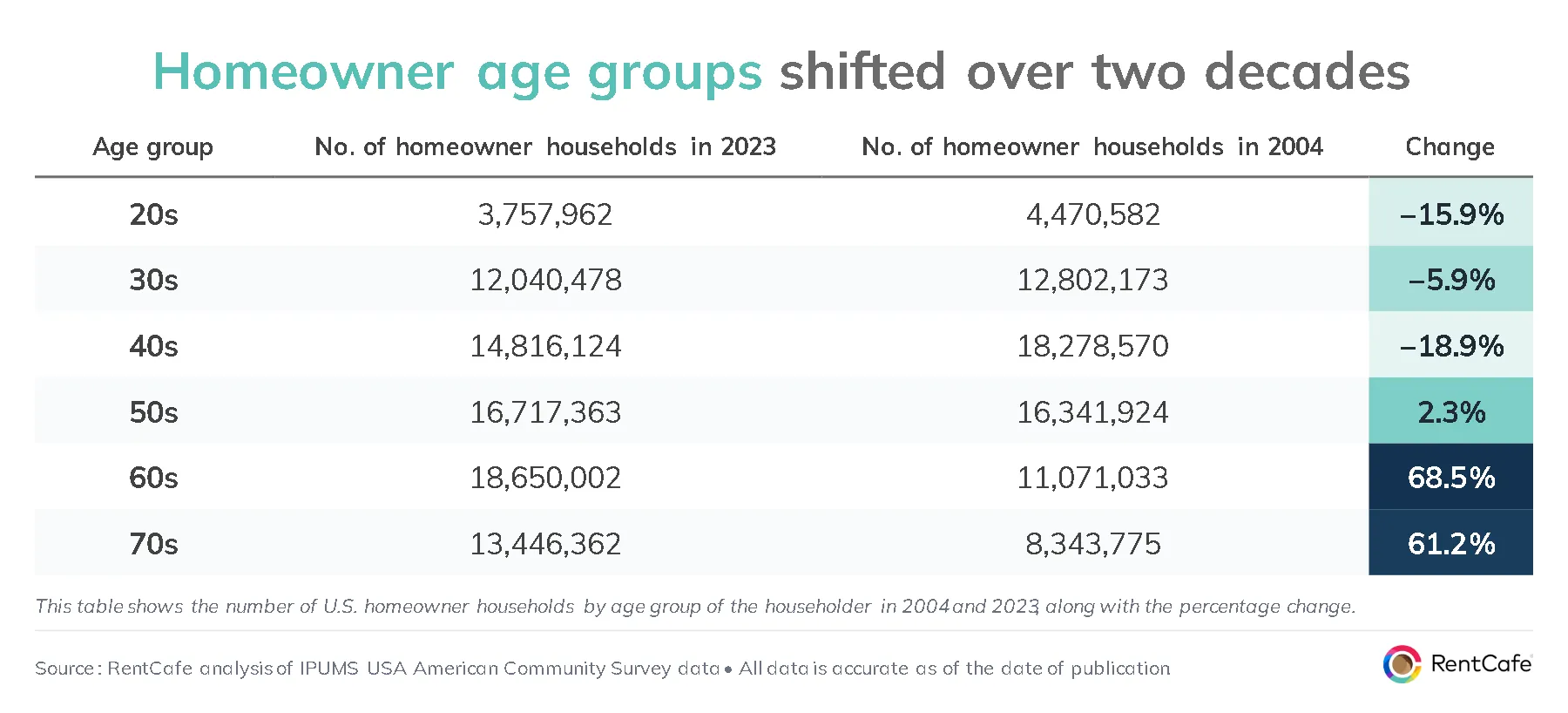
Population aging accounts for part of the shift. Many Americans who were in their 40s two decades ago are now in their 60s, although the research does not track individual households or establish how many remained in the same properties.
Location Matters
The Northeast had the oldest renters and homeowners of any U.S. region in 2023, with median ages of 45 and 58, respectively. Renters in the Midwest, South, and West had a median age of 41.
The Midwest had the youngest homeowners, with a median age of 56. Even there, the typical homeowner was six years older than in 2005.
The differences were even more pronounced among individual metropolitan areas. North Port, Florida, had a median renter age of 48 and homeowner age of 65. Provo, Utah, occupied the opposite end of the rankings, with corresponding ages of 29 and 47.
Not every community is growing older, either. The median renter age in Colorado Springs, Colorado, decreased by 10 years between 2005 and 2023. In Harrisburg, Pennsylvania, it increased by 14 years.
The Equity Advantage
Homeowners are keeping their properties longer before selling, according to NAR’s 2026 Profile of Home Buyers and Sellers. The typical ownership period before a sale reached a record 12 years.
According to NAR research, the average home appreciated by $146,000 over the past seven years. Established homeowners can put that accumulated wealth toward another property, a financial resource generally unavailable to first-time buyers.
Repeat buyers, whose median age was 62, accounted for 78% of primary residence purchases between July 2025 and June 2026. Thirty percent paid entirely in cash, while their median down payment was 19%, compared with 9% for first-time buyers.
Those purchasing another property aren’t necessarily looking for something smaller. Among surveyed sellers, 36% purchased a larger home, and 47% purchased a newer one. Moving closer to friends and family was the most commonly reported reason for selling.
Waiting for Wealth
Family wealth is also helping some Americans enter the housing market for the first time, although that financial assistance may arrive considerably later in life.
According to NAR’s November 5 report, a record 10% of first-time buyers paid entirely in cash. Among those buyers, 28% used an inheritance, compared with 9% of those using financing.
First-time cash buyers had a median age of 54, compared with 38 among those financing their purchases.
“Because people are living longer, the generation receiving that wealth is no longer young adults,” said Jessica Lautz, NAR’s deputy chief economist. “Many are reaching middle age before they can buy their first home.”
For those saving on their own, Lautz identified high rents, student debt, and a shortage of affordable homes as persistent barriers. First-time buyers represented just 22% of purchases in the latest survey, compared with a historical norm of approximately 40% before 2008.