Thanksgiving Dinner Will Cost Americans More This Year, With Some States Paying Much Higher Prices
Thanksgiving dinner is getting more expensive this year, and families preparing their holiday grocery lists may notice the difference before they even reach the checkout. After three consecutive years of declining costs, the average price of a traditional holiday meal is heading back up.
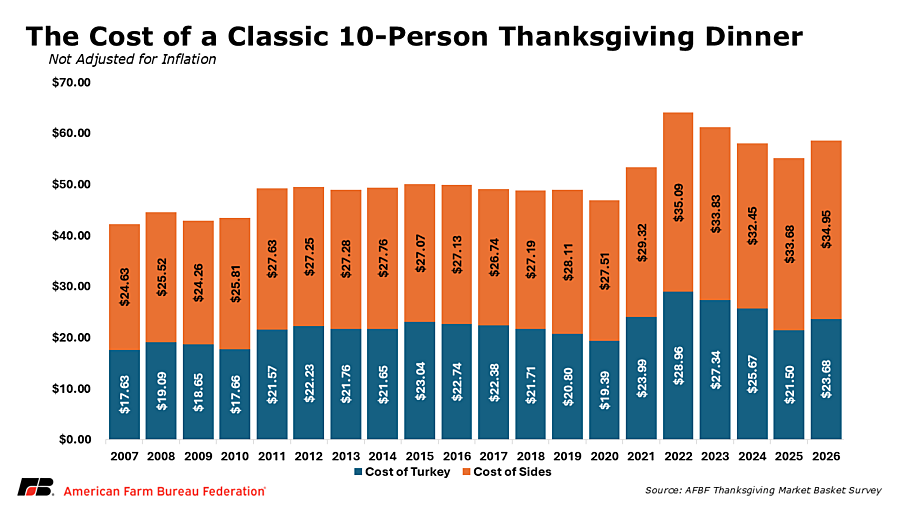
The American Farm Bureau Federation’s 2026 Thanksgiving dinner survey estimates that feeding 10 people will cost $58.63, or about $5.86 per person. That’s a 6% increase from last year, driven largely by higher prices for turkey, milk, dinner rolls, and other familiar holiday staples.
There is some perspective worth keeping in mind. This year’s estimated meal cost remains 8.5% below the record $64.05 reached in 2022. Not every grocery item has become more expensive, either, with several baking ingredients and vegetables offering modest savings.
Still, the national average doesn’t tell the whole story. Families in the Northeast are facing higher estimated costs than those in other regions, while rising fuel expenses and strong demand for turkey are creating additional pressure throughout the food supply chain.
What Thanksgiving Dinner Costs in 2026
The American Farm Bureau Federation’s annual survey draws on hundreds of volunteer shoppers across all 50 states and Puerto Rico. Participants checked prices during the first week of November, using grocery stores, websites, and shopping apps to identify available prices without special promotional coupons or bundled purchase discounts.
The organization has conducted its Thanksgiving survey since 1986, creating a long-running comparison of what households pay for a standard holiday meal. The classic menu includes turkey, stuffing, sweet potatoes, dinner rolls, cranberries, vegetables, and ingredients for pumpkin pie.
The latest results show how much those individual costs can shift even when the overall meal price changes by a relatively small amount.
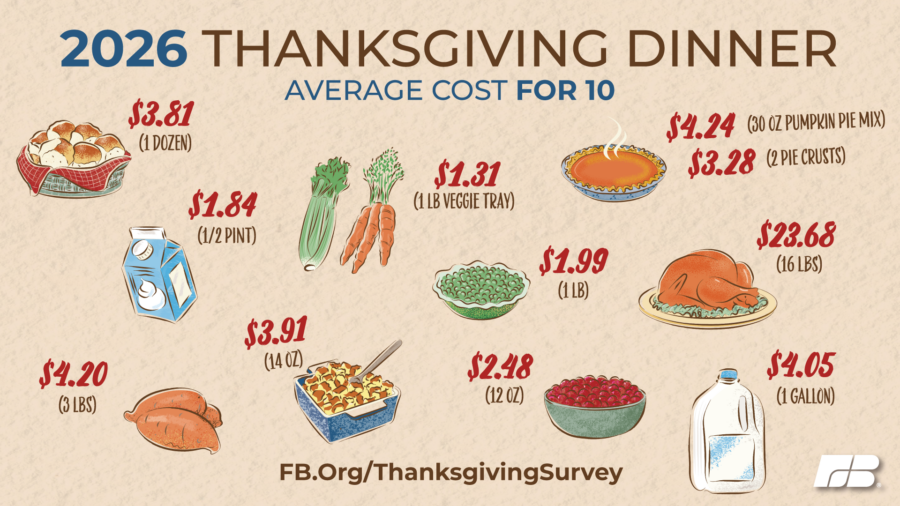
Other increases are spread throughout the meal. A gallon of whole milk averages $4.05, up 8.6%, while a dozen dinner rolls cost $3.81, a 7% increase. Fresh cranberries rose 8.8% to $2.48 for a 12-ounce bag, and a 14-ounce package of cubed stuffing averages $3.91, up 5.4%.
The increases aren’t universal. A vegetable tray containing carrots and celery costs $1.31, down 3.7%. Pie crusts and heavy whipping cream also became cheaper. Those declines help offset some of the larger increases elsewhere in the meal.
Why Turkey Prices Are Rising
Higher turkey prices are particularly notable because the United States is actually producing more turkey this year.
According to the USDA’s October 2026 Livestock, Dairy, and Poultry Outlook, domestic turkey production was projected to reach 5.134 billion pounds in 2026, compared with 4.844 billion pounds in 2025.
Ordinarily, greater production might help relieve some price pressure. However, strong consumer demand and growing exports have limited available inventories, while the industry continues to deal with the consequences of avian influenza.
The USDA reported 11 outbreaks in commercial turkey flocks during September, affecting approximately 544,900 birds across Minnesota, Wisconsin, North Dakota, and South Dakota.
Wholesale prices reflect those pressures. USDA projected an annual average of approximately $1.76 per pound for frozen whole hen turkeys in 2026, compared with about $1.36 in 2025.
Fuel costs are another factor. The Farm Bureau identified higher diesel prices as a source of increased expenses for farmers, food processors, and transportation companies. Those costs affect more than poultry, helping explain why several otherwise unrelated Thanksgiving ingredients are becoming more expensive at the same time.
Where Dinner Costs the Most
The national average also conceals a substantial difference between regions.
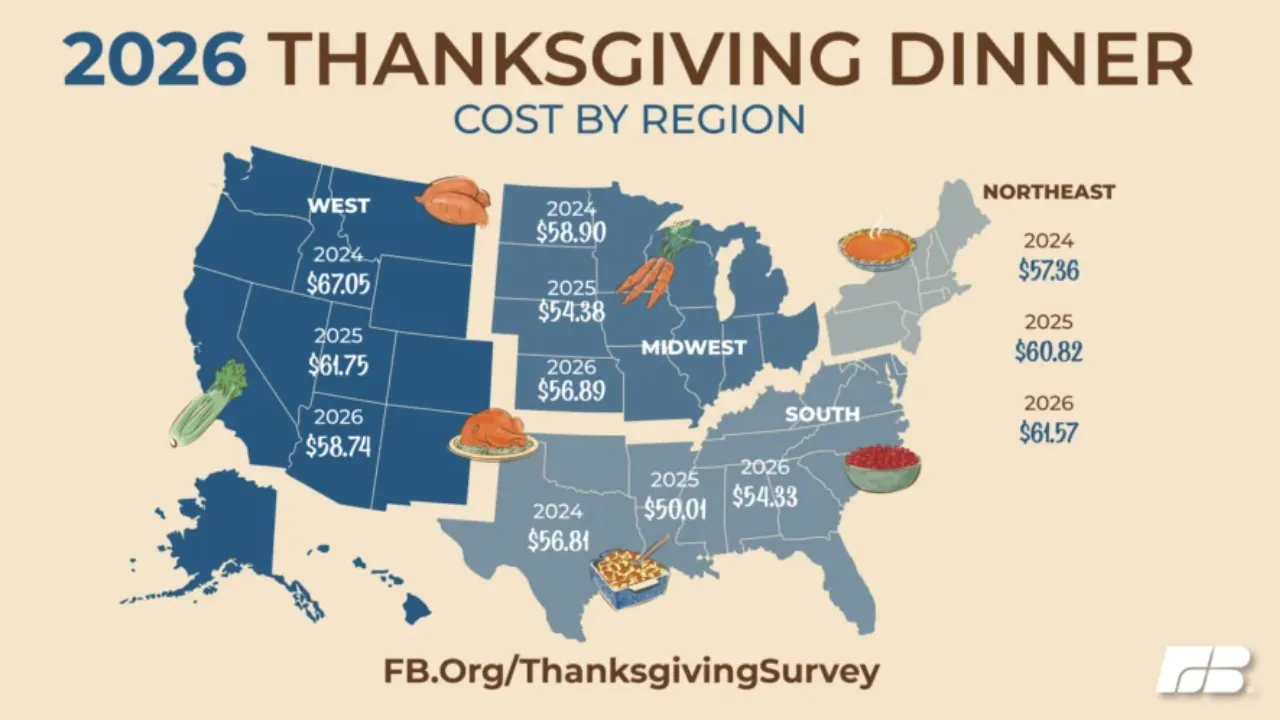
A classic Thanksgiving dinner for 10 is expected to cost $61.57 in the Northeast, making it the country’s most expensive region for the traditional holiday meal.
The West follows at $58.74, with the Midwest averaging $56.89. The South remains the least expensive at $54.33, creating a $7.24 difference between the highest- and lowest-cost regions.
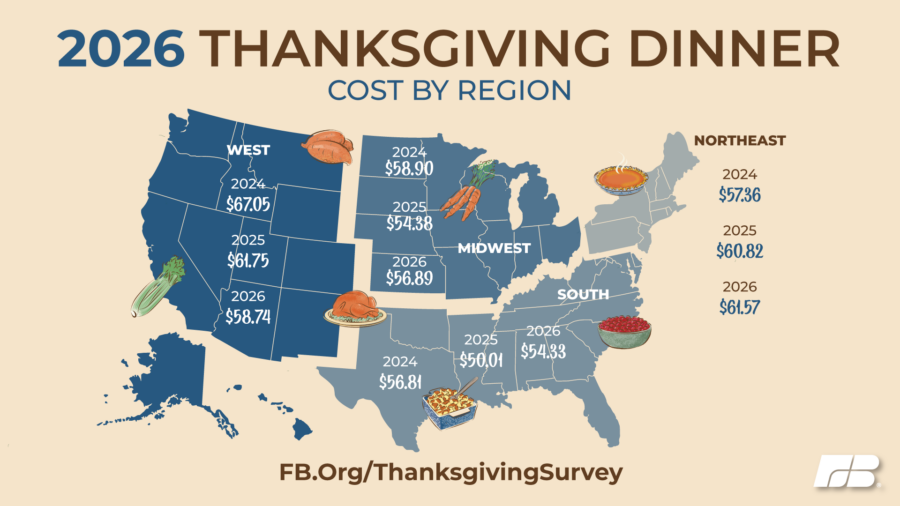
These are regional averages rather than fixed prices. What an individual family pays can vary depending on its grocery store, menu, serving sizes, and available discounts.
Can Shoppers Still Find Deals?
Despite the higher average, Thanksgiving shoppers may be able to spend considerably less by taking advantage of seasonal promotions.
The Farm Bureau reported that some survey participants found frozen turkey prices as low as 69 cents per pound, substantially below the national average of $1.48. Grocery retailers frequently advertise turkey discounts as Thanksgiving approaches, sometimes tying the lowest prices to loyalty programs or minimum purchases.
The survey’s historical figures also help put the current increase into context. Although prices have risen compared with last Thanksgiving, the cost of the traditional dinner remains below the peak recorded four years ago.
For households watching their budgets, comparing prices between stores and reviewing weekly advertisements can make a meaningful difference. Buying seasonal ingredients on promotion and adjusting quantities to the number of guests can also reduce unnecessary spending.
Higher Prices Don’t Mean Bigger Farm Profits
One distinction in this year’s report concerns where the additional grocery spending goes.
The Farm Bureau notes that farmers don’t necessarily benefit when retail food prices increase. The USDA’s Food Dollar research estimates that less than six cents of every dollar spent on food goes back to the farm, with the remainder supporting activities such as processing, transportation, distribution, and retailing.
Agricultural producers are also paying more for diesel, fertilizer, equipment, electricity, and labor. Those expenses can absorb additional revenue even when the market price of a crop or animal increases.
Cranberries illustrate the distinction. A 12-ounce package costs nearly 9% more than last year, but that increase doesn’t establish whether the farmer who grew the berries earned more money after accounting for production expenses.
For consumers, the survey provides a starting point rather than a guaranteed grocery bill. Farm Bureau volunteers collected prices in early November, leaving room for additional retailer promotions before Thanksgiving Day on November 26.