Scientists Discover Surprise Baby Whale, Bringing Hope for Critically Endangered Species
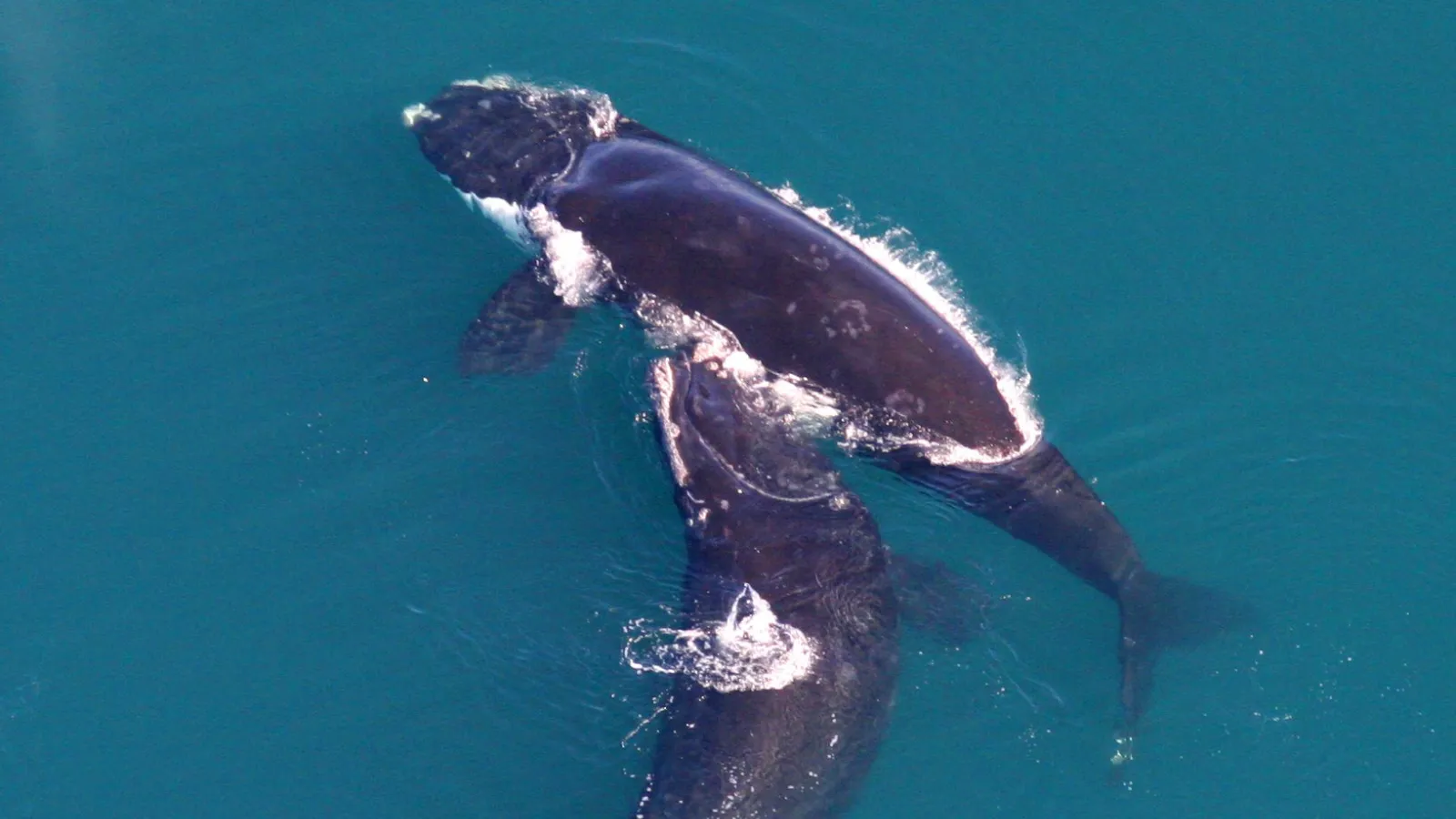
Scientists who track one of the world’s rarest whales have received an unexpected yet incredibly welcome surprise: a baby they had no idea even existed. The young North Atlantic right whale was photographed swimming beside its mother off the coast of Canada, months after the species’ annual calving season had ended.
North Atlantic right whales are enormous marine mammals that can grow up to 52 feet long and weigh as much as 140,000 pounds. They are recognizable by their broad bodies, lack of dorsal fin, and characteristic patches of tough skin on their heads. Their peculiar name dates back to commercial whaling, when hunters considered them the “right,” or correct, whale to pursue because they swam slowly and typically floated after they were killed.
Researchers spotted the mother-child pair near Anticosti Island, Quebec, on Sept. 25. After weeks of examining photographs and reviewing records, they confirmed that the calf had escaped detection through winter and much of the year.
The newly identified calf brings the 2025–26 calving season’s total to 24, the highest recorded since 2009. Researchers estimate that only about 380 North Atlantic right whales remain, so the species’ strongest breeding season in years offers some encouraging news for its future.
The New England Aquarium announced the discovery on Nov. 2. The mother was identified as Silt, a whale at least 38 years old whose life has been carefully documented by scientists for decades.
A Familiar Mother With an Unexpected New Baby
Embedded media follows. Please allow a moment for it to load.
View this post on Instagram
The original sighting came from researchers with Mingan Island Cetacean Study, a Canadian nonprofit dedicated to whale research. They photographed Silt and her calf in the Gulf of St. Lawrence before sharing the images with scientists at the New England Aquarium, the latter of which maintains an extensive catalog of individual North Atlantic right whales.
Silt, tagged in the catalog as No. 1817, was last seen in February in the calving grounds off the southeastern United States. Researchers believe she may have given birth there before traveling north, although the calf’s birthplace and exact age remain unknown. Neither whale was documented during later surveys along the East Coast.
This is Silt’s sixth known calf, and her family history extends several generations. She has three grandchildren, and her first great-grandchild was born earlier this year. Scientists have also documented at least five occasions when Silt became entangled in fishing gear, leaving her with scars on her head and tail.
Some members of her family have been less fortunate. Her eldest known calf died following a vessel strike in 2005, while another offspring, named Division, died earlier in 2026 after a severe entanglement. Researchers are hoping Silt’s newest calf will avoid similar dangers.
A Promising Breeding Season for an Endangered Species
North Atlantic right whales typically give birth in warmer waters off the southeastern United States from mid-November through mid-April. Mothers and calves then travel north toward feeding grounds off New England and eastern Canada, where researchers continue monitoring them through aerial and boat-based surveys.
According to NOAA Fisheries, Silt’s calf is the latest happy addition to the 2026 birth records. The 24 calves recorded during the 2025–26 season mark the fourth-highest total on record for North Atlantic right whales. The numbers have fluctuated considerably over the years, and as recently as 2018, an entire calving season passed without researchers documenting a single birth.
The numbers are highly encouraging; however, it is important to remember that the whales remain vulnerable both to collisions with vessels and entanglement in commercial fishing equipment. Only about 70 reproductive-age females remain, so the survival of mothers and their offspring is particularly important to the population’s recovery.
Scientists are continuing to monitor the species just in time for another calving season. The unexpected discovery of Silt’s sixth calf has added one more young whale to the population’s precarious records, potentially ushering in a new dawn for this beleaguered species.