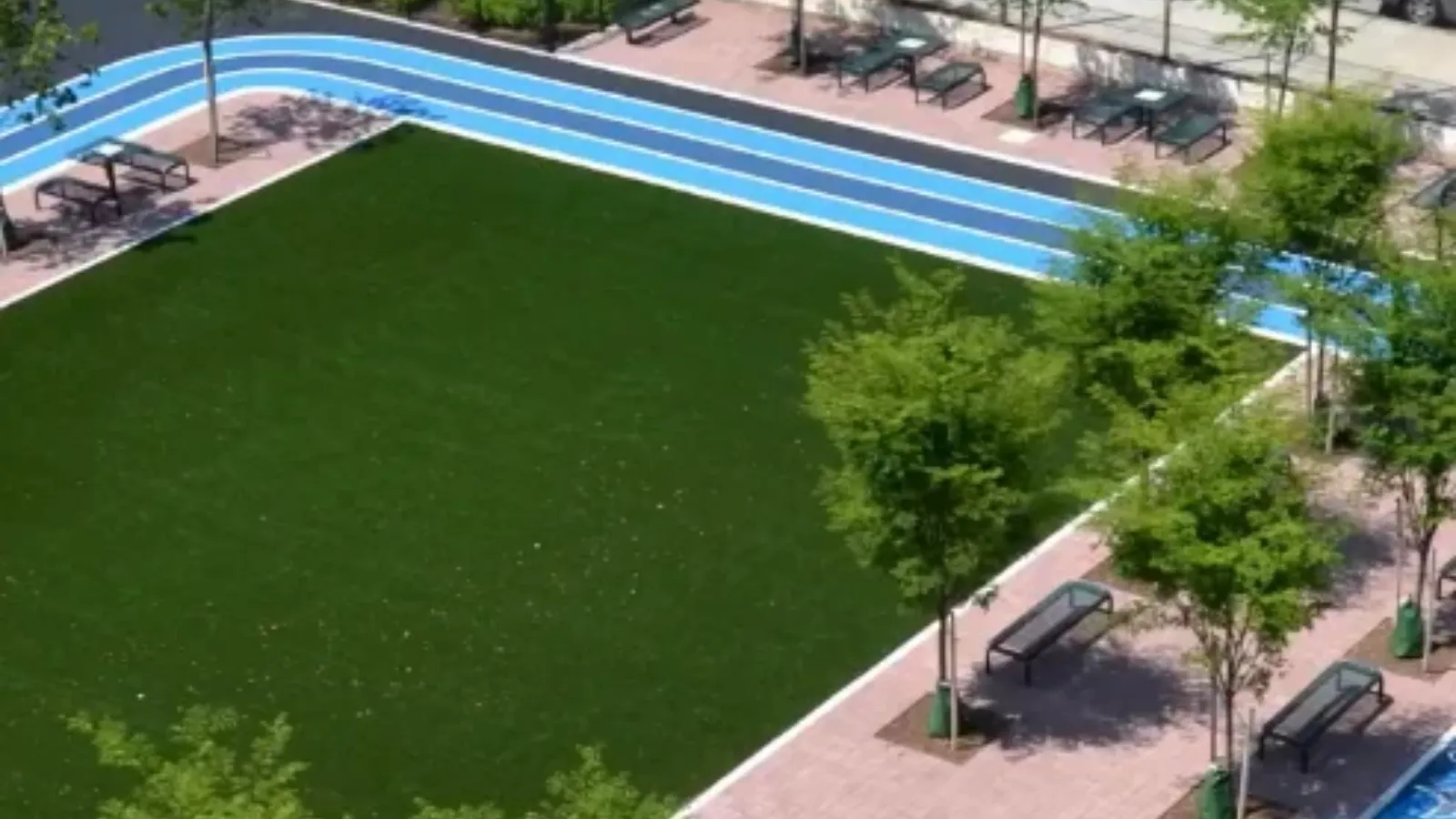
Schools Across America Are Tearing Up Asphalt Playgrounds and Bringing Nature Back
For generations, great swaths of hot asphalt have played host to countless recess games played by schoolchildren across America, all while surrounded by little more than fences, basketball hoops, and the occasional patch of grass. Now, a growing movement is giving those familiar playgrounds a much greener makeover.
Across the country, schools are replacing portions of their paved playgrounds with trees, gardens, shrubbery, natural play areas, and outdoor classrooms. Some of these transformed spaces even welcome neighborhood residents after the final school bell rings.
The trend is gaining momentum, and researchers are beginning to have actionable measurements of its effects. A study released earlier in 2026 found that children at renovated schoolyards in Washington state were more likely to engage in physical activity during recess than those at a comparable school without improvements.
Leading many of these transformations is Trust for Public Land, a national nonprofit that has worked with communities on more than 400 completed or active schoolyard projects across 26 states and Washington, D.C. The organization hopes to make green schoolyards a standard feature of American neighborhoods.
From Asphalt Playgrounds to Places Filled With Nature
Embedded media follows. Please allow a moment for it to load.
View this post on Instagram
The idea behind this playground transformation has been decades in the making. Trust for Public Land began transforming schoolyards in Newark, New Jersey, in 1996, recognizing that existing school grounds could provide valuable outdoor space in neighborhoods where traditional parks were scarce.
Today’s projects have expanded far beyond planting a couple of trees here and there. Students, teachers, and neighbors alike all take part in designing schoolyards that may include gardens, walking paths, shaded gathering areas, and natural play features. Some also incorporate rain gardens and other landscaping designed to absorb stormwater and reduce flooding.
Natural play refers to unstructured, child-led outdoor activity that allows the child to interact with outdoor features such as rocks, plants, sticks, water, and so on, as defined by the Australian Institute of Family Studies.
One recent example opened in September at P.S. 69 in Jackson Heights, Queens. According to Trust for Public Land, the redesigned yard includes nature-based play elements, shaded seating, and improvements to manage rainwater and extreme heat. The school serves more than 800 children in a neighborhood where access to public green space is particularly limited.
The broader opportunity is enormous. Trust for Public Land estimates that 28 million American children live more than a 10-minute walk from a park. Opening renovated schoolyards to the surrounding community after hours could help close that gap without requiring cities to find entirely new parcels of land.
Researchers Are Finding Benefits Beyond the School Day
A study published in March 2026 in the International Journal of Behavioral Nutrition and Physical Activity examined the effects of redesigned schoolyards at two elementary schools in Tacoma, Washington. Researchers evaluated improvements that included trees, natural areas, walking paths, and updated play structures, developed with input from students and community members.
Researchers found that children at the renovated schools were 1.5 times more likely to engage in moderate-to-vigorous physical activity during recess compared with children at a similar school that had not received improvements. The study also recorded a substantial increase in neighborhood use outside school hours, particularly among children.
Researchers also found that grassy areas and creatively designed paved spaces could both encourage active play, suggesting that a successful playground needs a variety of features. However, it is important to remember that although the findings are encouraging, the study examined a small number of schools and cannot establish that every green schoolyard will produce the same results.
Interest in the approach continues to grow. In February 2026, Trust for Public Land joined other organizations in announcing an updated national Green Schoolyards Action Agenda, setting a goal of making nature-rich schoolyards accessible to communities across the country by 2050.
Already, the nonprofit has helped complete or drive progress on over 420 schoolyard projects nationwide. Many of these schoolyards also remain open after school hours. In neighborhoods where public parks are scarce, they provide families with valuable places to walk, play, and spend time outdoors.