Airline Passengers Left to Find Hotel Rooms Late at Night After Sudden Diversion
When it comes to air travel, sometimes the unexpected is the most expected thing a traveler can encounter.
For instance, landing safely after an unexpected flight diversion should bring some relief. However, passengers aboard a Scandinavian Airlines flight from New York to Copenhagen faced another problem after landing in Newark: where they were supposed to spend the night.
With their luggage still aboard the aircraft and replacement flights uncertain, travelers reportedly received instructions to arrange their own accommodations. One passenger said he spent the early morning hours searching for a hotel room while trying to figure out how to get himself and his son home.
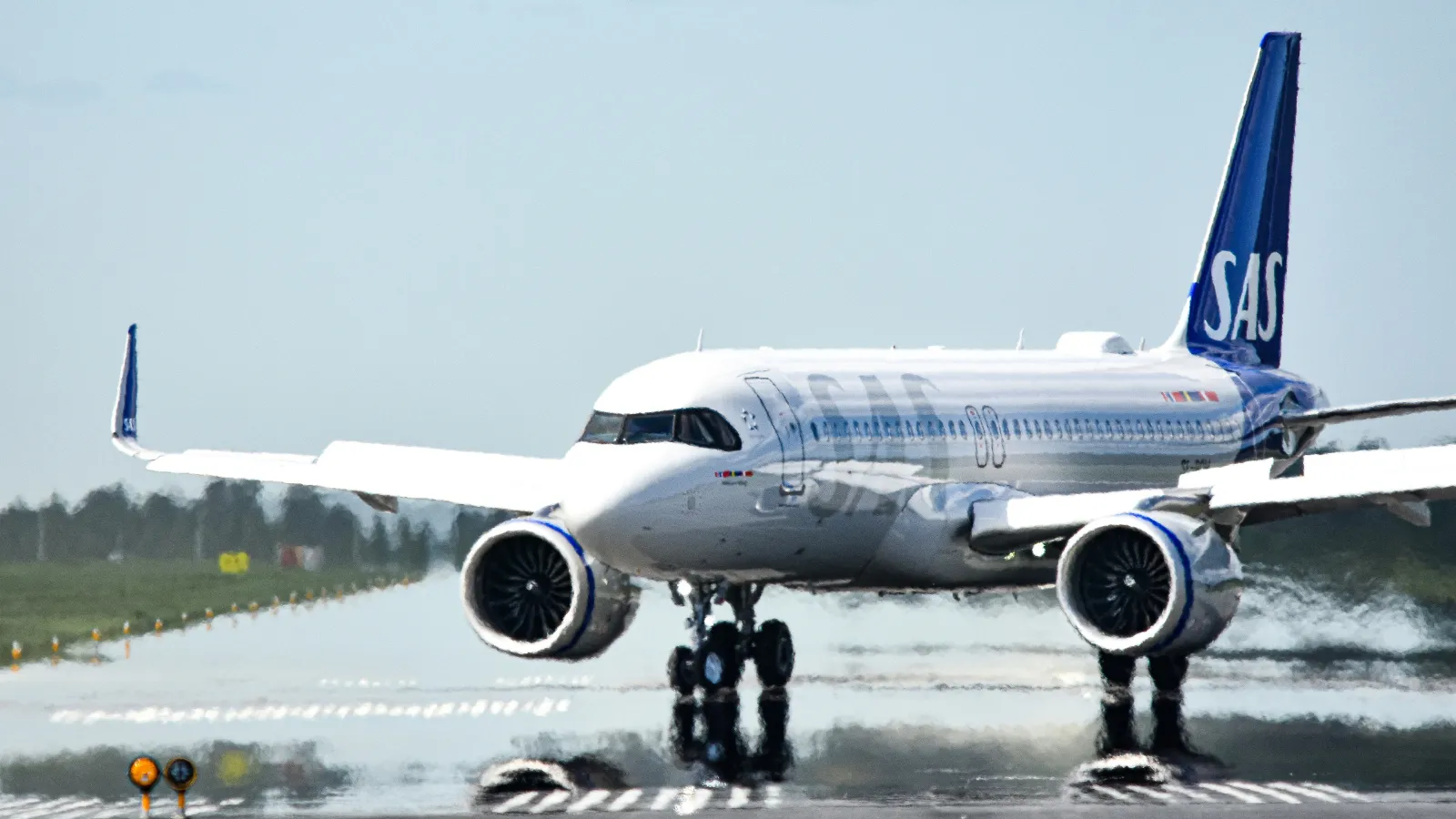
The aerial odyssey began on Friday, Oct. 23, when Scandinavian Airlines (SAS) flight SK916 reversed course over Canada following a suspected technical problem. Instead of continuing across the Atlantic, the Airbus A330-300 returned to the New York area, landing at Newark Liberty International Airport shortly before 11 p.m.
Danish designer Michael Flarup, who was traveling with his son, described the experience in an Oct. 24 post on X. Although he supported the pilots’ decision to turn back, he was far less impressed with how the airline handled the aftermath.
Passengers Left Searching for Hotels After Midnight
Embedded media follows. Please allow a moment for it to load.
About two hours into our flight home from JFK to Copenhagen last night, I noticed something pretty unsettling on the flight map: we were flying in the wrong direction, and our destination had suddenly changed.
At first I thought it was a glitch, but when we asked the cabin crew what was going on, they just told us the captain would make an announcement shortly. Not exactly reassuring.
Eventually we were told the plane had developed a technical issue and the pilots didn’t feel comfortable crossing the Atlantic.
We’d made it all the way up to the waters between Nova Scotia and Newfoundland before turning back towards New York.
Not a particularly fun situation to be in, especially with a kid. I tried to reassure my son that if something was seriously wrong, the pilots probably would have landed at a closer airport rather than flying all the way back to New York.
After a tense 1 hour and 45 minutes in the air, we landed at Newark instead of JFK, with fire trucks and ambulances waiting on the runway.
What followed was a complete mess.
After waiting an hour at baggage claim, we were told they couldn’t get our luggage off the plane. We were given a QR code to report our missing bags, but absurdly, @SAS’ system wouldn’t accept the report because we never arrived at our original destination.
Meanwhile, SAS told us we’d receive new flight details within a couple of hours. Hours passed. Nothing.
Our entire booking had also disappeared from the SAS app.
By now it was well past midnight, with a plane full of passengers suddenly needing somewhere to sleep and no clear plan for getting home.
SAS had emailed everyone instructing us to arrange our own accommodation, offering reimbursement of up to €250 per room.
At that point I just wanted to get my son somewhere he could sleep. I started calling nearby airport hotels and managed to secure one of the last available rooms. A lot of people were still stranded at the airport when we left.
Once we got to the hotel, I called SAS support and managed to secure us seats on a direct flight from Newark to Copenhagen Saturday evening, rather than risk waiting for an automatic rebooking that might send us through multiple airports.
Despite several calls to SAS support throughout the night and this morning, nobody can tell us where our two suitcases are or help us register them as missing.
I completely understand the decision to turn the plane around. Safety comes first. But the handling of hundreds of stranded passengers afterwards really needs to be better. People need clear information and a way to get home, especially in the middle of the night.
So at least we managed to get ourselves a bed for the night and a direct flight home. We’ll deal with the luggage later.
Fingers crossed this next plane can fly over water.
— Michael Flarup (@flarup) October 24, 2026
The diversion itself had occurred near Canada’s Gulf of St. Lawrence. Flarup recalled noticing that the aircraft’s flight map showed an unexpected change in direction before the crew announced a technical concern.
According to Danish broadcaster TV 2, SAS confirmed a possible technical fault and said the aircraft would undergo inspection.
Flarup said SAS initially promised to send passengers their new flight arrangements within a few hours. However, the information didn’t arrive as expected, and his original booking had disappeared from the airline’s app.
Eventually, an email instructed passengers to arrange their own hotel rooms, according to Flarup, with SAS offering reimbursement of up to €250 (approximately $280 USD) per room.
He managed to secure one of the last available rooms at a nearby hotel, but said many other travelers were still at the airport when he left. He did not specify how long it took for him to lock in and head to a hotel room.
The luggage situation offered little reassurance. Flarup reported that passengers waited about an hour at baggage claim before being informed that their suitcases could not be unloaded. A QR code supplied for reporting missing luggage led to another complication: the airline’s system reportedly wouldn’t accept his claim because he hadn’t reached his scheduled destination.
Flarup eventually called SAS customer service and secured seats on a direct flight to Copenhagen the following evening. At the time of his post, however, he still hadn’t recovered his suitcases.
What Passengers Are Entitled to When Flights Go Wrong
Although the trouble began in the United States, passengers aboard SK916 are covered by European Union air passenger protections because the flight was operated by a European airline and scheduled to arrive in Denmark.
The European Commission explains that passengers facing an overnight disruption are generally entitled to hotel accommodations and transportation between the airport and their hotel.
When an airline fails to arrange that assistance, travelers may seek reimbursement for necessary, reasonable expenses. Keeping receipts is essential.
Those rights are separate from additional financial compensation, which depends on factors including the length of the delay and the circumstances responsible for it. A suspected technical fault does not automatically establish whether passengers qualify.
SAS provides an online process for submitting disruption-related expense claims, although the airline has not publicly detailed the exact technical issue that forced SK916 to turn around.
The aircraft involved subsequently returned to service, but the reason for the diversion remains unclear. Flarup’s experience also leaves another question unanswered: whether the airline ultimately located his family’s luggage.
He had no objection to putting safety first. As he wrote in his original post, though, passengers still need clear information and a way to get home, particularly when an unexpected landing leaves them stranded in the middle of the night.