Baby Whales Are Washing Ashore Dead in Argentina, and Scientists Are Investigating a Disturbing Cause
More than 100 baby whales died along Argentina’s Península Valdés in 2012. Researchers say the number of dead southern right whale calves found in the same area this year could be even higher.
The Instituto de Conservación de Ballenas reported the unusually high number of deaths in September. Researchers are checking the coastline to make sure they don’t count the same whale twice, and they’ll compare the final number with how many calves were born this season.
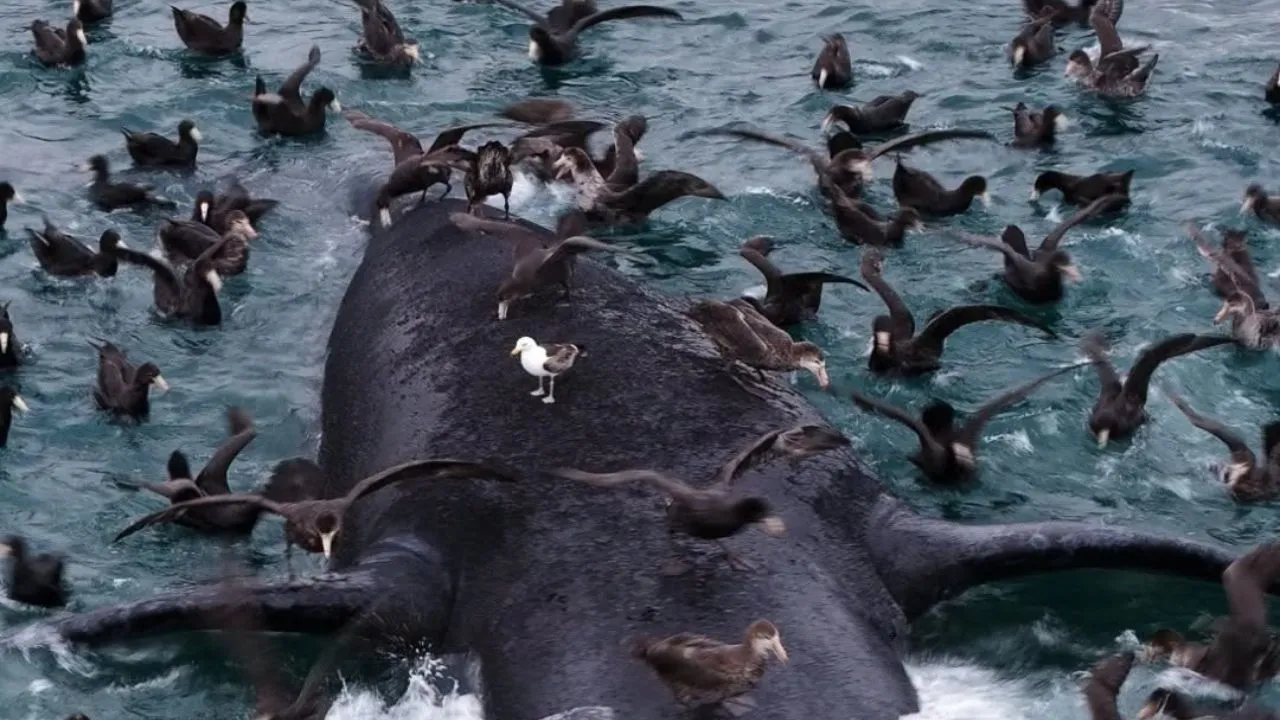
In an October 14 update, Chubut’s environmental agency reported finding bacteria associated with septicemia in some of the dead calves. Researchers are also looking at whether wounds left by kelp gull attacks could have allowed bacteria to enter their bodies.
The whale conservation institute shared another update on October 16, this time about dead adult whales. Early examinations hadn’t found signs that those whales were suffering from the same bacterial condition detected in the calves.
Researchers Are Examining the Dead Whales for Clues
Embedded media follows. Please allow a moment for it to load.
Marcela Uhart, a veterinarian with the University of California, Davis, is leading the investigation. She told the Associated Press that her team has been searching for dead whales using boats, planes and drones, along with people walking the beaches.
Santiago Fernández, Matías Di Martino and Marcos Ricciardi are among the researchers responding to the stranded whales. They’re working with local park rangers and wildlife officials to examine the animals and collect samples before the carcasses become too decomposed for testing.
At the veterinary school at Argentina’s National University of the Center of Buenos Aires Province, Silvia Estein’s laboratory is testing samples for bacteria. According to UC Davis, another researcher, Juan Manuel Herrera, is preparing tissue slides for a pathologist to examine.
One bacterium found in some of the calves is called Erysipelothrix rhusiopathiae. Uhart told Madryn Ahora that just finding bacteria in a dead whale doesn’t necessarily mean it caused the animal’s death.
Seagulls Have Been Attacking the Whales for Decades
Researchers have been photographing southern right whales from the air since the 1970s, allowing them to track injuries left by kelp gulls. For one study, they examined photographs of 2,680 living whales taken between 1974 and 2011.
A 2015 study found that about 2% of living mother-calf pairs had wounds from gull attacks in the 1970s, compared with 99% in the 2000s. The photographs also showed that calves were getting more injuries than their mothers. By the 2000s, calves had an average of about nine wounds from gull attacks, while adult females typically had fewer.
A separate study published in 2016 examined wounds on two calves during the 2013 season, one living and one dead. Researchers led by Carla Fiorito found the same bacterium now under investigation, although the study didn’t establish whether the infection caused the dead calf’s death.
Scientists Are Also Looking Into Dead Adult Whales
The whale conservation institute reported on October 16 that adult whales were also being found dead around Península Valdés. Officials are examining whether harmful algal blooms, commonly called red tides, could explain those deaths.
Between September 24 and October 11, 2022, 30 southern right whales died in Golfo Nuevo. An investigation by Argentine government researchers found toxins associated with a harmful algal bloom in samples taken from some of the dead whales. A study published in 2026 found toxins from the bloom in samples collected from living whales, along with mussels and fish.
Chubut’s provincial government is also arranging tests on water and shellfish from Golfo Nuevo and Golfo San José as part of this year’s investigation. The cause of the recent adult deaths hasn’t been established yet.