Homeowners Could Pay $6,360 More in Property Taxes Just by Living in a Different State
Property taxes can take thousands of dollars out of a homeowner’s budget every year, and new comparisons show just how dramatically those costs can change depending on where someone lives.
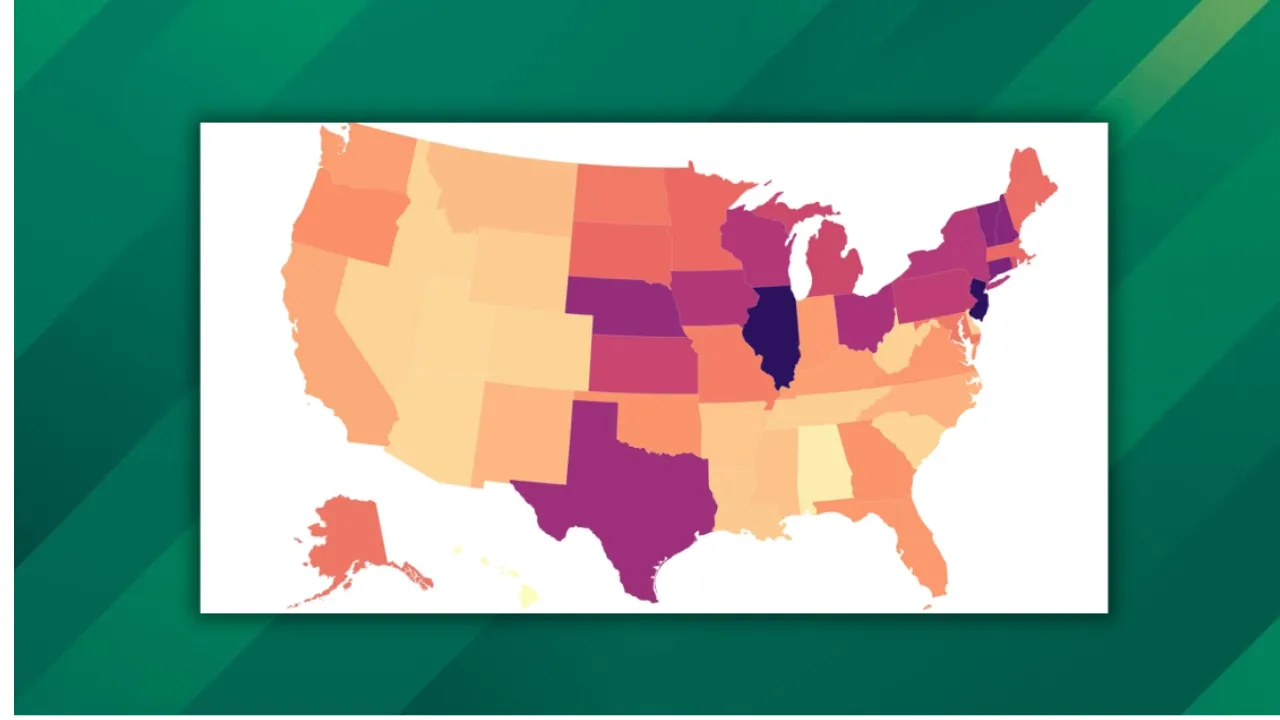
A Tax Foundation report reveals that effective residential property tax rates range from just 0.29% in Hawaii to 1.88% in New Jersey and Illinois, creating substantial differences in annual expenses.
For perspective, applying those rates to a hypothetical $400,000 home produces annual taxes of $1,160 at the lowest rate and $7,520 at the highest. That’s a hypothetical difference of $6,360 annually for homes of equal value, although actual property tax bills vary based on local assessments, exemptions, and other factors.
The findings, based on 2024 U.S. Census Bureau data, highlight an important financial consideration for current homeowners and prospective buyers: a property’s purchase price is only part of its long-term cost.
Where Homeowners Pay More
New Jersey and Illinois share the country’s highest effective residential property tax rate at 1.88%, followed by Connecticut at 1.54%, Vermont at 1.51%, and New Hampshire at 1.50%.
Texas also ranks among the more expensive states for property taxes, with an effective rate of 1.40%. Although the state does not impose a personal income tax, homeowners still face substantial local property tax obligations.
At the other end of the rankings, five states have effective rates below 0.50%:
- Hawaii: 0.29%
- Alabama: 0.37%
- Arizona: 0.48%
- Utah: 0.48%
- South Carolina: 0.49%
Four of these five states recorded lower effective rates than in 2023, while Alabama’s rate remained unchanged.
However, living in a state with a lower rate does not automatically guarantee a smaller bill.
Thousands in Property Tax Difference
The Tax Foundation’s county-level figures reveal even sharper differences in actual payments.
In Virginia, homeowners in Buchanan County face a median annual property tax bill of approximately $404. Meanwhile, the median bill in Falls Church City, part of the Washington metropolitan area, exceeds $10,000.
That means the typical annual payment differs by more than $9,596 between the two Virginia jurisdictions.
Hawaii provides another example. Although the state has the nation’s lowest effective rate, Honolulu County’s median annual property tax bill reaches $2,553, reflecting the financial impact of higher property values.
The report identifies multiple counties in New York and New Jersey where median annual property tax payments exceed $10,000, demonstrating how location and housing prices can combine to produce considerably larger bills.
Why Bills Keep Growing
Property taxes support local services, including public schools, roads, police departments, and fire protection. Rates and assessments depend on decisions made by local governments and other taxing districts.
Rising property values can also increase a homeowner’s tax burden, although higher assessments do not automatically require governments to collect proportionally more revenue.
The Tax Foundation explains that jurisdictions can adjust tax rates to account for changes in property values, while exemptions and assessment rules can further affect individual bills.
For homeowners comparing properties, the practical difference can be significant. Reviewing the actual tax history, assessed value, available exemptions, and local tax rules offers a more accurate picture of future expenses than relying on statewide averages alone.
The Tax Foundation’s interactive county and state data allows homeowners to compare effective rates and median payments across the country using the latest figures included in its 2026 report.