World’s Driest Nonpolar Desert is in Bloom Right Now
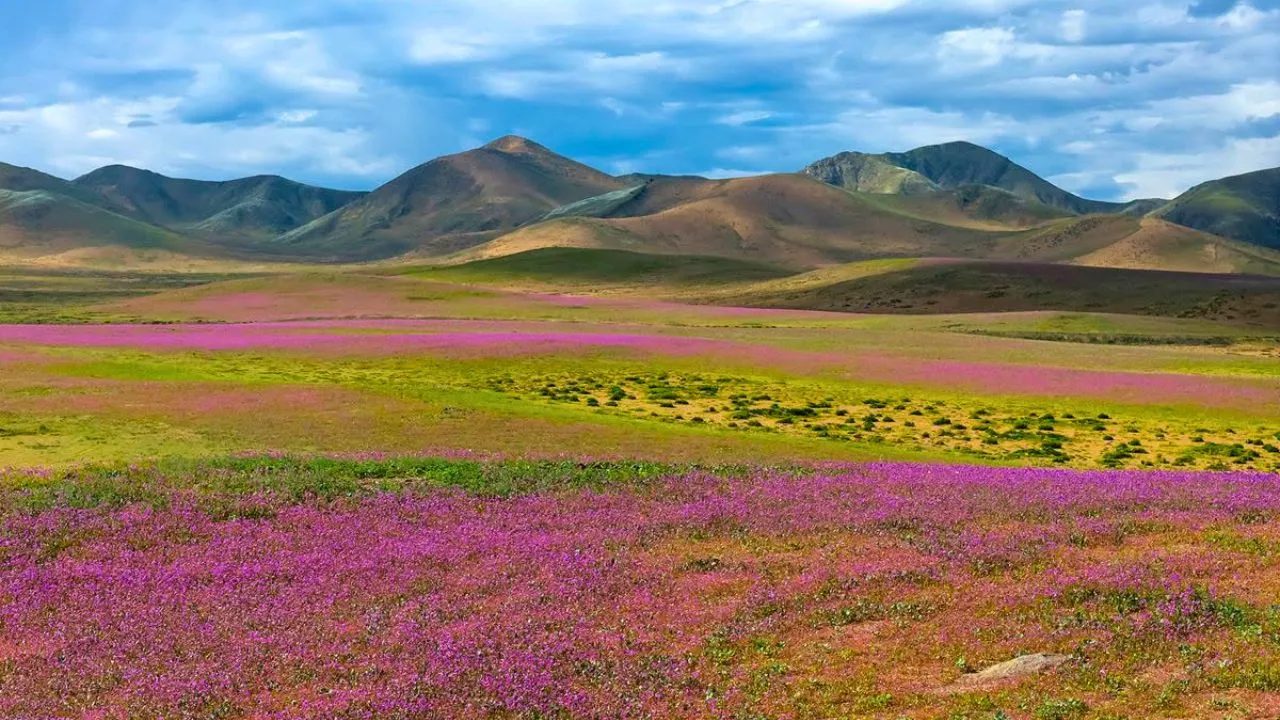
The Atacama Desert in Chile is known for being one of the driest places on Earth, but parts of it are covered in wildflowers right now. You can see beautiful purple and white flowers stretch across the ground, with red and yellow blooms popping up in other areas.
The flowers started appearing in August after Chile had an unusually rainy winter. Chile’s tourism service said larger fields were visible by early September, and the biggest display was expected around the middle of October.
The phenomenon is called Desierto Florido, or “flowering desert,” and it doesn’t happen every year, but when it does, over 200 native plant species can appear when the conditions are right.
This year’s display could be the largest since 1997. Some flowers are expected to last into November, so the desert may not be done blooming yet if you still want to plan a last-minute trip.
Some Parts of the Desert Got More Than Seven Inches of Rain
Embedded media follows. Please allow a moment for it to load.
Biologist César Pizarro told the Associated Press that some locations received between 160 and 190 millimeters of rain. That’s roughly six to seven and a half inches in an area where plants can spend years underground waiting for water.
Much of the plant life in the desert survives dry periods as seeds, bulbs and tubers beneath the ground. Pizarro said some hills and mountain ranges hadn’t had flowers or greenery for 30 or 40 years.
Now there are purple rock purslane, white suspiros and orange terciopelos growing alongside red and yellow añañucas. Officials estimated that the rainy conditions could activate dormant plant material across roughly 6,821 square miles of the Atacama Region.
Tourists Are Traveling Hundreds of Miles to See the Flowers
One couple traveled nearly 620 miles from Santa Cruz, Chile, to see the flowers. Chef Franco Moya told the AP that he and his girlfriend visited several parts of the desert while celebrating his birthday.
Visitors are coming from other countries, too. Felix Banda, who was born in Chile but grew up in Australia, said he’d expected to see some greenery after hearing about the rain, but the flowers surprised him.
In an October 16 update, Chile’s tourism service reported hotel occupancy around Copiapó at 74.3%, compared with a national average of 52.2%. The agency said the flowering desert has brought considerable interest to the region this season.
Where Visitors Can See the Blooming Desert
Chile established Desierto Florido National Park in 2023, about 19 miles south of Copiapó. The country’s official tourism website also recommends Llanos de Challe National Park and areas around Totoral for seeing this year’s flowers.
There are rules about getting close to them, though. Chile’s National Forest Corporation asks visitors to stay on designated roads and walking paths, avoid stepping on the plants and leave flowers, seeds and bulbs where they are.