Neighbor Cuts Back Homeowner’s Maple Trees But The Property Line Could Make All The Difference
An Illinois homeowner says their neighbor took tree trimming into their own hands, leaving several maple trees looking considerably worse for wear.
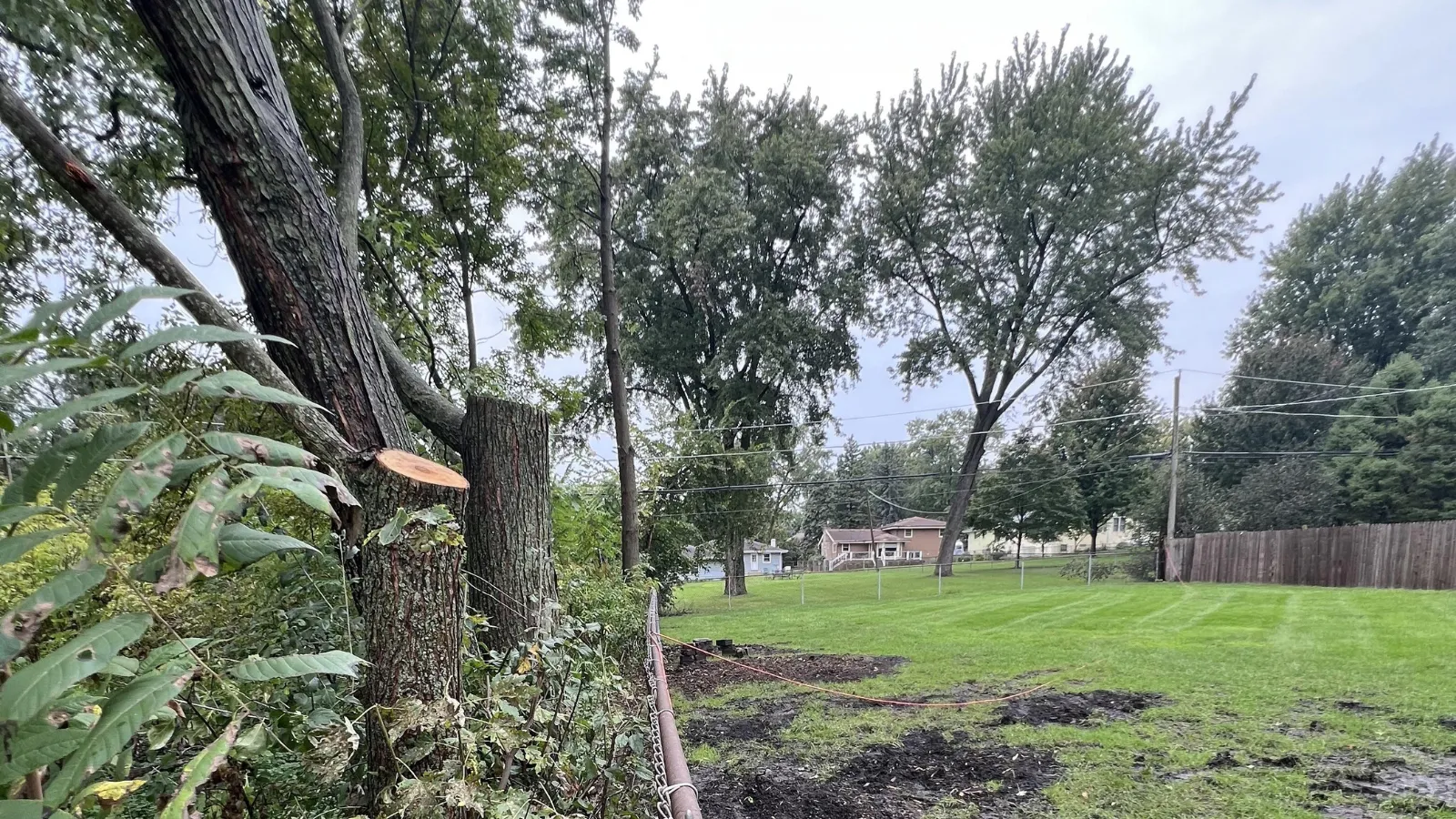
“Our property line is to the left,” shared the homeowner in an Oct. 1 Reddit post. The homeowner, going by the username u/bipolarearthovershot, shared a photo of the cut trees. “This was way more than a trimming and we did not agree to this.”
The photo quickly prompted a valuable question: where, exactly, is the property line?
Redditors noted the fence visible in the photo. One user asked for further clarification, writing, “Your description of where the property line runs is not clear. Is the fence yours? Did they trespass on your property to make the cuts?”
“I believe the fence divides our properties,” the homeowner replied. However, u/ countered, “What you ‘believe’ means nothing. Fences aren’t always right on property lines.”
Other commenters noted that fences aren’t necessarily built directly on property lines, and a particular piece of legal documentation would help immensely.
Illinois Allows Some Trimming Across Property Lines
Neighbor hacked up our maples
by
u/bipolarearthovershot in
treelaw
Illinois generally allows homeowners to trim branches from a neighbor’s tree that extend onto their property.
That doesn’t necessarily give them permission to cut into the tree on the neighbor’s side of the boundary or damage its health. There are limits. Illinois Legal Aid Online explains that ownership depends on where the tree’s trunk emerges from the ground. If a trunk crosses the property line, the tree is jointly owned, and one neighbor cannot simply remove it without the other’s permission.
A University of Illinois Extension forestry specialist has also cautioned that although a homeowner can trim branches extending into their yard, those cuts should not adversely affect the tree’s health, vigor, or longevity.
Excessive Cutting Can Carry Consequences
Illinois also has a Wrongful Tree Cutting Act. This piece of legislation provides that someone who intentionally cuts a tree they did not have the legal right to cut can be required to pay the owner three times its stumpage value.
Determining how badly the maples were damaged would require more than a photograph. The University of Illinois Extension recommends having a certified arborist assess damaged trees to determine whether they can be saved and what corrective pruning may be necessary.
And when property-line questions arise, getting a survey is another essential step.
“Survey, police report, arborist and a lawyer,” recommended Reddit user u/
What Comes Next
On Oct. 4, the homeowner declared, “lawyer incoming. Trees are on our property.” But when another Redditor asked whether a survey had actually been conducted to formally confirm the boundary, no answer followed. The homeowner has not shared any further developments anywhere in the thread.
That question remains awash in mystery when the answer could become one of the most vital details in deciding the entire dispute. If the maples stand on the homeowner’s property, the next issue is whether the neighbor simply trimmed overhanging branches or went further than Illinois law allows. If the trunks straddle the boundary, ownership becomes more complicated.
Then there’s the damage itself. An arborist could determine whether the trees are likely to recover or whether the cutting has caused lasting harm. That assessment may further escalate this from an unpleasant neighbor dispute to an outright compensation claim.
However, even a legal victory wouldn’t necessarily undo what happened to the maples. According to Colorado State University Extension, trees take decades to reach maturity, bringing beauty and value to a property along the way. Mature trees are also less tolerant of improper pruning, and so the consequences can extend well beyond their appearance.
No legal action can restore years of growth with a swipe of the pen. For a homeowner who says their neighbor already dislikes their garden, the cuts may be a lasting reminder of a relationship that has reached new levels of tension.
Whether the next step is corrective pruning, an agreement between neighbors, or a courtroom fight remains to be seen. For now, the trees are still standing, the property line is still unconfirmed publicly, and the homeowner’s last word suggests they aren’t prepared to let the matter end there.