Two Heads, One Tiny Shell: Rare Baby Turtle Discovered on Cape Cod
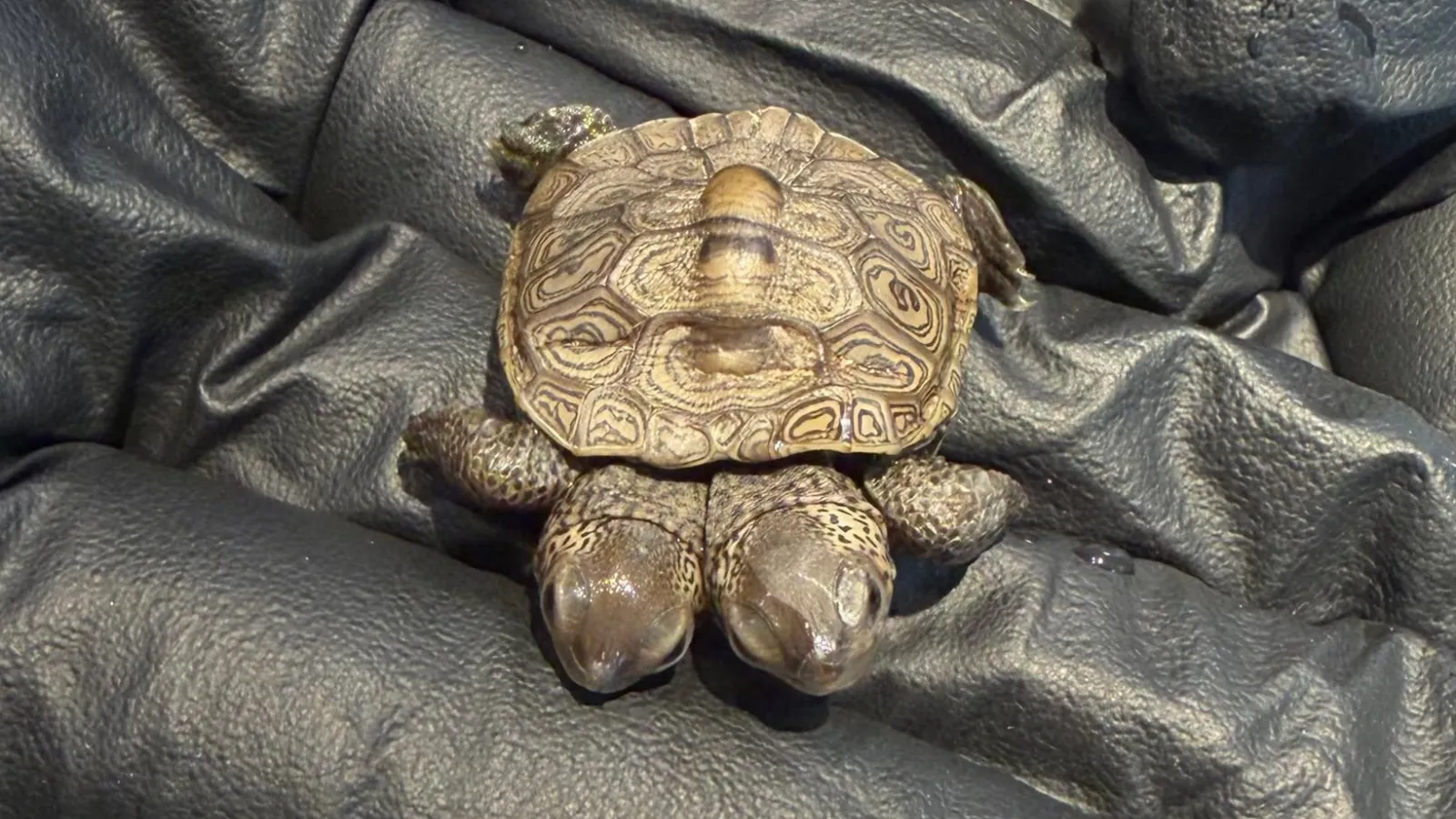
People have been seeing double thanks to one tiny turtle discovered around Cape Cod, all thanks to its extraordinarily rare, two-for-one feature: two heads sharing one shell.
The diamondback terrapin hatchling, weighing just 5.2 grams, arrived at the Cape Wildlife Center in Barnstable, Massachusetts, on Sept. 17. It had hatched at a protected nesting site in Wellfleet before being brought to the wildlife hospital by Mass Audubon’s Wellfleet Bay Wildlife Sanctuary.
The center shared photographs of the unusual arrival in a Facebook announcement. The center identified the hatchling as having a rare developmental condition known as bicephaly.
Although the discovery is unusual, the veterinary team is treading somewhat familiar ground. Zak Mertz, CEO of New England Wildlife Centers, confirmed in a direct interview with Popular Science that this is actually the third pair of two-headed terrapins the organization has encountered in six years.
Both Heads Are Alert And Showing Interest In Food
Embedded media follows. Please allow a moment for it to load.
Veterinarians are closely monitoring the turtle’s key biological functions, including appetite, growth, and behavior to better understand how its two heads function together.
Mertz told Popular Science that both heads have been alert, responsive, and showing interest in food. Staff members are watching to make sure each head remains active and attempts to eat.
The team suspects this hatchling may have more shared anatomy than the two-headed terrapins previously treated at the center. However, advanced imaging has not yet been performed, so the exact arrangement of its internal organs remains unknown.
A Rare Discovery For An Already Dwindled Species
Bicephaly is believed to occur when an embryo begins dividing but fails to separate completely, somewhat like conjoined twins. Mertz explained that the resulting anatomy can vary considerably from one animal to another.
One of the center’s previous cases involved another diamondback terrapin discovered in Barnstable in 2021. That hatchling had two heads and six legs, with each head controlling three legs during swimming.
The latest arrival is also significant because diamondback terrapins are classified as threatened under the Massachusetts Endangered Species Act. According to the state’s Division of Fisheries and Wildlife, they are Massachusetts’ only turtles found predominantly in salt marshes and estuaries.
The species faces numerous threats: the loss of suitable nesting habitat, coastal development, rising sea levels, and fatal car strikes. Its remaining Massachusetts populations are largely concentrated around Cape Cod and several other coastal areas.
Regarding the two-headed newcomer, veterinarians are waiting for it to grow before conducting advanced imaging that will reveal more about its internal anatomy. They have not yet determined its sex or whether it could eventually be released into the wild.
The team will continue monitoring both heads and their shared body’s development before making those decisions.