3 Hikers Asked AI for Tips on Climbing Mount Shasta. They All Were Rescued by Humans.
Three novice hikers headed up California’s Mount Shasta expecting an eight-hour ascent. Sixteen hours after leaving camp, they finally reached the summit.
That was at 7 p.m., seven hours beyond the recommended turnaround time. The three men from Roseville still had to get back down the mountain, and darkness had already arrived.
An hour into the descent, they called the Siskiyou County Sheriff’s Office for directions. They eventually wandered off the Clear Creek Route and into Mud Creek Canyon, where one member of the group fell and injured his knee.
The hikers spent the night stranded in the steep drainage before U.S. Forest Service climbing rangers reached them the next morning, provided medical aid, and helped get everyone back to the trailhead.
Then rescuers learned how the trip had been planned.
The hikers told a sheriff’s deputy they had relied heavily on Google’s Gemini artificial intelligence assistant for information about the route and what they should pack. The Siskiyou County Sheriff’s Office called that a “critical misstep,” saying the group had been advised by Gemini to carry far less food and water than they ultimately needed.
The Long Way
Embedded media follows; please allow a moment to load.
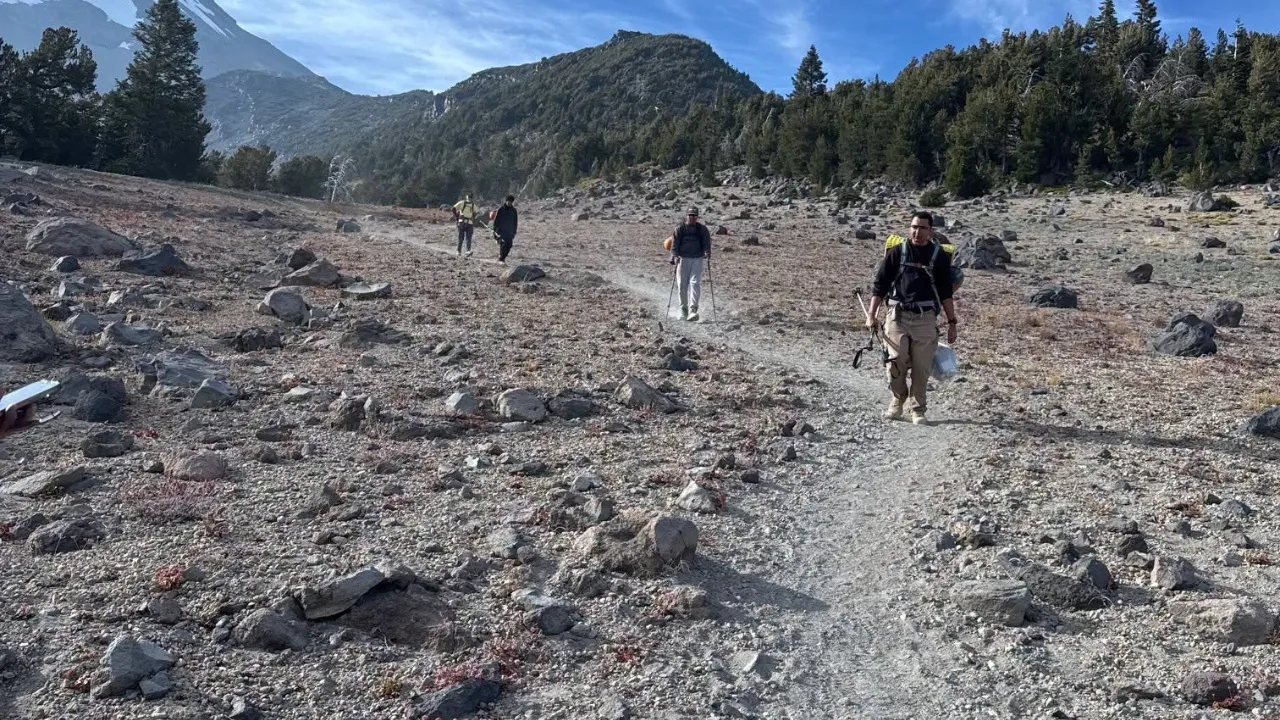
The three hikers established camp at roughly 8,400 feet on Saturday, Aug. 29, according to the sheriff’s office. At 3 a.m. Sunday, they left with daypacks and headed for Mount Shasta’s summit.
The department recommends turning around if a climber has not reached the summit by noon, allowing enough daylight for the descent.
The group kept climbing.
They reached the top at about 7 p.m. and started down in darkness. Roughly an hour later, they contacted sheriff’s dispatch for help finding their way.
They eventually left the Clear Creek Route and entered Mud Creek Canyon. One of the hikers fell and injured his knee later that night, and the group was forced to bivouac in the drainage until help arrived Monday morning.
U.S. Forest Service climbing rangers reached the group first and provided medical aid. Siskiyou County Search and Rescue volunteers were also deployed, and the hikers and rescue personnel eventually returned to the trailhead without further incident.
Easy Is Relative
Clear Creek is considered Mount Shasta’s easiest nontechnical summit route, but that description comes with an important qualifier.
The Mount Shasta Avalanche Center warns climbers not to mistake the route’s relative simplicity for a casual hike. It specifically notes that Clear Creek has generated numerous rescues and becomes substantially more dangerous when people get off route.
Its route guidance describes a familiar failure point: climbers descending toward the springs can miss their route and enter Mud Creek Canyon, the same drainage where the three Roseville hikers became stranded.
Current climbing guidance also recommends setting a noon or 1 p.m. turnaround time and sticking to it. Clear Creek may lack the technical difficulty of some Mount Shasta routes, but the climb is long, much of it is exposed, and careful routefinding remains necessary.
The AI Part
The sheriff’s account does not establish that Gemini alone caused the rescue.
The hikers made decisions of their own, including continuing toward the summit well beyond the recommended turnaround time. Their descent then placed them off route in darkness before the knee injury made an already difficult situation worse.
What the department attributes directly to Gemini is the planning advice the hikers described afterward.
The men told a deputy they had depended heavily on the AI assistant for both route information and packing recommendations. The sheriff’s office said Gemini advised them to bring substantially less food and water than the group needed once their expected eight-hour climb became an overnight emergency.
That distinction matters because the sheriff’s account is based on what the rescued hikers reported about their interaction with Gemini. It does not include the original prompts and responses, so the precise advice the chatbot generated cannot be independently reconstructed from the department’s post.
One More Backup
The rescue prompted a broader warning from the sheriff’s office that does not stop with artificial intelligence.
Climbers should regularly verify that they remain on the correct route and should not depend on a cellphone or GPS device as their only way to navigate, the department said.
The Mount Shasta Avalanche Center makes much the same point in its Clear Creek guidance: stay aware of the route during the descent, know when to turn around, and do not let exhaustion or the desire to reach the summit override careful navigation.
The sheriff’s office recommends contacting the U.S. Forest Service’s Mount Shasta Ranger Station before a climb for current information.
Its advice on AI was considerably shorter: “never rely solely on AI for your trip planning.”