
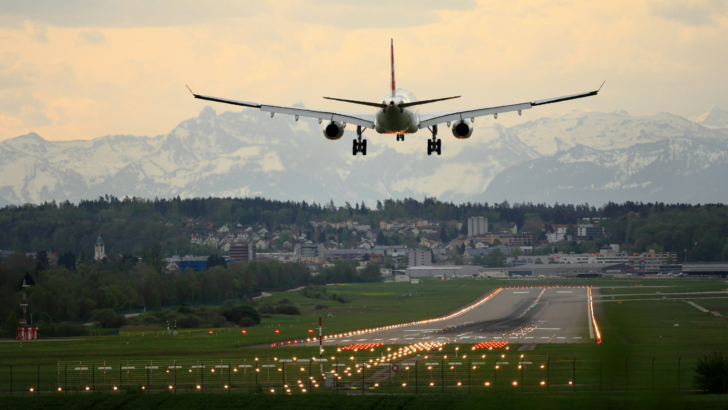
A sky free of clouds sounds like the setup for a flawless flight free of delays or complications. There is another condition, however, that can significantly impact a travel schedule without a single storm cloud floating by. When temperatures climb high enough, heat itself can make it harder for an airplane to get off the ground.
The problem comes down to air density. Hot air is thinner than cooler air, which affects how much lift an aircraft’s wings can generate during takeoff.
The Federal Aviation Administration (FAA) further explains that extreme heat can reduce lift. How much heat a plane can safely handle during takeoff depends on factors including the aircraft model, its weight, airport of the elevation itself, and even runway length. There is no single temperature at which the FAA stops all flights.
This means the effects become more noticeable at airports that are already high above sea level or have shorter runways. In an Aug. 31 report, Travel + Leisure highlighted Las Vegas and Denver as examples where heat and elevation can combine to make takeoffs doubly difficult.
The Physics Of Flight
Embedded media follows. Please allow a moment for it to load.
An airplane needs air moving over its wings to create lift. When that air becomes less dense, as a trade-off, the aircraft generally needs more speed—and therefore more runway—to generate the lift it needs to take off.
Higher elevations compound the problem because the air is already less dense there. Specifically, the FAA says the combination of high temperatures and high elevation can increase the runway distance needed for takeoff while reducing an aircraft’s climb rate.
When conditions become too restrictive, airlines have several options before canceling a flight. Anna Brown, a travel expert at Going, told Travel + Leisure that airlines can reduce weight by carrying less fuel or cargo, use a fuel stop, remove passengers, or wait for temperatures to fall.
That happened in Las Vegas in July. FOX5 Las Vegas reported that American Airlines asked passengers to voluntarily leave a flight after temperatures reached about 114 degrees because the aircraft needed to reduce its weight for takeoff.
According to Brown, pilots have dubbed the frustrating combination of high temperatures and elevation “hot and high.”
Some Airports Face More Risk, and Timing Can Help
Hot desert airports such as Phoenix and Las Vegas are particularly susceptible during periods of extreme heat. Likewise, higher-elevation airports such as Denver can face similar problems even at lower temperatures because elevation and heat both reduce air density.
Then there’s the runway length factor. The Associated Press reported in August that airports with shorter runways, including New York’s LaGuardia and Washington’s Reagan National, can have less room to accommodate the longer takeoff distances extreme heat may require.
For travelers, one workaround is to fly earlier in the day. Brown told Travel + Leisure that morning temperatures are usually lower, which in turn reduces the chance that a flight will run into heat-related weight restrictions.