This Ohio Home Lets You Live Like a Hobbit, With Some Surprising Pros and Cons
In a hole in the ground, there once lived… some adventurous humans.
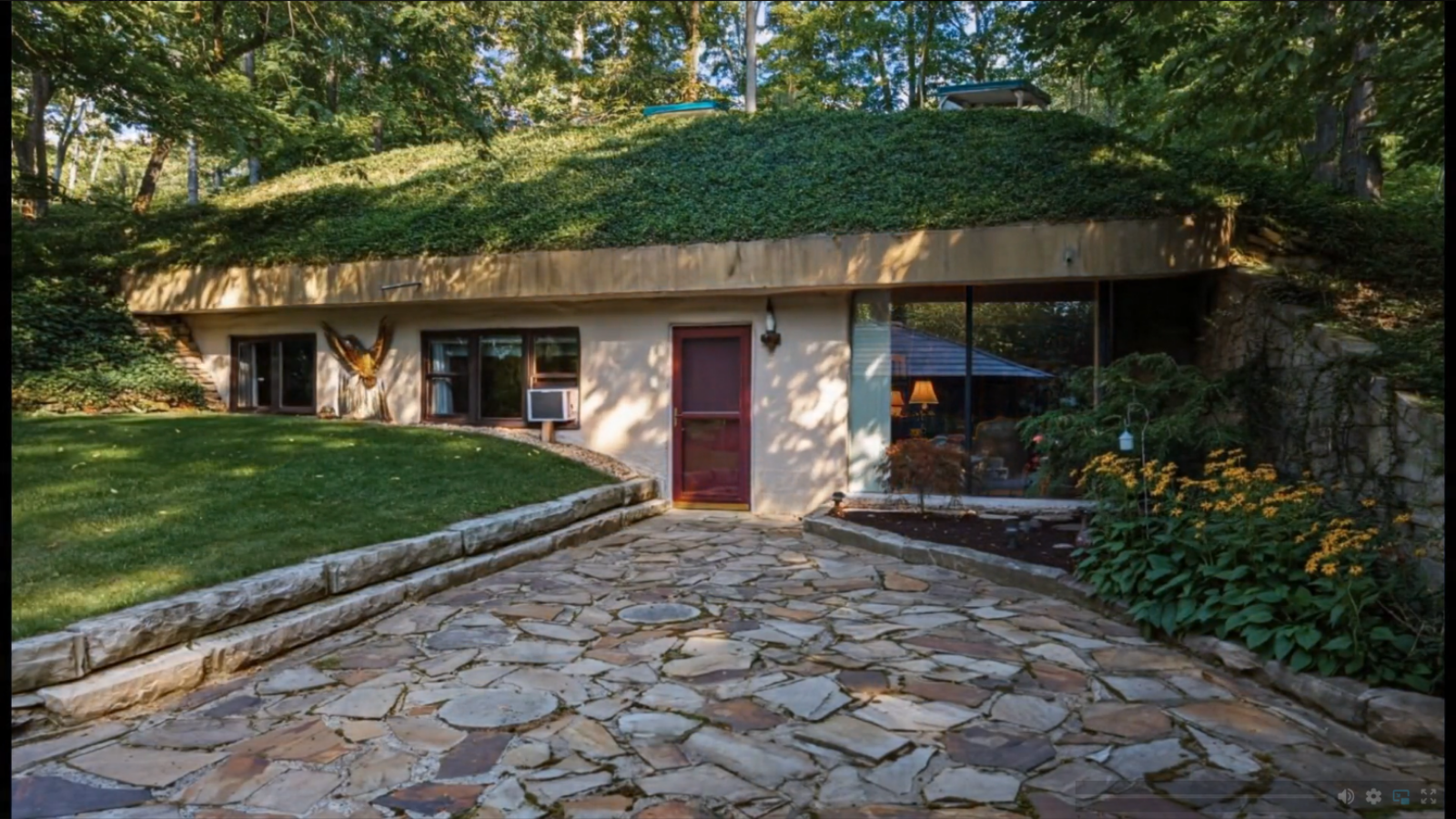
Although this Ohio home is as unique as they come, it would actually be very difficult to spot while just passing by. That’s because about 90% of the house is actually underground, tucked into a hillside beneath dirt, ivy, and grass, listing agent Laurie Brill told Realtor.com.
The earth-sheltered home in Huron is listed for $850,000. Built in 1977, it boasts three bedrooms, two bathrooms, and 2,100 square feet of living space, all sitting on nearly eight wooded acres along the Huron River. If that wasn’t scenic enough, Realtor.com lists 250 feet of waterfront as another of the property’s features.
The owners had originally planned to build a conventional house—with walls above the ground, shingled roofs, the works. Brill told Realtor.com that after walking the property, the owner wondered if the house could instead be built beneath an existing ridge and found a contractor who could make it happen.
The result looks a little like something out of J. R. R. Tolkien’s Middle-earth, but there are practical reasons people would want to build homes this way. Living against the earth can impact everything from indoor temperatures to exterior maintenance—though putting most of a house below ground also comes with its own logistical considerations.
Inside, It Feels Much More Like a House Than a Burrow
Embedded media follows. Please allow a moment for it to load.
Despite the unusual exterior, Brill said the inside feels like a fairly typical ranch home: windows along two sides and skylights throughout the house bring natural light into the living room, dining area, kitchen, and most other rooms, according to Realtor.com.
There is one notable exception: the third bedroom has no windows or natural light. Otherwise, Brill said the house’s interior looks and functions very similarly to houses that stand out in the open, atop blades of grass rather than beneath them.
The property itself stretches well beyond the underground house. Its 7.93 acres also feature a gazebo, workshop, pole shed and separate log cabin, while the Huron River offers access toward Lake Erie, according to the listing.
Then there is that roof. Because it is covered in dirt and vegetation rather than conventional shingles, Brill said the owners mow the ivy and myrtle growing above the house—one decidedly unusual entry on the maintenance checklist.
Living Underground Comes With Some Benefits and Tradeoffs
One potential advantage comes from the very earth itself. The U.S. Department of Energy notes that shallow ground temperatures stay far more stable than the air above them, remaining relatively cooler during hot weather and warmer during cold weather. That can ultimately help reduce the extreme temperature swings more conventional homes experience when out in the open.
The owners also get to avoid swapping out or updating several familiar exterior features. “There’s no roof. There’s no gutters. There’s no siding,” Brill told Realtor.com. “There are no downspouts, so [the sellers] have never had to replace any of those items.”
On the other hand, being surrounded by earth makes moisture control particularly important. The Department of Energy’s Building Science Education program stresses waterproofing below-grade walls and using drainage systems to keep water from building up against concrete foundations.
Being unusual can create another challenge when it is time to sell. “Trying to price it was really difficult,” shared Brill. “There are other earth-sheltered homes across the country, but I’ve never seen one here in northern Ohio. There are not comps for this.”
For the right buyer, though, that may be exactly the appeal: this is one house where disappearing into the landscape is a rare gift to be enjoyed quite literally immersed in nature.