
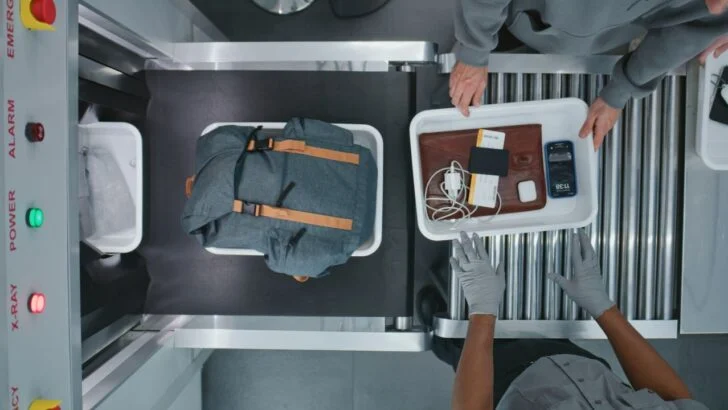
Airport security procedures can differ from airport to airport. At one checkpoint, you may need to remove a laptop from a carry-on bag, while at another, you can leave it packed. Part of that comes down to technology that provides a clearer image of a bag’s interior, but with an important trade-off.
On July 13, the Transportation Security Administration (TSA) announced that both security lanes at Juneau International Airport in Alaska are now equipped with computed tomography, or CT, scanners. The Juneau Independent writes that the airport installed the two machines in April, and they are now part of regular passenger screening.
CT scanners are actually not new to airport security. American Airlines reports that TSA began testing CT technology for carry-on screening at Phoenix Sky Harbor International Airport in 2017. Since then, TSA has expanded the technology to airports nationwide.
Juneau’s upgrade is an important reminder to check what your airport of choice offers and the requirements of each security station. The technology lets passengers leave laptops, electronics, and permitted travel-size liquids in their bags, but it has one physical limitation: some larger carry-ons may not fit through the scanners.
Why Airport Security Instructions Can Differ

Image Credit: Josh Sorenson on Unsplash
CT scanners create three-dimensional images of a carry-on bag’s contents. TSA says officers can rotate those images on a screen, allowing them to examine bags from different angles without requiring travelers to remove laptops, electronics, and permitted travel-size liquids first.
TSA spokesperson Eric Guthier told the Juneau Independent that the scanners take numerous images that officers can rotate. This lets officers look around or underneath objects that might have required a physical bag check with older equipment.
Juneau’s checkpoint also received new bins designed to hold more of a traveler’s belongings together during screening, according to the Juneau Independent. The scanners do not change what liquids travelers can bring through security; TSA’s liquids rule still limits most carry-on liquids, aerosols, gels, creams, and pastes to containers holding 3.4 ounces or less, packed inside one quart-sized bag.
The technology also does not necessarily mean every security line will move faster. Juneau Transportation Security Officer Amanda O’Dell told the Juneau Independent that the detailed three-dimensional images can take officers longer to review, although she noted that passengers have appreciated being able to leave more belongings inside their bags.
Easier Screening, Smaller Entry Tunnel Size
There is one tradeoff for travelers carrying larger luggage. TSA says CT scanners have slightly smaller entry tunnels than some older screening equipment, meaning some larger carry-on bags will not fit through the machines.
TSA recommends that travelers check large carry-on items with their airline if the bags cannot fit through the scanner. At Juneau International Airport, both passenger screening lanes now use the CT technology, so travelers with especially large carry-ons should keep the smaller opening in mind.
Juneau is only one part of a much wider rollout. As of July, TSA had installed more than 1,150 CT scanners at nearly 300 airports nationwide, according to the Juneau Independent.
That means the screening experience can still differ depending on which airport and equipment a traveler encounters. For passengers, Juneau’s upgrade is another reminder to follow the instructions given at each checkpoint: the laptop may be able to stay packed this time, even if it had to come out on the last trip.