TSA Reminds Passengers They Do Not Confiscate Prohibited Items
If you’ve ever had your bag searched by TSA and had something taken away, you know how nerve-wracking it can be. However, TSA is reminding passengers that it does not confiscate routine prohibited items. There is typically a way to keep your item or pack it differently unless it is something dangerous.
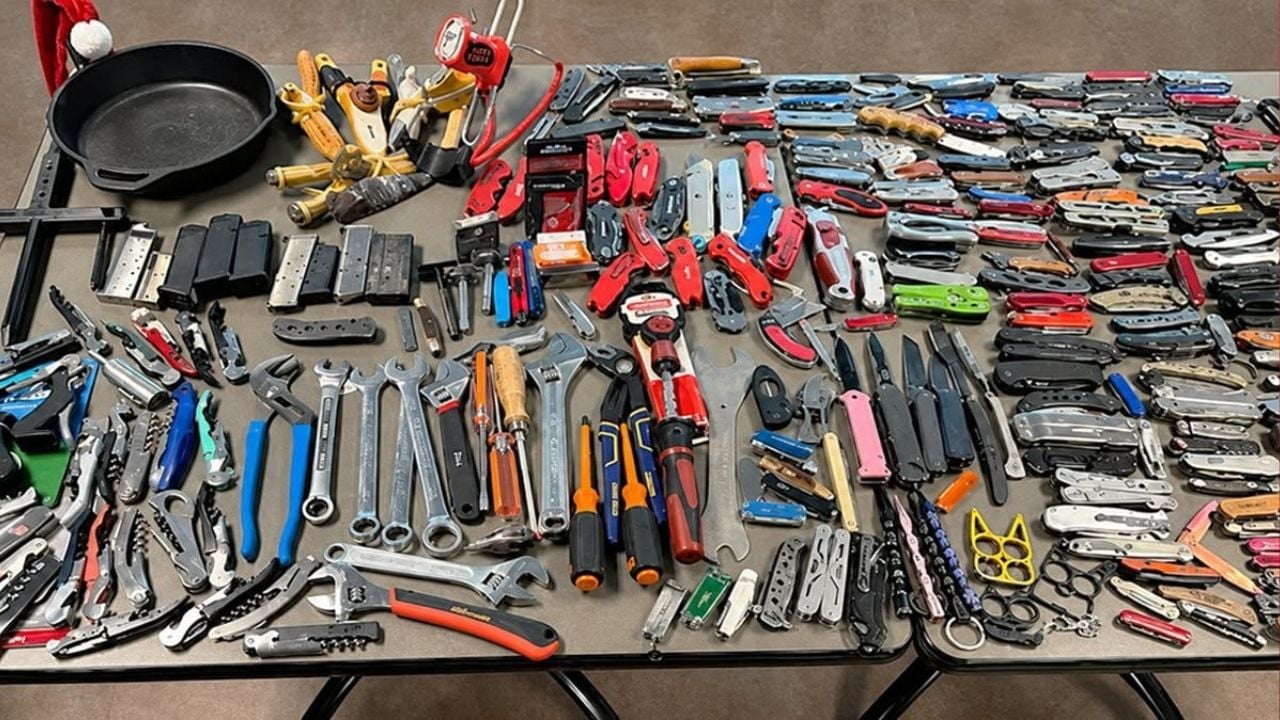
In an official Facebook post, TSA shared a photo that appeared to be items people left behind. The post added that passengers are generally offered alternatives before being asked to abandon an item voluntarily.
Those options may include placing it in a checked bag, returning it to a vehicle, giving it to a non-traveling companion, or mailing it home where that service is available.
Of course, not every option applies to every item or airport. Travelers also cannot take a prohibited item beyond the security checkpoint. If you do not choose any of those options, you are allowing that item to be thrown away or even sold at auction.
TSA calls the items voluntarily abandoned property
Embedded media follows. Please allow a moment for it to load.
The official TSA post encourages travelers to begin packing with an empty bag so they do not accidentally carry prohibited objects left inside from an earlier trip.
If an officer discovers something that cannot pass through the checkpoint, the passenger can decide whether to leave the screening area and pursue an available alternative. If the traveler leaves the item behind, TSA classifies it as voluntarily abandoned property. Walking away from the object is therefore treated as a choice, although travelers facing an approaching departure may have limited time to do anything else.
Commenters on the Facebook post certainly had something to say. One person summed it up: “You have to be really early for any of these alternatives to work. Your non traveling companion isn’t allowed into security… [so] they probably dropped you at the door and you’ve got to call them to come back. Your checked bag is already who knows where in the system. Your car is probably a shuttle ride away. Mailing isn’t an option if you don’t come prepared with packing supplies. And if you’re in a big enough airport to have a post office the security line is pretty long and you have to go through again.”
Some items can go inside a checked bag
An object prohibited in carry-on luggage is not necessarily banned from the aircraft entirely. Certain knives, tools, and sporting equipment may travel in checked baggage when packed correctly.
TSA’s What Can I Bring? database provides rules for hundreds of items and can be very helpful for packing. The agency notes that the final decision about whether something can pass through a checkpoint rests with the officer conducting the screening.
Some dangerous materials cannot travel in either type of luggage. TSA says certain flammable, corrosive, and explosive items are prohibited from both carry-on and checked bags.
Firearms and illegal items can involve police
The distinction becomes especially important when officers discover a firearm or an item that may violate the law. TSA says it does not confiscate firearms. Officers instead contact local law enforcement, whose response depends on the applicable laws and circumstances. Police may take possession of the weapon, cite the traveler or even make an arrest.
Passengers can also face TSA civil penalties and lose TSA PreCheck eligibility for bringing firearms or certain other prohibited items to a checkpoint. The safest approach is to check questionable belongings before leaving home. Travelers can search TSA’s online database or contact AskTSA before packing to avoid a tough decision when they need to catch a flight.