
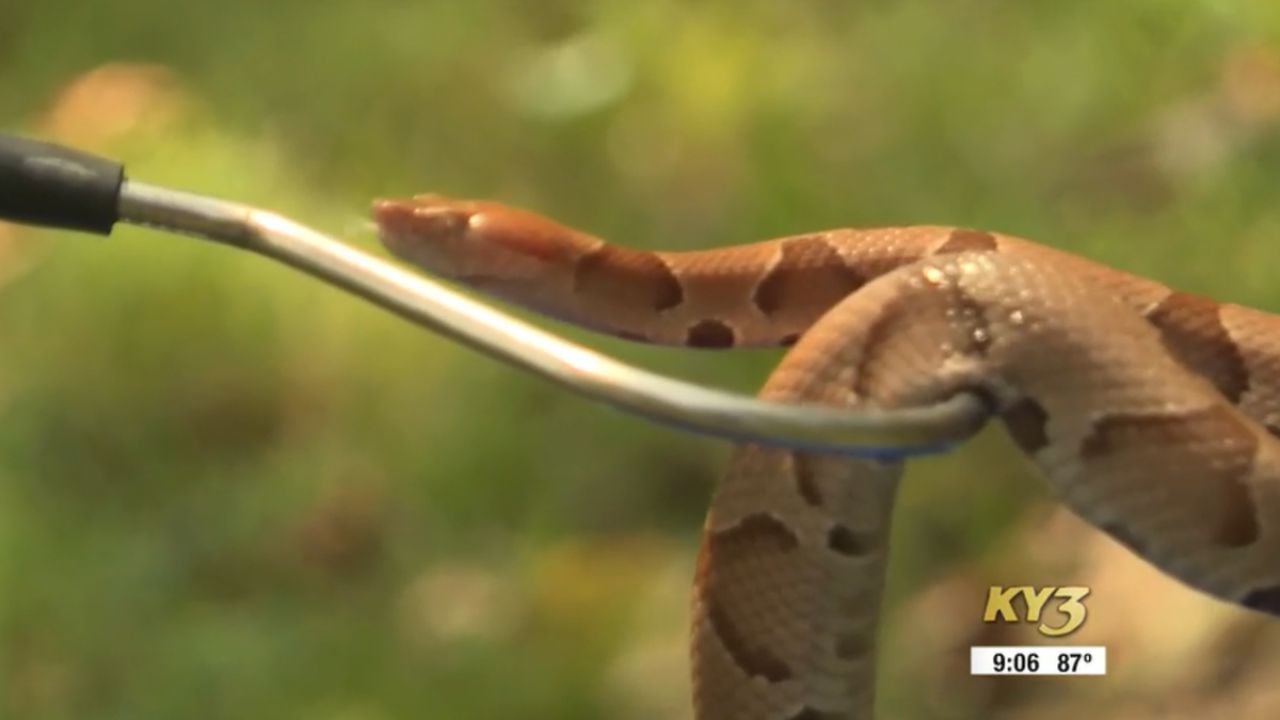
A Missouri Man Has Found 47 Copperheads in His Yard This Year and Tracks Every One
A reptile expert in Taney County, Missouri, has found 47 copperheads in his yard so far this year, breaking his own record of 45 set two years ago. He keeps detailed records on every one of them and adds a new entry each time he stumbles upon a new snake. Randy Dietz, who’s lived on his farm for more than 50 years, has handled venomous snakes for nearly 60. He doesn’t simply remove the snakes from his yard, but photographs each one, measures it, and assigns it a code, according to KY3. He has never been bitten.
His identification method uses the snakes’ own markings. Dietz uses the saddle markings along a copperhead’s back, which he says are as unique as fingerprints, to give each one an identifier. He counts back from the neck and records any that are broken or misshapen so he can recognize the same snake later. He’s been tracking the copperheads this way since around 2020, when he first noticed an unusually high number of them on his property.
When Dietz catches a copperhead, he puts it in a blue barrel and moves it roughly 1,000 feet across his property to an old rock pile. He then measures it a second time before release. His records show that about 30 percent of the snakes he’s relocated have returned to his yard. That’s a mystery, he says, that he can’t fully explain.
Dietz has theories about what draws them, though. His property includes a spring-fed creek below the house that connects to thousands of acres of largely undisturbed land. He says that parts of the Ozarks appear to have denser copperhead populations than others. After decades of observation, though, he said the only consistent thing he’s found in nature is that there’s no consistency at all.
Why Copperheads Return to the Same Yard
Snakes, including copperheads, tend to have an established home range and a sense of their territory. That means that moving one a short distance, as Dietz does at about 1,000 feet, often leaves it well within familiar ground and able to navigate back. Research on relocating venomous snakes has generally found that moving them short distances is ineffective, while moving them long distances can disrupt their behavior and survival.
The features of Dietz’s land help explain why the snakes are there to begin with. Copperheads favor exactly the conditions his property offers. Rock piles, wood piles, tall grass, and debris give copperheads shelter and attract the rodents and insects they eat. That means a property with abundant cover next to wild land is likely to keep drawing them regardless of how many are removed.
How to Stay Safe Around Copperheads
Dietz’s own advice, drawn from a lifetime of handling snakes, is straightforward and aimed at people without any snake-centric experience. He recommends never putting your hands somewhere you can’t see, using caution walking outside barefoot or in sandals after dark, and never trying to handle a snake without proper knowledge.
Reducing what draws snakes in is the other half of staying safe. Keeping grass cut short, clearing brush, wood, and debris piles, and sealing gaps where rodents and snakes can shelter all make a yard less inviting.
If you’re ever bitten by a snake, his guidance is to stay calm, keep the affected limb still and below heart level, and get to a hospital promptly rather than attempting home remedies. Copperhead bites, while rarely fatal, do require medical evaluation. It’s a good idea to have every snake bite looked at by a doctor, though, just in case.





47 is not an outrageous number for a farm in Missouri…..