How Location Shapes Rental Success Long Before a Lease is Signed
Location remains one of the most important factors influencing a rental property’s long-term performance. While interior upgrades and modern amenities attract attention, the surrounding neighborhood often determines how quickly a property rents, the quality of prospective tenants, and its long-term earning potential. Understanding what renters value in a location helps property owners make informed investment decisions and improve occupancy rates.
Access to Everyday Essentials Matters
Many renters prioritize convenience when choosing a home. Properties located near grocery stores, healthcare facilities, schools, parks, and shopping centers often appeal to a broader range of tenants.
Commute times also play an important role. Easy access to major highways, public transportation, and employment centers can make a property more attractive to professionals and families who want to reduce travel time. Walkable neighborhoods with nearby services may also increase demand in many markets.
Neighborhood Quality Influences Demand
Renters often evaluate the surrounding community as carefully as they evaluate the property itself. Well-maintained streets, attractive landscaping, and nearby recreational spaces contribute to a positive first impression.
Safety, noise levels, and community amenities also affect rental decisions. While preferences vary among tenants, neighborhoods with stable housing markets and consistent public investment often experience stronger rental demand over time. Researching local development plans can also provide insight into future improvements that may increase a property’s appeal.
Local Market Trends Support Better Decisions
Rental demand changes based on population growth, employment opportunities, and housing supply. Reviewing vacancy rates, average rental prices, and demographic trends helps owners better understand local market conditions before purchasing or pricing a property.
Many owners also work with property management professionals who understand neighborhood trends, rental pricing, tenant expectations, and local regulations. Their market knowledge can help owners make informed decisions that support consistent occupancy and long-term returns.
Strong Locations Help Protect Long-Term Value
Even well-maintained homes can struggle to attract tenants if the surrounding area does not meet renter expectations. Choosing properties in desirable locations often contributes to more stable occupancy, competitive rental rates, and stronger property values over time.
Successful rental investments depend on more than the home itself. Access to services, neighborhood quality, transportation options, and local economic conditions all influence rental appeal. Evaluating these factors before purchasing or leasing a property helps owners position their investments for sustainable performance while creating a better experience for future tenants.
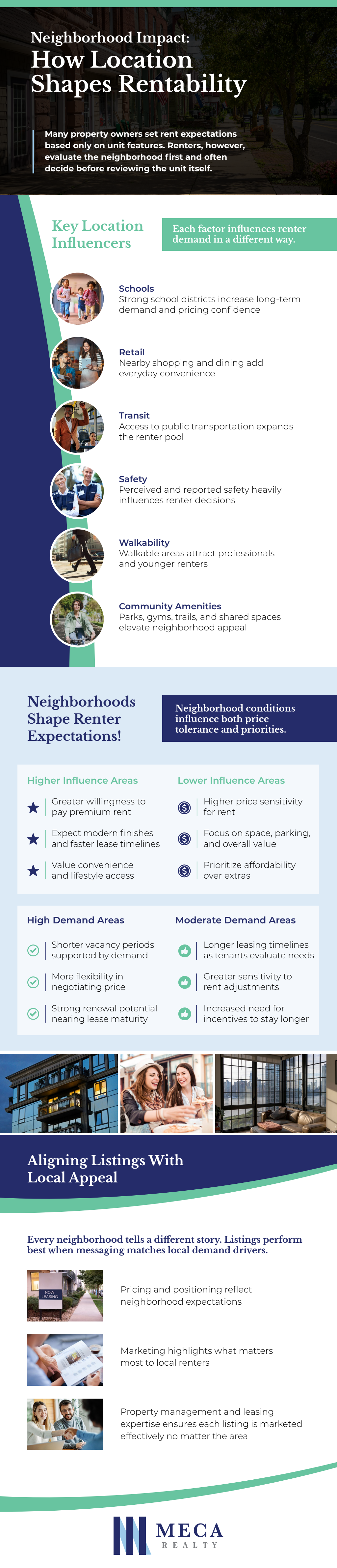
Look over the infographic below for more information.