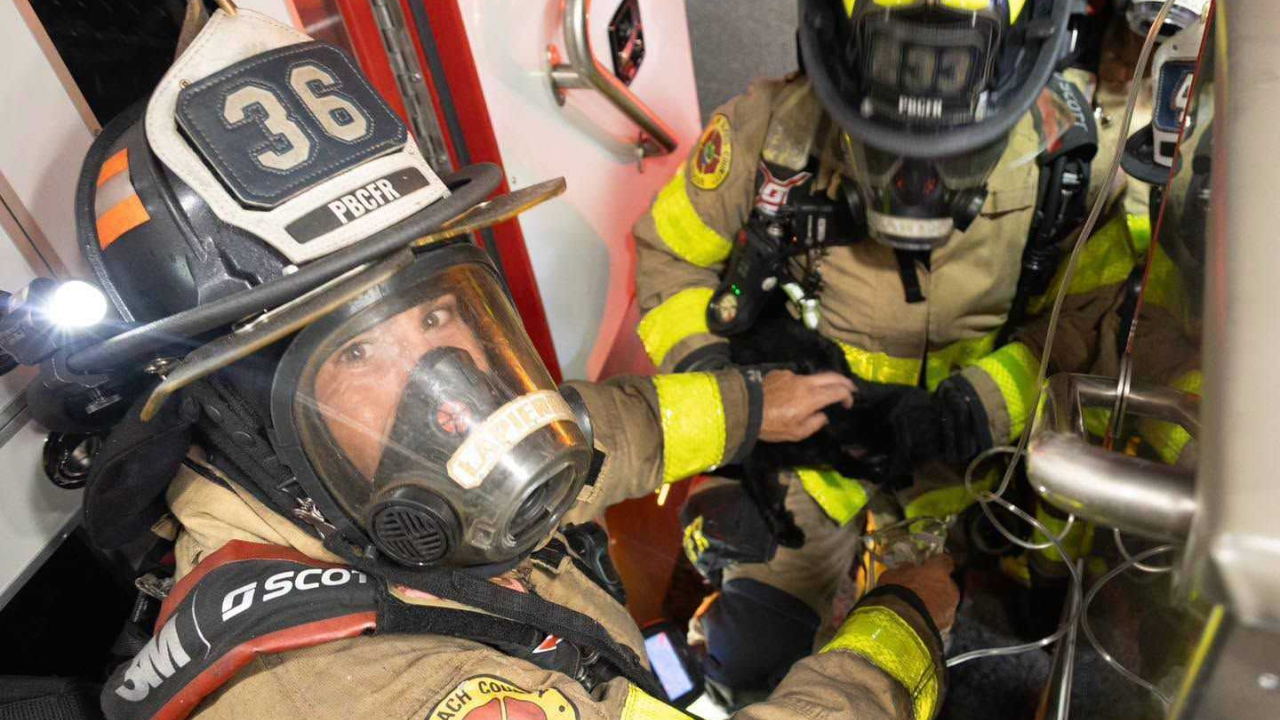
Firefighters Pulled a Soot-Covered Cat and a Hamster From a Florida House Fire
Firefighters pulled a black cat and a hamster from a burning single-story home in unincorporated Palm Beach County, Florida, on Monday night, and no one was hurt. Palm Beach County Fire Rescue crews were dispatched around 9 p.m. to the 5000 block of Basil Avenue for a reported structure fire, according to WPTV. They arrived in about three minutes to find heavy smoke and flames coming from the building.
The homeowner had already gotten everyone out when crews arrived. They were told by the person who owned the house that the people inside had escaped safely, but one black cat was still missing somewhere in the house. The rescue crews began a search to find the missing feline.
Some crews attacked the flames while others went through the smoke-filled home looking for the animal. Firefighters found the cat hiding inside and carried it out to a waiting rescue unit. There, the soot-covered cat was given oxygen before being reunited with its owner. Crews also removed a hamster that was still in its cage and carried it to safety.
Photos shared by the department showed the cat receiving oxygen from firefighters ahead of the reunion, CBS12 reported. The fire was quickly brought under control. There were no reported injuries to any of the residents or the responding crews, and the cat and hamster ended up completely safe from the fire.
Why Pets Tend to Hide During House Fires
Cats and other small animals commonly hide rather than flee when a fire breaks out, which is why searches like this one are often needed. Smoke, roaring flames, and the noise of an emergency frighten an animal into its instinct to retreat somewhere small and enclosed, such as under a bed, inside a closet, or behind furniture. That instinct works against them in a fire, since the safest spots in ordinary life become traps filling with smoke, and it is the reason a pet can be missing even after every person has made it out.
Smoke is the bigger danger to a trapped animal, more so than the flames themselves. Pets are smaller and closer to the ground, and smoke inhalation can affect them quickly, which is why firefighters carry pet oxygen masks and give animals oxygen at the scene, as crews did with the soot-covered cat on Basil Avenue. A hamster or other caged pet cannot escape on its own at all, leaving its survival entirely dependent on someone reaching the cage in time.
What to Do to Keep Your Pets Safe in a Fire
Firefighters recommend planning for what will happen to your pets in a fire before an emergency ever happens. That includes knowing the spots where an animal typically hides so it can be found fast, keeping collars on and carriers accessible, and telling arriving firefighters right away how many pets are inside and where they might be. You need a clear escape plan to make sure there’s no tragedy that occurs needlessly.
Officials stress that people should get themselves out first and let trained firefighters handle a search, rather than going back into a burning building, since re-entering a smoke-filled home is how rescues turn into tragedies. In this Palm Beach County case, the homeowner did exactly that, getting everyone out and then telling crews a cat was still inside, which gave the animals their best chance. And now we can report on a happy ending that you can feel good about, because there was a little preparation done.