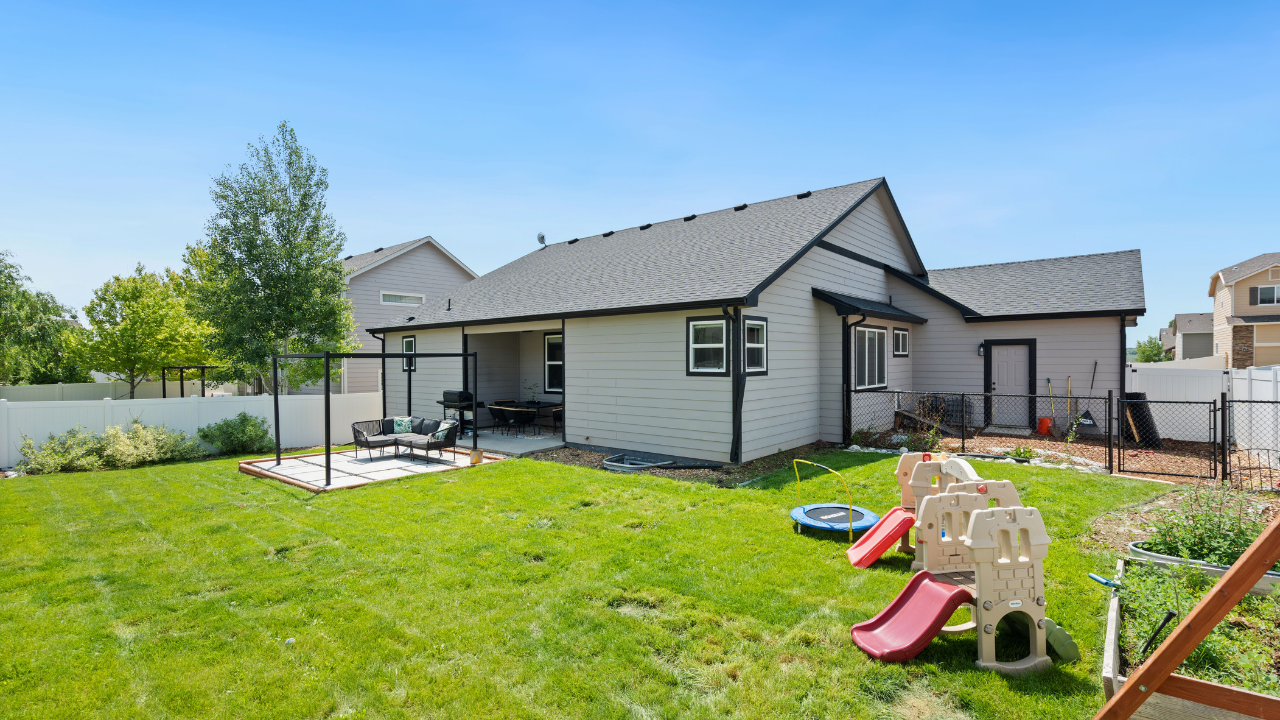
Why a Big Backyard Isn’t Top Priority for Buyers Anymore
For years, a big, inviting backyard ranked near the top of a home buyer’s wish list. That’s all changed because, in 2026, the feature buyers want most is the interior, where people like to gather most. Can you guess what it is?
According to a 2026 Survey, 41% of buyers say the kitchen is the most important room. Why are yards falling out of favor?
Lot sizes are shrinking as space becomes costly. Plus, a large yard can be seen as a liability and something to have to take care of for a buyer looking for more convenience in a life that already feels busy.
Let’s take a look at trends to get a handle on these shifting home-buying priorities.
A Look at How People Are Prioritizing Time
Buyers, particularly retired folks who are downsizing, don’t necessarily want to spend their weekends mowing a ton of grass. Additionally, people who work remotely or travel often want a home they can lock up and leave without worrying about upkeep. Then you have busy families and professionals who are watching the time and money a property demands. It’s simple, really. Buyers just want to spend less of both keeping a house up.
And you can’t blame them. What they want instead is a home that’s ready to live in. Buyers are wary of aging HVAC, plumbing, and electrical systems, which means lots of expensive work ahead. On the exterior, they want materials that need less care. For outdoors, they want less of a wide-open lawn and more landscaping that mostly takes care of itself. All of this is much easier to deal with.
For sellers, the shift changes the math on some once-prized features. A sprawling water-hungry lawn or a high-upkeep pool can count against a listing now instead of for it. That is a real reversal from a decade ago. Understanding it means looking at what soured buyers on the big yard, and at what still adds value in the outdoor space.
Why Buyers Cooled on the Big Yard
The turn away from big yards tracks a few real changes in how people live. The buyer pool is older on average, and many of those buyers are downsizing on purpose.
They are trading square footage and lawn for less to manage. Remote work and cheap travel mean more people want a place they can leave for weeks without lining up a lawn service. In much of the West, several hot, dry summers have made a green lawn a running expense, between water bills and watering restrictions.
A big yard is a standing commitment of time and money. The purchase price is only the start. Someone has to mow it, water it, weed it, and keep the trees and beds in shape, or pay someone else to. Landscaping and irrigation are recurring bills that some buyers just aren’t interested in paying anymore.
What Adds Value to a Yard Now?
Low maintenance doesn’t mean bare, though. A neat, cared-for yard still helps a sale, and it can pay off directly. The American Society of Landscape Architects estimates that quality landscaping can add roughly 15 to 20 percent to a home’s value.