Frustrated Homeowners Say a Utility Company Cut Their Trees, Left the Debris, and Let the City Cite Them
Usually, when a utility company trims the trees around your power lines, you might assume the crew is going to haul away anything it cuts down. In Clinton, Mississippi, a group of homeowners learned the hard way that sometimes the opposite happens. The debris gets left where it is. Months after Entergy contractors cut trees along the lines, the wood is still there. Worse, it is the homeowners, not the utility, now on the hook for cleaning it up.
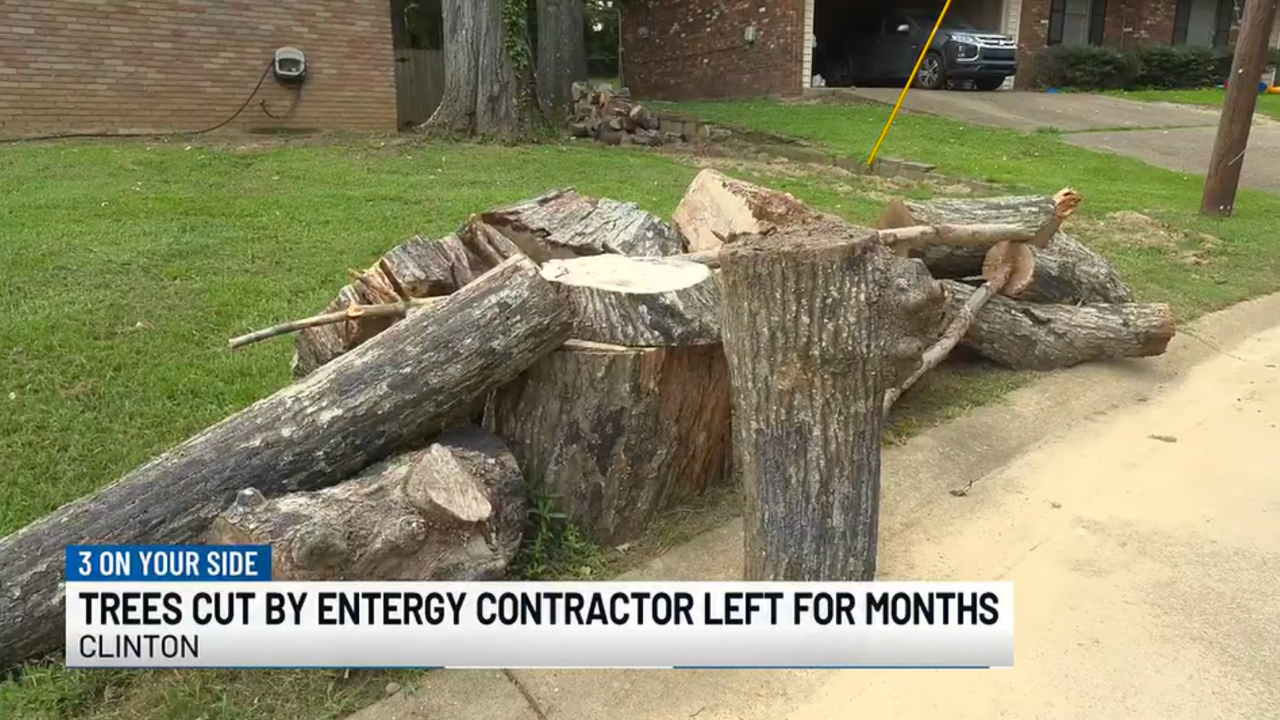
Joedda and Paul Gore are among the frustrated. They say Entergy crews cut trees along the power lines at their East Northside Drive home back in January. Months later, hundreds of pounds of wood remain in front of the house. Adding insult to injury, the city has started citing the Gores over the debris. As Joedda Gore put it, “It’s not our mess, and we have got no response.”
But the Gores aren’t alone. Their neighbors on Normandy Drive and Tanglewood Drive have the same problem. Mack Hughes watched a crew cut on his property and then leave. When he came back, the wood hadn’t been hauled off, and instead it had been piled by a tree.
So WLBT’s 3 On Your Side asked those involved about what exactly what was happening. The City of Clinton said its zoning ordinances don’t make it responsible for hauling away debris left by a utility, but it can’t comment on cases in progress. On the other hand, Entergy Mississippi said that cleanup falls to the property owner. Otherwise, they can look forward to citations, which seems like a little bit of a frustrating catch-22.
Why Cleanup Falls on Homeowners
During its regular maintenance cycle, in the areas Entergy maintains, it removes or mulches the debris it creates. But not all trimming is counted as regular maintenance. For things like customer-requested work, hazardous trees, and storm damage, Entergy says the debris stays put. That’s when the property owner would be responsible.
The work in both of the locations above fell into those categories: hazard trees or trimming that a customer asked for. The company says the same rule applies whether a tree is inside or outside its right of way. So many of the cuttings end up becoming something homeowners have to deal with, like it or not.
What You Can Do If It Happens to You
The residents’ frustration is easy to understand. The Gores point to a city code they read as giving utilities five days to clean up after themselves. By their count, it has been five months. The city clearly reads its ordinances differently, and that gap is where disputes like this stall. If you end up in a similar spot, the first useful step is to nail down the category. Ask the utility, in writing, whether the work was routine maintenance or something like a hazard tree or a customer request. That one answer often decides who is responsible.
From there, a few moves can help. Get the details of any citation from the city’s Community Development Department, since in Clinton, such disputes go through that office and its Environmental Court. Photograph the debris with dates, so you can show exactly how long it has been there. It also helps to remember that a free trim from a utility rarely includes free removal, so ask about hauling before any work begins, as you can see that you might end up stuck with the hauling anyway.