
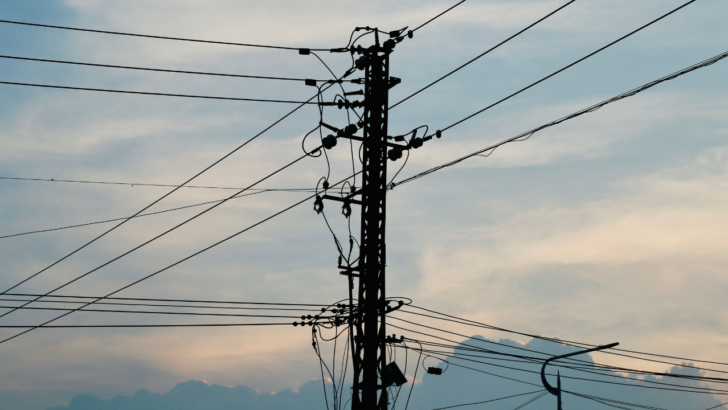
A Virginia family has lost its year-long fight to keep a data center power line out of its backyard. This week, state regulators approved the route for new Dominion Energy transmission lines through their Ashburn neighborhood. That includes being run through the property of a woman who had planned to retire there. The decision cleared the last regulatory hurdle for construction. For Vicky Hu, who has lived there for 20 years, it was terrible news. Now, she says she plans to appeal the decision.
Hu bought her home two decades ago and expected to grow old in it. Now high-voltage lines are set to run directly across her backyard. “I was supposed to retire here,” she told WUSA9, describing the sense that everything she’d planned was suddenly in doubt.
The line is part of Dominion’s Golden-Mars project. It’s a set of 500- and 230-kilovolt lines carried on monopoles up to 185 feet tall, running several miles through the Ashburn and Dulles area. According to the Piedmont Environmental Council, the project is the final piece of a transmission loop built specifically to serve the Data Center Alley. That’s the dense cluster of data centers across Loudoun and Prince William counties. In other words, the lines over Hu’s yard are there to move power to the server farms.
Dominion says the project is essential. The company calls it a “critical investment” in keeping the regional grid reliable as demand climbs, serving homes, businesses, and data centers alike. Hu isn’t persuaded. She intends to take her case to the Virginia Supreme Court, the only place an SCC ruling can be appealed. The line, and the people in its path, are part of a much bigger fight.
Why the Lines Are Being Built
The short answer is data centers. Northern Virginia hosts the largest concentration of them in the world, and they draw enormous amounts of electricity. Meeting that demand takes more than power plants. It also takes the high-voltage lines and substations to move the electricity where it’s needed, which is what projects like Golden-Mars are for.
Golden-Mars is one segment of a larger loop Dominion is building around Loudoun, along with related lines and substations. The company frames all of it as necessary for reliability, warning that the grid in the area is strained by the growth. Critics, including environmental and community groups, counter that this is infrastructure built for the data center industry, with the cost and disruption falling on residents. Both things can be true. The grid may genuinely need the upgrade, and the people living under the towers may genuinely be paying a price for it.
What It Means for the Neighborhood, and What’s Next
For the people in the line’s path, dealing with this situation is akin to a nightmare. Monopoles as tall as 185 feet don’t disappear into the landscape, and neighbors worry about property values, views, and living beneath high-voltage lines. Hu isn’t alone in the fact that she doesn’t want to have to fight this as part of her reality. Yet, it affects multiple properties and homeowners.
Legally, Hu’s options are pretty difficult. An SCC decision can only be appealed straight to the Virginia Supreme Court, with no lower court in between. She says she’ll try anyway. Her fight is one piece of a broader clash across Northern Virginia over who bears the burden of the data center boom, from power lines to electric bills. That argument is far from settled. What’s decided, for now, is that the towers are cleared to go up, over at least one home whose owner had hoped to grow old in.