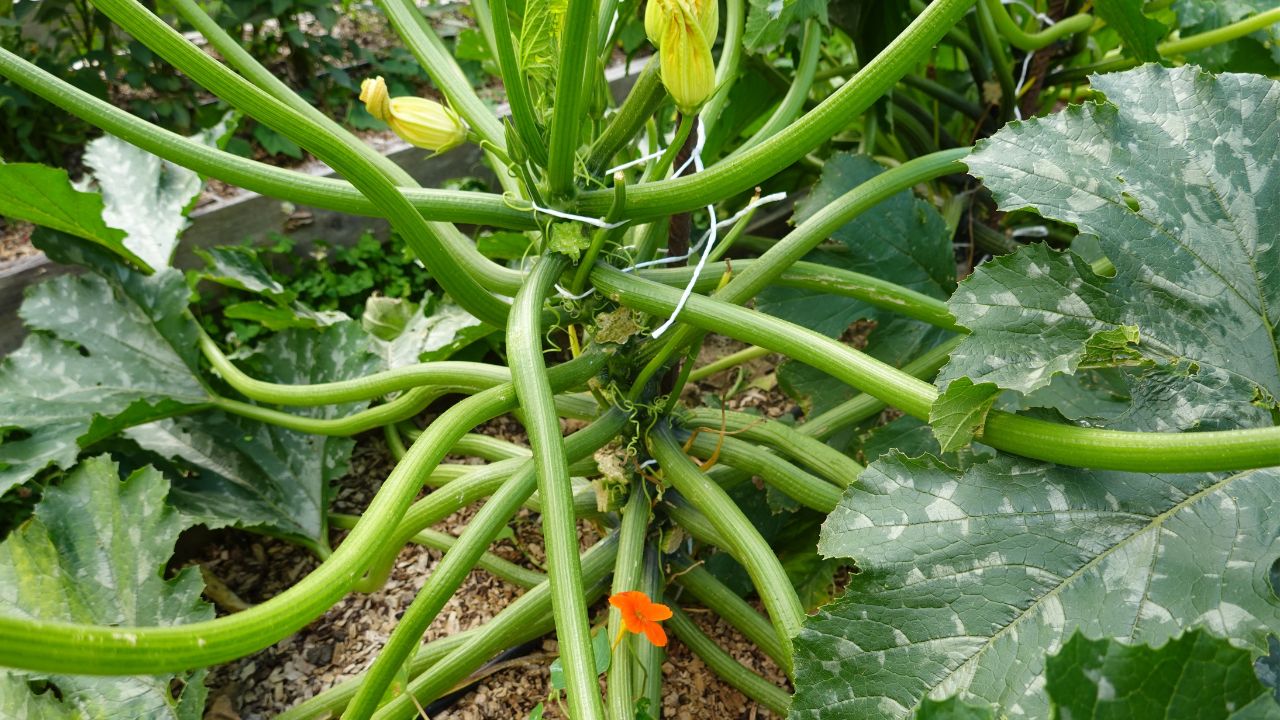
How to Grow Zucchini Vertically: 7 Steps That Save Space and Double Your Harvest
Most gardeners are killing their zucchini harvest before it starts, and they don’t know it. The problem isn’t pests, bad soil, or a lack of sunshine. It’s the way the plant grows: flat on the ground, leaves resting in damp soil, stems hidden under a canopy of foliage, and powdery mildew creeping in right on schedule. If you’ve ever watched a zucchini plant look impressive for three weeks and then collapse into a diseased mess by August, you’ve seen this pattern firsthand.
Here’s what most gardening guides never tell you: zucchini doesn’t have to grow that way. It grows on a single main stem, just like a tomato, and it can be trained upward on a stake or trellis in the same fashion. The difference in results is not subtle. Vertical zucchini plants produce cleaner fruit, suffer far less disease, take up a fraction of the bed space, and are dramatically easier to harvest, especially for gardeners who’d rather not be crouching in the dirt every other morning.
If you’re planting soon, this is the right moment to get your setup right from day one. A trellis installed at planting costs less than $10 in materials and can save an entire season’s harvest. The Colorado State University Extension recommends trellising cucurbit crops specifically as one of the most effective ways to reduce ambient humidity, improve airflow, and prevent the powdery mildew that ruins so many summer squash plants every year. However, if your zucchini plants are already growing in the ground, it’s not too late to amend your setup to grow vertically.
Why Growing Zucchini Flat on the Ground Is Costing You Fruit
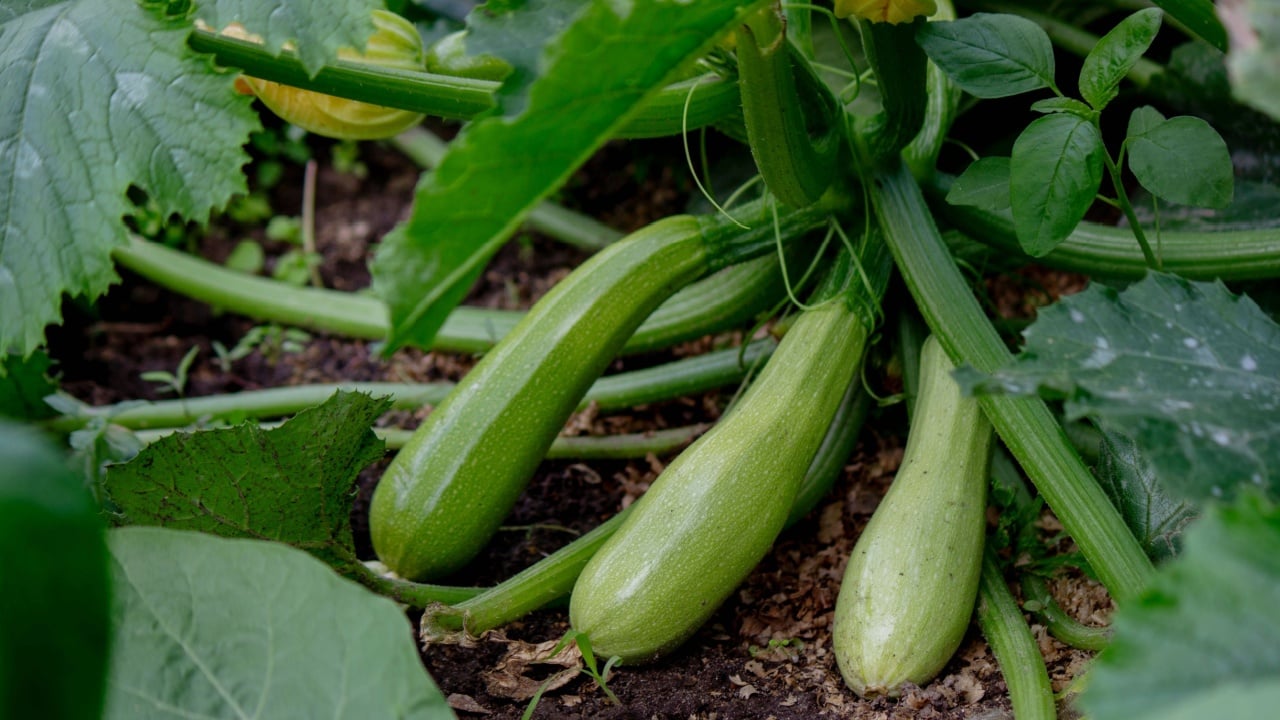
The horizontal sprawl habit most gardeners allow isn’t a natural preference; it’s a default we’ve never questioned. When zucchini leaves rest against moist soil, relative humidity beneath the canopy can exceed 85%, the exact threshold at which Podosphaera xanthii, the fungus responsible for powdery mildew, flourishes and spreads. Squash vine borers find it easier to lay eggs at the base of a stem buried under leaf litter. Fruit hides under overlapping foliage until it has grown to the size of a small baseball bat, and an oversized zucchini signals the plant to stop producing entirely.
The University of Connecticut Extension notes that promoting good airflow around plants is one of the primary management tools for powdery mildew in cucurbit crops, and that vertical supports are among the most reliable methods for achieving it. A plant that grows upright, with space between its leaves and sunlight reaching the stem, simply doesn’t provide the humid, crowded conditions those pathogens require.
The fix is not complicated. It requires a stake, some soft twine, and a willingness to prune. Here are 7 steps to raise your zucchini off the ground for a better harvest.
Step 1: Choose the Right Variety Before You Do Anything Else
Not every zucchini can be trained vertically. Vining varieties spread aggressively in all directions and resist training; their stems are more prone to breaking when redirected. Bush-type zucchini, including Black Beauty, Patio Star, and Bush Baby, grow from a central crown on a single compact stem. That structure is exactly what makes vertical training work.
If you’ve already purchased seeds or transplants and aren’t sure what you have, check the tag. The word “bush” or “compact” indicates a variety that will cooperate. “Vining” or “heirloom” types are better left to sprawl or grow on a very wide hog panel trellis where they can weave freely rather than be forced upright.
This step costs nothing but a moment’s attention, and skipping it is how many gardeners end up with a broken stem by mid-June.
Step 2: Build or Buy a Trellis That Won’t Fall Over by July
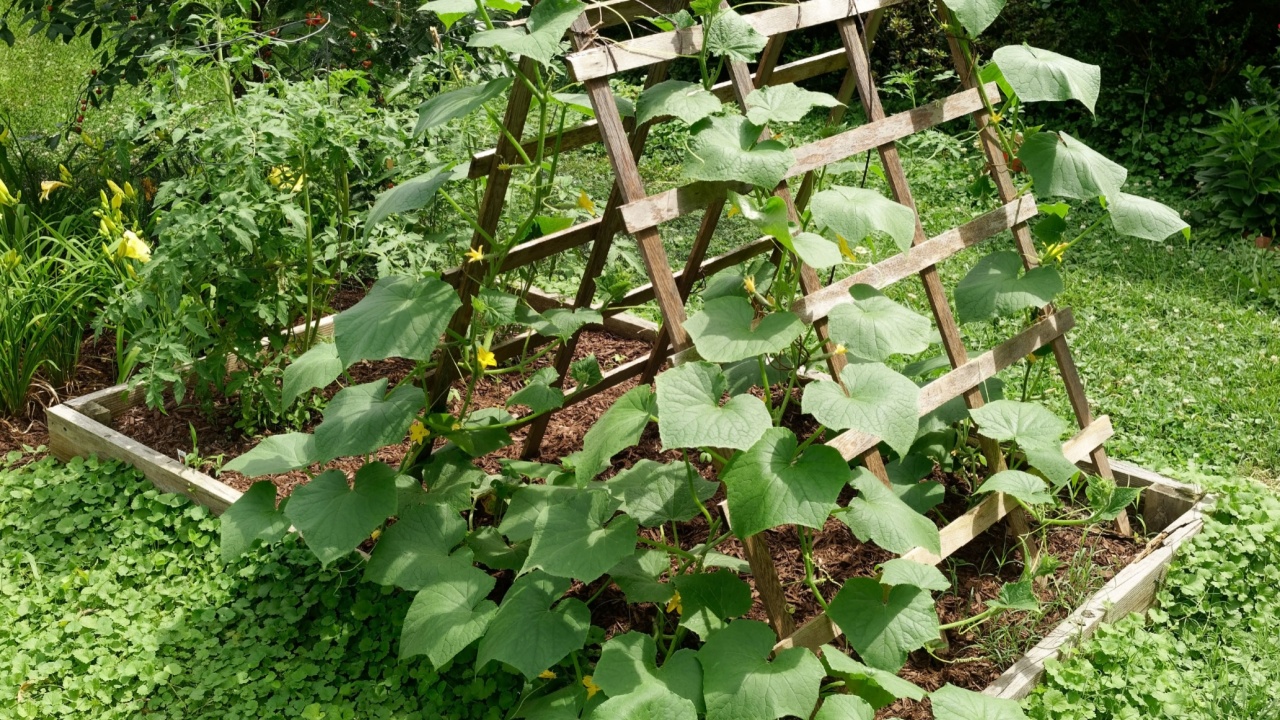
Zucchini fruit is heavier than it looks. By midsummer, a mature plant can carry several pounds of developing fruit at once, and an under-built trellis will bow or topple under the load. Build for that weight from the beginning.
A single sturdy bamboo stake (at least 6 feet tall, pressed 12 inches into the soil) works well for one plant. For multiple plants in a row, wooden posts strung with jute twine horizontally, or a rigid cattle panel trellis secured to T-posts, provide enough support for an entire bed. Whitwam Organics recommends a minimum trellis height of 6 feet; a shorter structure becomes a bottleneck by late July when the plant is still actively growing upward.
Whatever structure you choose, anchor it before planting. Driving stakes into soil around an established root ball risks damaging roots and destabilizing the plant. Spend five minutes doing it right on day one.
Step 3: Stake Early or Lose Your Window
The single most common vertical-growing mistake is waiting too long to stake. Once a zucchini stem has set its growth direction by sprawling flat, it resists being lifted. The stem is hollow inside, which makes it surprisingly brittle; bending an established plant upright often ends with a crack at the node, and a cracked stem is effectively a dead stem.
At planting time, place your stake within a few inches of the transplant, then tie the main stem loosely using a loop of jute twine or soft garden tape. Gardenary describes this as “the same principle as training a tomato vine” and emphasizes that the earlier the support goes in, the more naturally the plant grows upward without resistance.
Revisit the tie every week to ten days as the plant grows. Add new loops higher on the stem as needed, keeping each one loose enough to slide a finger underneath. Never use wire, zip ties, or anything that cannot flex with the expanding stem.
Step 4: How to Prune Zucchini Without Killing It
Pruning is where vertical zucchini growing separates itself most dramatically from traditional methods, and where most gardeners hesitate. Those enormous leaves look like they’re doing critical work. Many of them aren’t.
Only the leaves above the most recently opened flower are actively feeding developing fruit. Everything below that point is shading the stem, trapping humidity, and stealing energy that could go toward new blossoms. Gardenary, whose founder documented doubling her zucchini yield after adopting this method, describes it plainly: pruning redirects the plant’s energy away from excessive foliage and toward more flowers and fruit.
To prune correctly, start at the base of the stem and remove the lowest, oldest leaves by cutting flush against the main stem. Because the stem is hollow, leaving a stub creates an open wound that invites pests. Work gradually; never remove more than one-third of the plant in a single session. Repeat weekly throughout the season. The benefit is cumulative: cleaner airflow, better light penetration, fewer hiding places for squash bugs, and a harvest you can actually see without parting a jungle of overlapping foliage.
Step 5: The Pollination Problem Nobody Warns You About
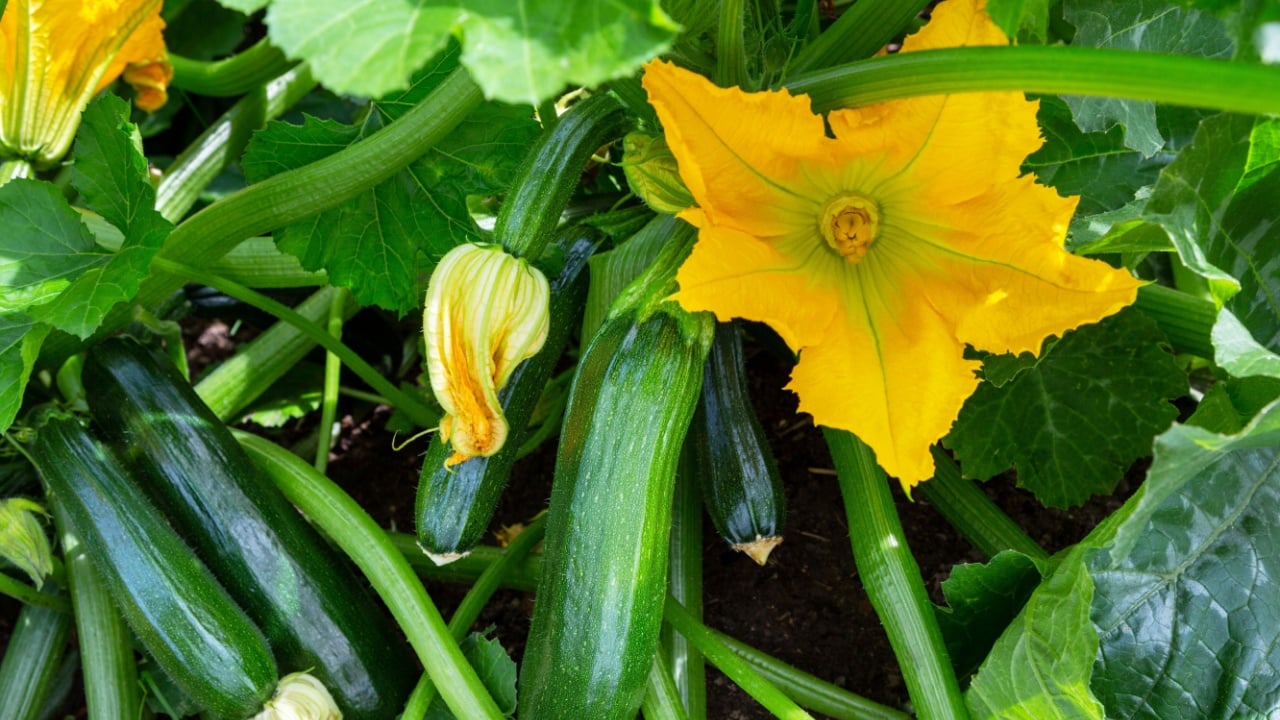
Here is the single most surprising fact about growing zucchini vertically, or any other way: the plant cannot set fruit without a pollinator, and its flowers are only open for a few hours each morning.
Zucchini produces separate male and female flowers. Male flowers appear first and look like simple yellow blooms on a thin stem. Female flowers carry a tiny miniature zucchini at the base. For fruit to develop, a bee (or your own hand) must carry pollen from a male flower to a female flower before the blossoms close, usually by midday.
The University of Maryland Extension explains that poor fruit set is common during rainy weather when bees are inactive, and recommends planting companion flowers nearby to attract pollinators throughout the season. Nasturtiums, calendula, and borage planted alongside a vertical trellis do this beautifully while taking up almost no extra room.
If fruit is forming and then yellowing and dying before it reaches 3 inches, failed pollination is almost always the cause. The fix is simple: use a small paintbrush or cotton swab to collect pollen from an open male flower early in the morning and transfer it directly to the center of an open female flower. Repeat for each female blossom. It takes 30 seconds per flower and eliminates the problem.
Step 6: Water and Feed Your Vertical Plant Differently
A vertically-trained zucchini in a container or raised bed dries out faster than one spreading across the ground, because the reduced canopy means less natural shade over the soil. During peak summer heat, check moisture daily by pressing a finger 2 inches into the soil; if it’s dry, water at the base of the plant rather than overhead.
Wet leaves are a gateway to powdery mildew. Always water at the soil level, never over the foliage. A soaker hose or drip line set at the base is ideal, especially if you’re managing multiple trellised plants in a row.
Zucchini are heavy feeders, and vertical plants that are producing actively benefit from fertilizing every two weeks with a balanced liquid fertilizer once the first fruits begin to develop. The Epic Gardening team recommends using a quality potting mix amended with compost for container-grown vertical plants, prioritizing both drainage and nutrient availability.
If powdery mildew does appear despite good airflow and dry foliage, mix one tablespoon of apple cider vinegar into one quart of water and spray affected leaves on a cool morning or evening, never in direct sun. This mild acidity slows mildew spread without harming the plant or nearby pollinators.
Step 7: Harvest on Time or Your Plant Will Quit on You
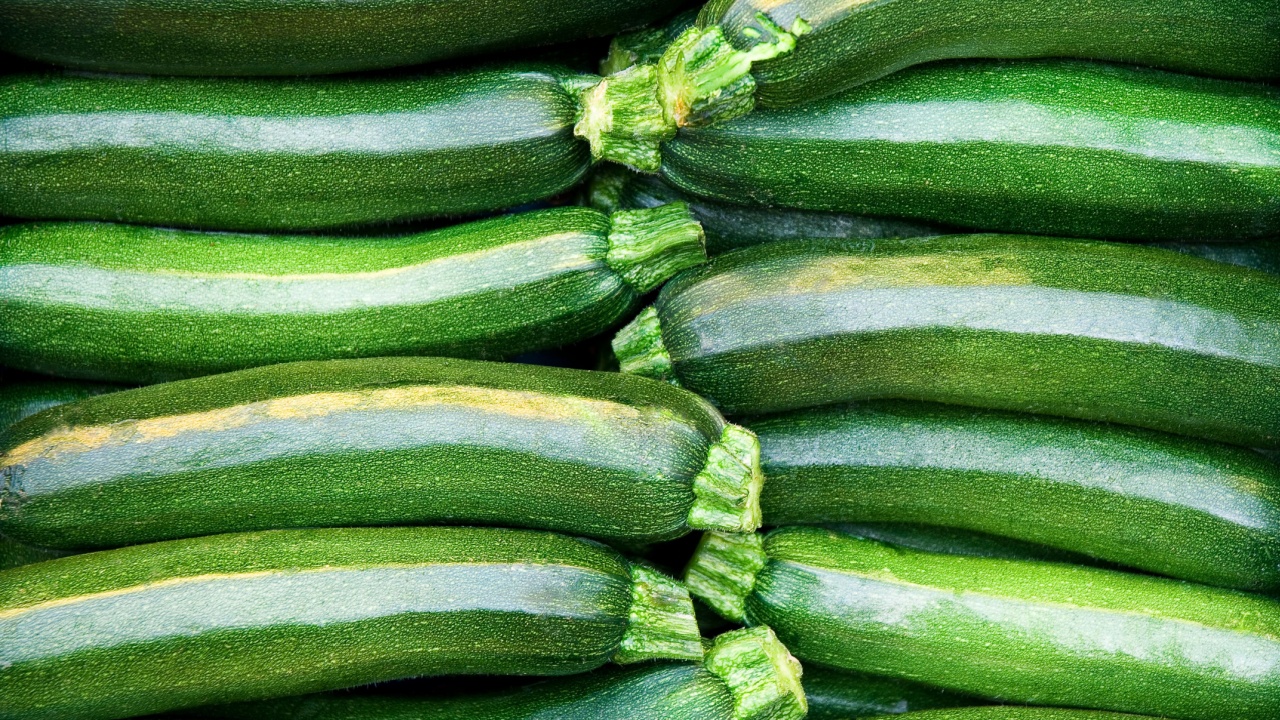
The final step is the one gardeners most often overlook, particularly when the plant is buried in foliage and hard to monitor. But with a vertical plant, the fruit hangs in plain sight, and there’s no excuse for missing it.
Harvest zucchini at 6 to 8 inches long. The University of Maryland Extension states that if the rind is too hard to be marked by a fingernail, the fruit is already overripe. An oversized zucchini sends a signal to the plant that it has successfully reproduced; production slows and may stop entirely. Removing fruit regularly, every one to two days during peak season, keeps the plant in continuous production mode.
This is one of the most practical advantages of the vertical method: the fruit is visible, accessible, and easy to harvest without bending over or reaching under a canopy. For gardeners who’ve dealt with back strain or limited mobility, that alone is worth the ten minutes it takes to stake a plant.
Read more:
Is Your House A Wildfire Target? 7 Things That Increase Your Risk At Home
Is The Heat To Blame for Your Struggling Vegetable Garden This Summer? Stop Making These 7 Mistakes