Plant These 10 Companion Plants With Your Tomatoes — and Stop Planting These 4
The mint you tucked next to your tomatoes last summer? It might have been sabotaging the tomatoes. So might the dill. Some of the most popular plants gardeners are told to grow alongside tomatoes don’t just fail to help — they actively get in the way, and yet they keep showing up on companion planting lists year after year.
This is the month to get it right. If you’re planning your tomato beds in March, the window to set up proper companions before transplant time is still open. The right plants in the right spots can reduce pest pressure, improve pollination, and even help your tomatoes defend themselves. The wrong ones will compete, inhibit growth, or roll out the welcome mat for the exact pests you’re trying to avoid.
Why Your Companion Plant Choices Matter More Than You Think
Companion planting has deep roots in gardening tradition, but in recent years, researchers have started separating the science from the folklore. A surprising amount of the most repeated advice turns out to be unverified folk wisdom.
However, a handful of pairings have real, documented benefits — and knowing which is which is the difference between a garden that works for you and one that quietly works against you.
The good news: you don’t need a complicated companion planting map or a perfectly orchestrated polyculture. You need a short, reliable list. Here it is.
1. Basil
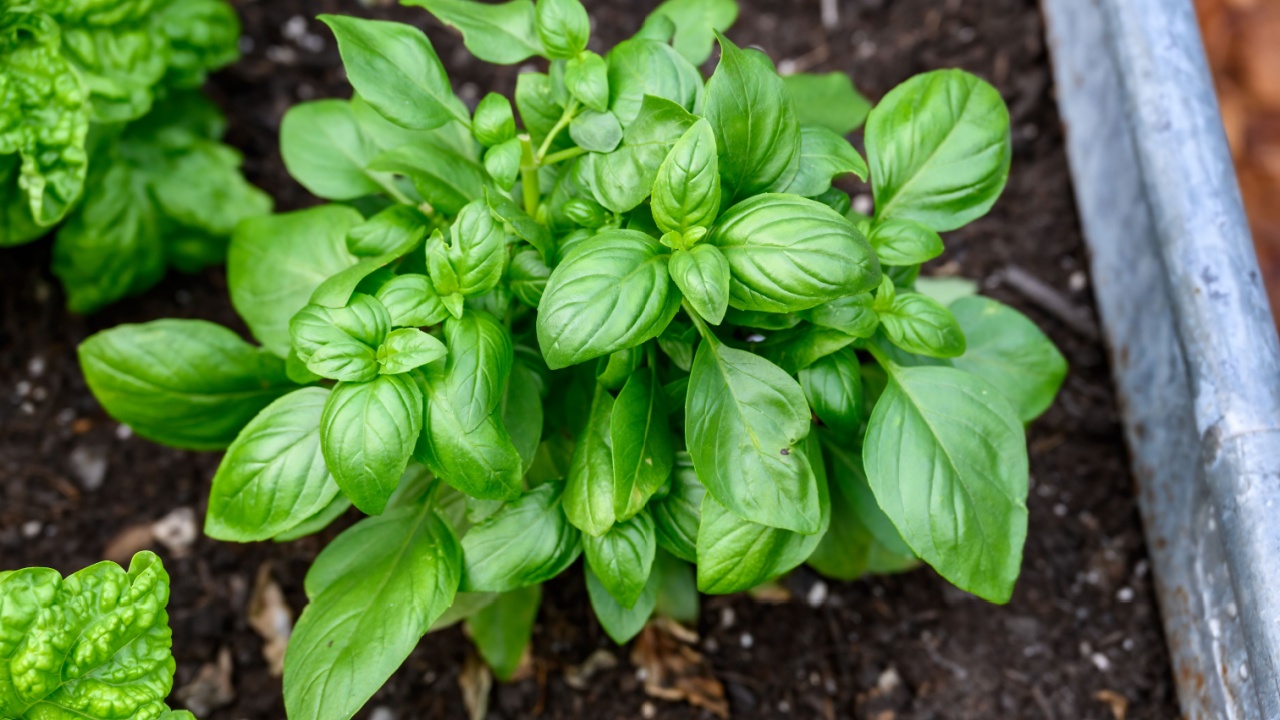
Basil releases aromatic oils that confuse and repel aphids, whiteflies, and tomato hornworm moths. More surprisingly, a 2024 study led by Kagoshima University found that volatile compounds from basil plants actively prime tomatoes’ own immune systems, triggering natural defense responses before pest damage even occurs.
Plant basil in clusters around the base of each tomato plant rather than in a single far-off row; proximity matters here. As a bonus, basil will flag powdery mildew and other diseases before your tomatoes show symptoms, giving you a critical head start on treatment.
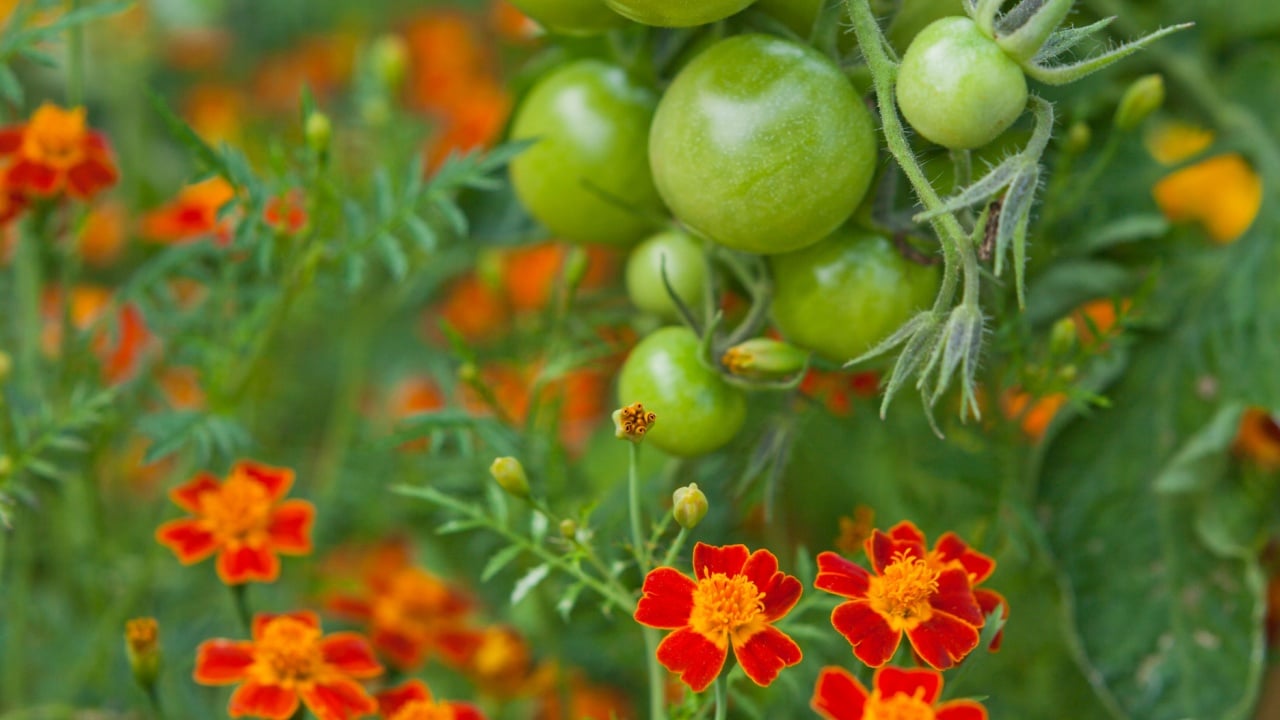
2. Marigolds
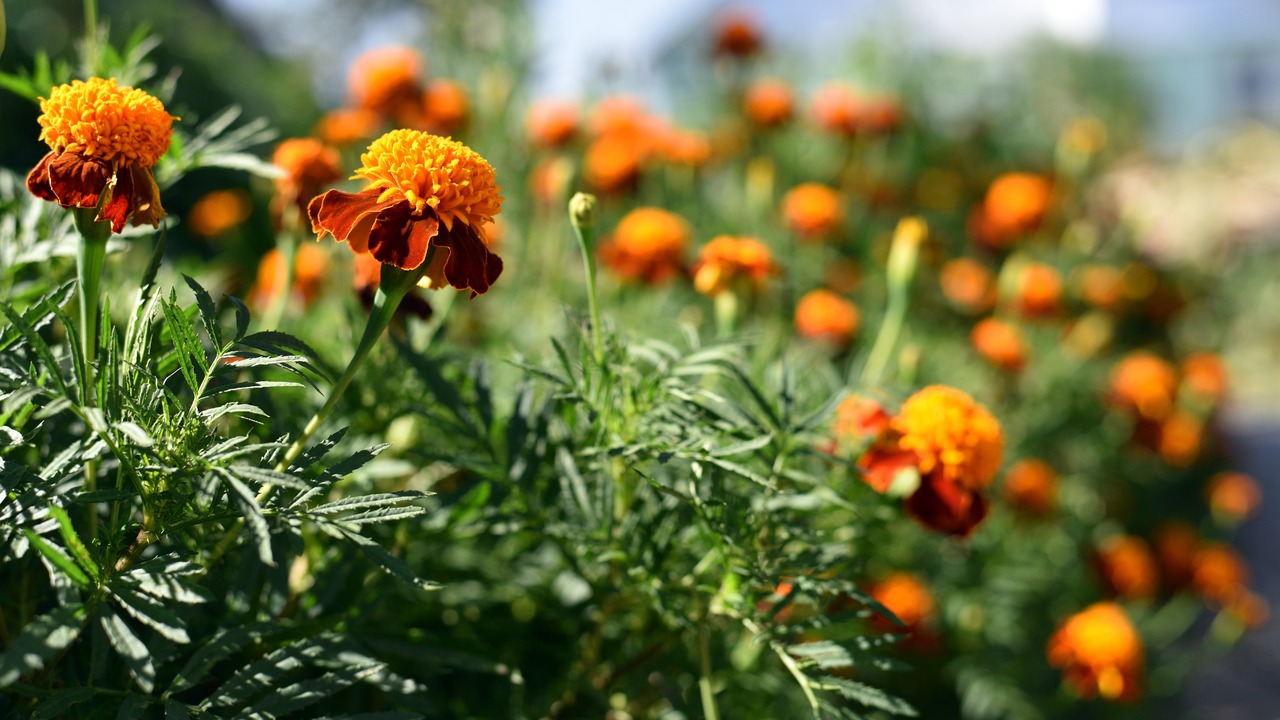
Marigolds are the most recommended tomato companion, and also the most misunderstood. Most gardeners scatter a few around the bed and expect pest miracles. The real nematode-suppression benefit only kicks in when specific varieties like ‘Nemagold’ or ‘Golden Guardian’ are grown as a full cover crop before tomatoes are planted, according to UC Riverside.
That said, marigolds reliably attract ladybugs and other beneficial insects that prey on aphids, and they draw pollinators to the bed. Plant them; just set the right expectations.
3. Nasturtiums
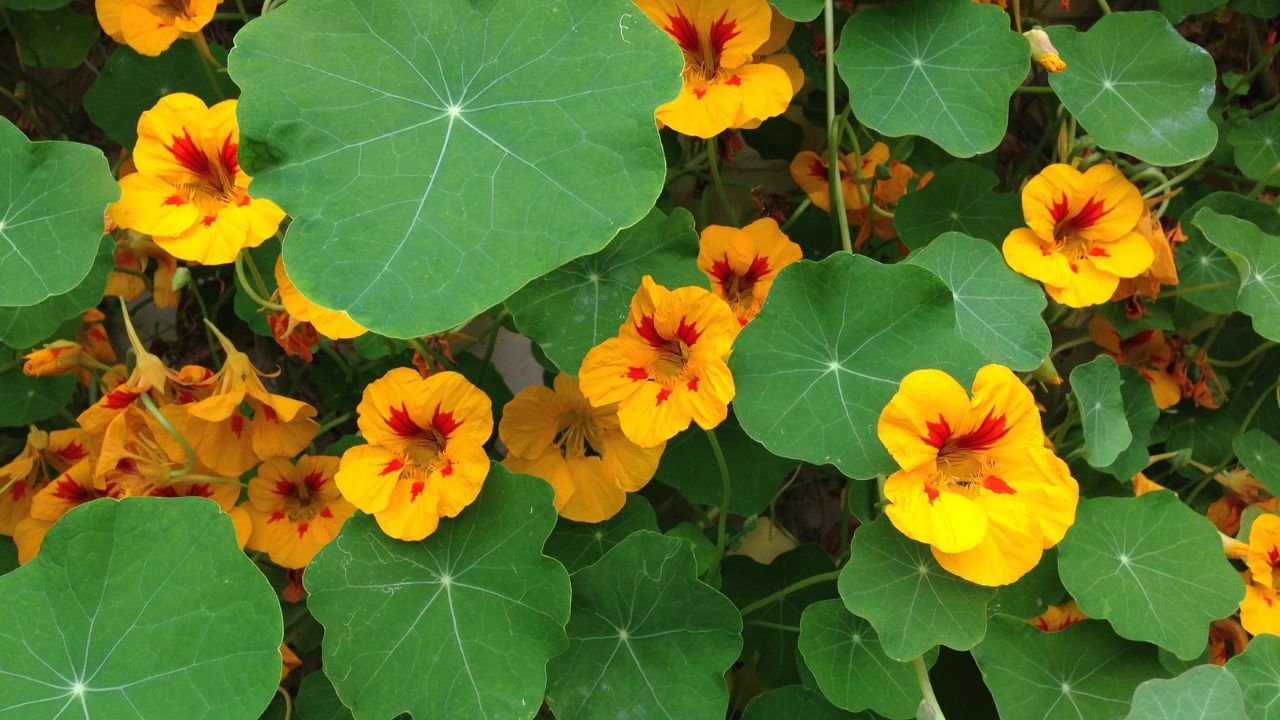
Nasturtiums are what gardeners call a trap crop: they attract aphids and whiteflies so aggressively that pests go for the nasturtiums instead of your tomatoes. This only works if you let it happen, which means resisting the urge to spray your nasturtiums when they get covered in insects.
That’s exactly the point. Their flowers and leaves are also edible, with a peppery kick that makes them a legitimate dual-purpose addition to any garden.
4. Borage
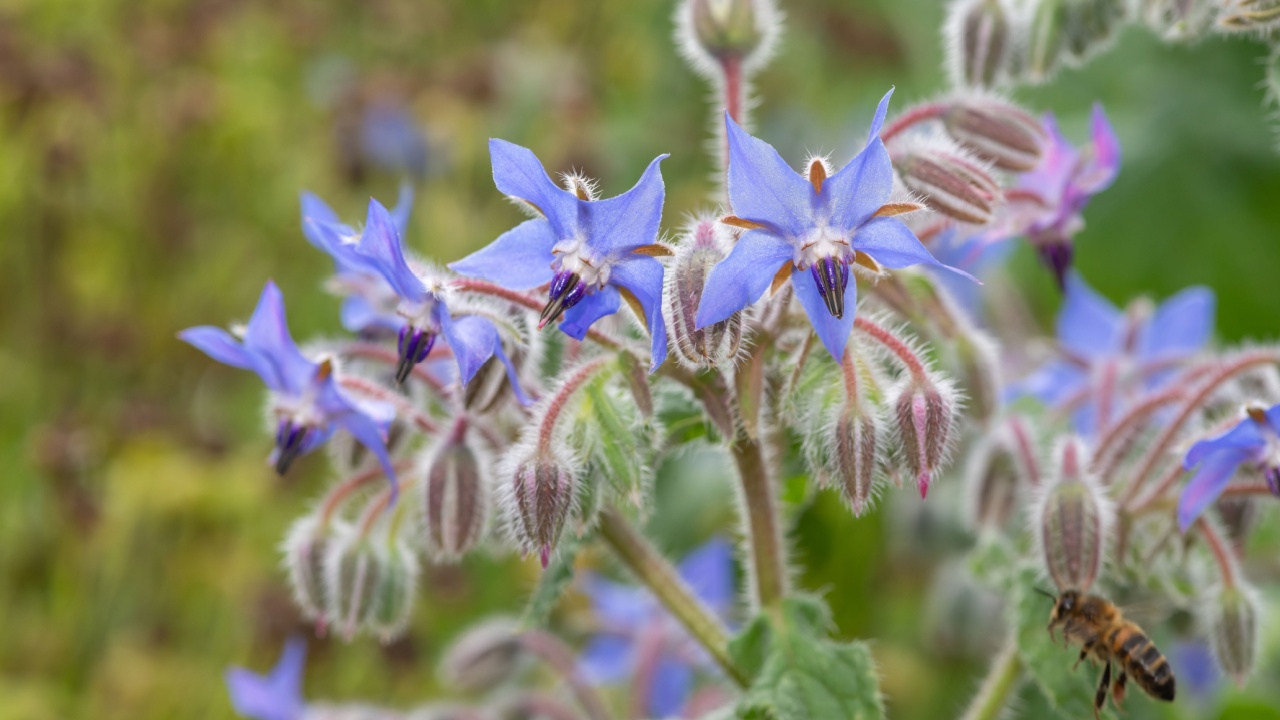
Borage deters tomato hornworms and cabbage moth caterpillars, and it attracts pollinators with its striking blue flowers. The most useful thing about borage, though, may be its self-seeding habit: plant it once at the edge of your tomato bed, and it will return on its own year after year.
Give it space — it sprawls — but the free recurring protection is worth the real estate.
5. Garlic
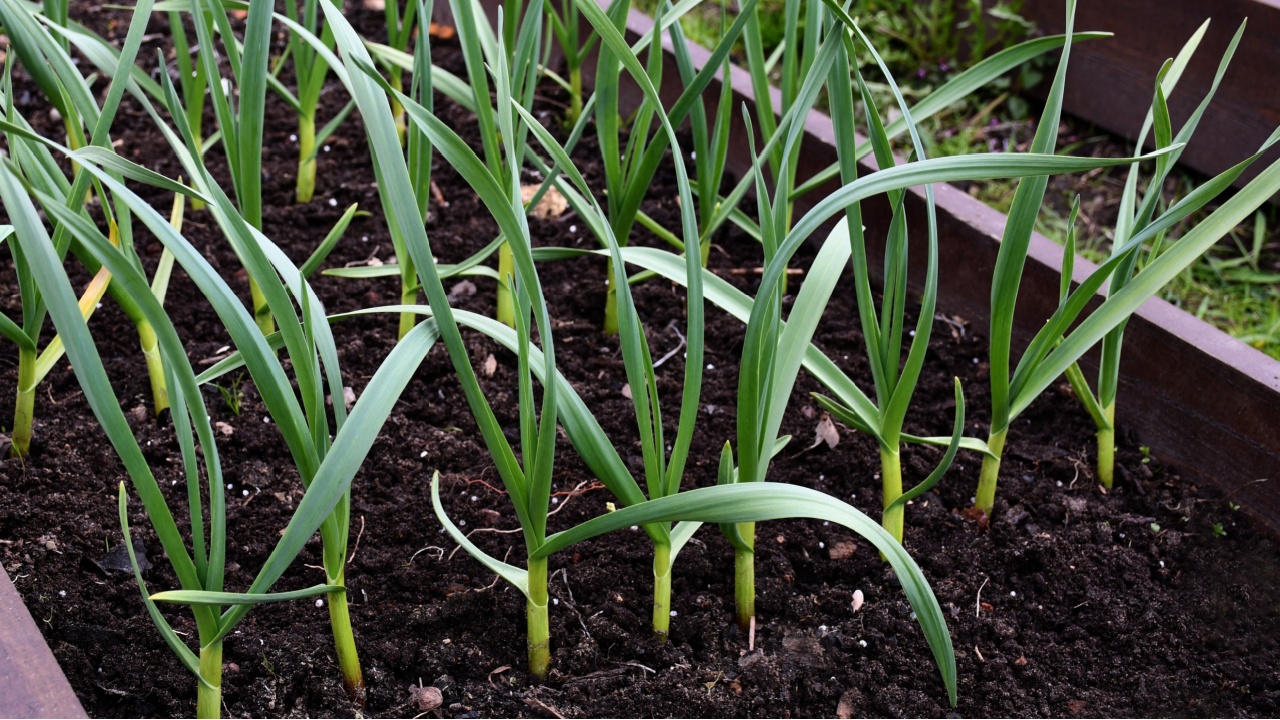
Garlic’s sulfurous odor masks the smell of ripening tomato fruit, disorienting pest moths and keeping away cabbage loopers and root maggots. Beyond pest deterrence, garlic’s antibacterial and antifungal compounds also help suppress soil-borne disease around tomato roots. The same logic applies across the entire allium family: onions, leeks, shallots, and chives all share that pungent, pest-disrupting smell.
Chives, in particular, pull double duty — they deter aphids and hornworms through most of the season, and when they flower, they attract pollinators and beneficial wasps to the bed. One Texas A&M vegetable specialist noted that planting two or three rows of onions around a tomato patch created a physical and olfactory barrier that rabbits simply refused to cross.
6. Carrots
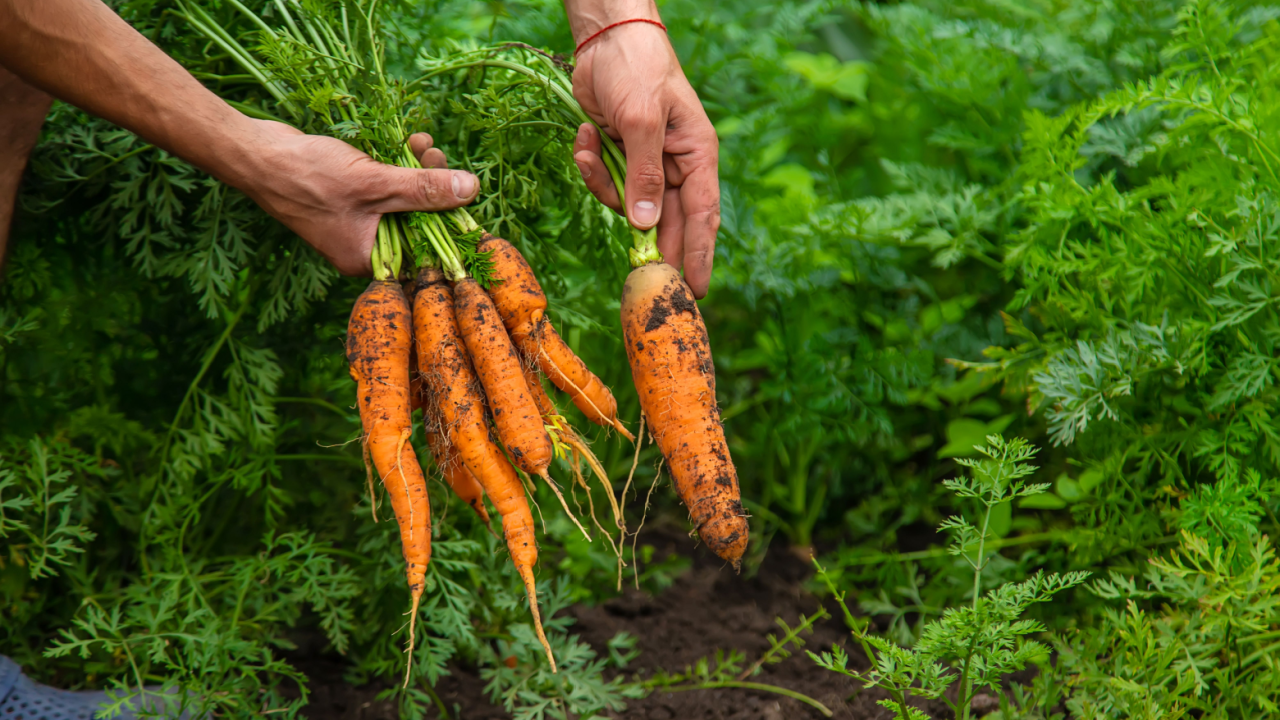
Carrots do most of their work underground, which is exactly why they’re valuable to tomatoes. Their deep taproots break up compacted soil and improve drainage, oxygen flow, and nutrient access around tomato roots, without competing for the same resources.
Plant them early in the season before your tomatoes fill in, and you’ll have a carrot harvest right around the time your tomatoes need the full bed to themselves.
7. Lettuce
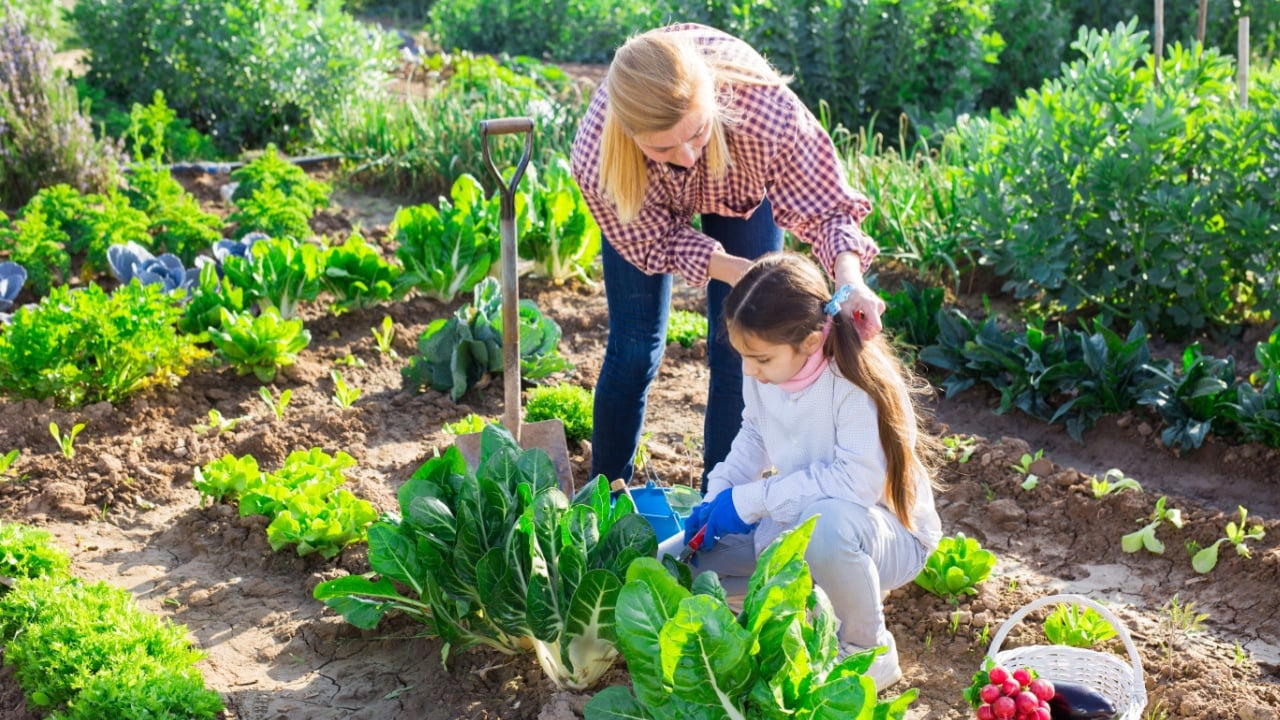
Lettuce is the practical companion: it fills the shaded, lower-level space beneath tomato plants that would otherwise go bare, acts as a living mulch that retains soil moisture, and doesn’t compete for the same root depth.
By midsummer, the partial shade from tomato foliage actually keeps lettuce from bolting. Stick to looseleaf varieties rather than heading types, and tuck them along the outer edges of the bed.
8. Asparagus
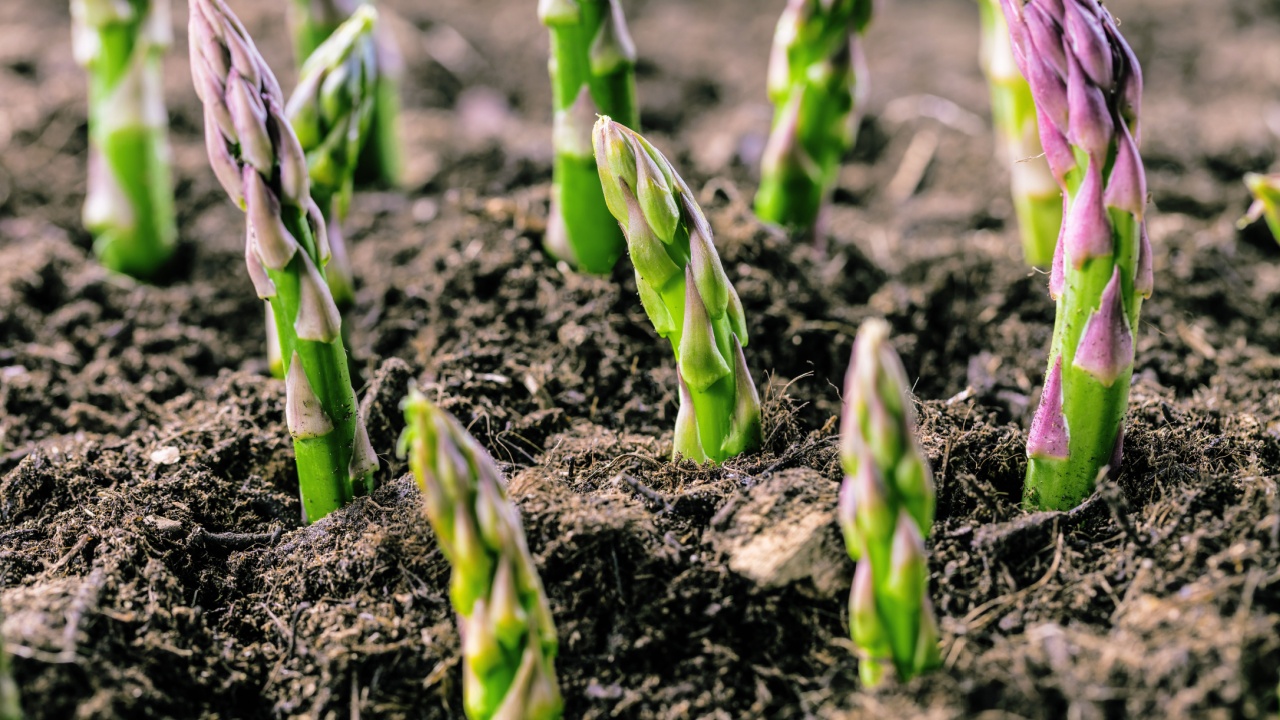
This one surprises most gardeners, but the asparagus-tomato pairing is one of the few companion relationships with genuinely documented mutual benefit. Asparagus releases a compound that is toxic to root-knot nematodes, protecting tomato roots.
Tomatoes, in return, produce solanine, which repels the asparagus beetle. Since asparagus is a perennial, this is more of a long-term garden design decision than a seasonal planting choice, but if you have an established asparagus bed, plant your tomatoes nearby.
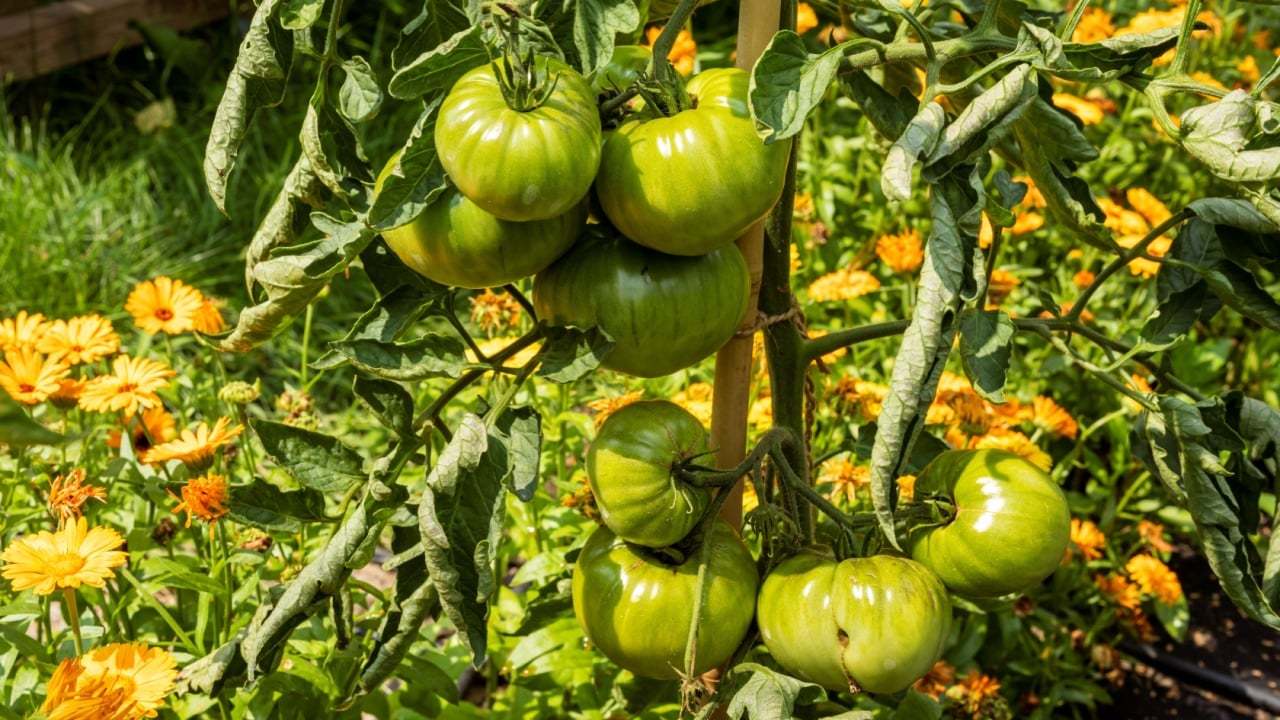
9. Calendula
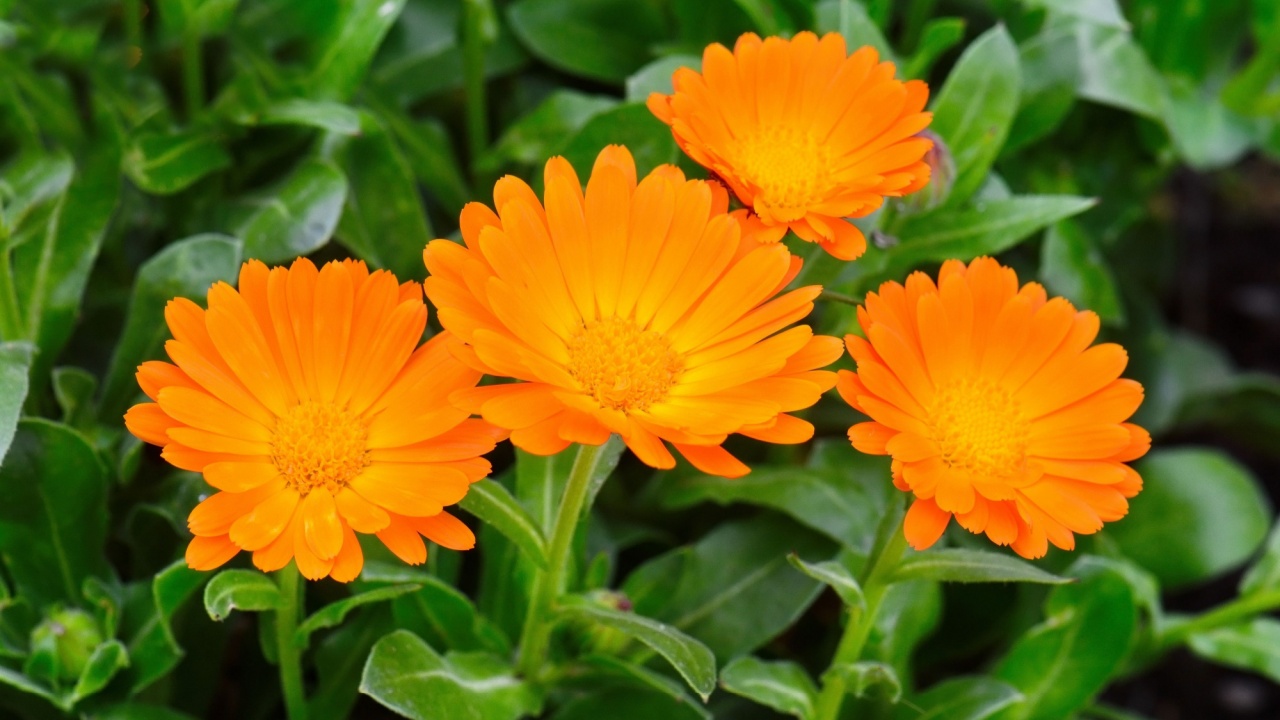
Calendula’s sticky stems trap aphids before they reach your tomatoes. It also attracts hoverflies and parasitic wasps, which are natural predators of caterpillars and whiteflies. Like nasturtiums, it functions as a sacrificial plant, requiring occasional cutting back or removal when pest load gets high.
The bright orange flowers are edible and attractive, making it one of the most garden-worthy companions on this list.
10. Thyme
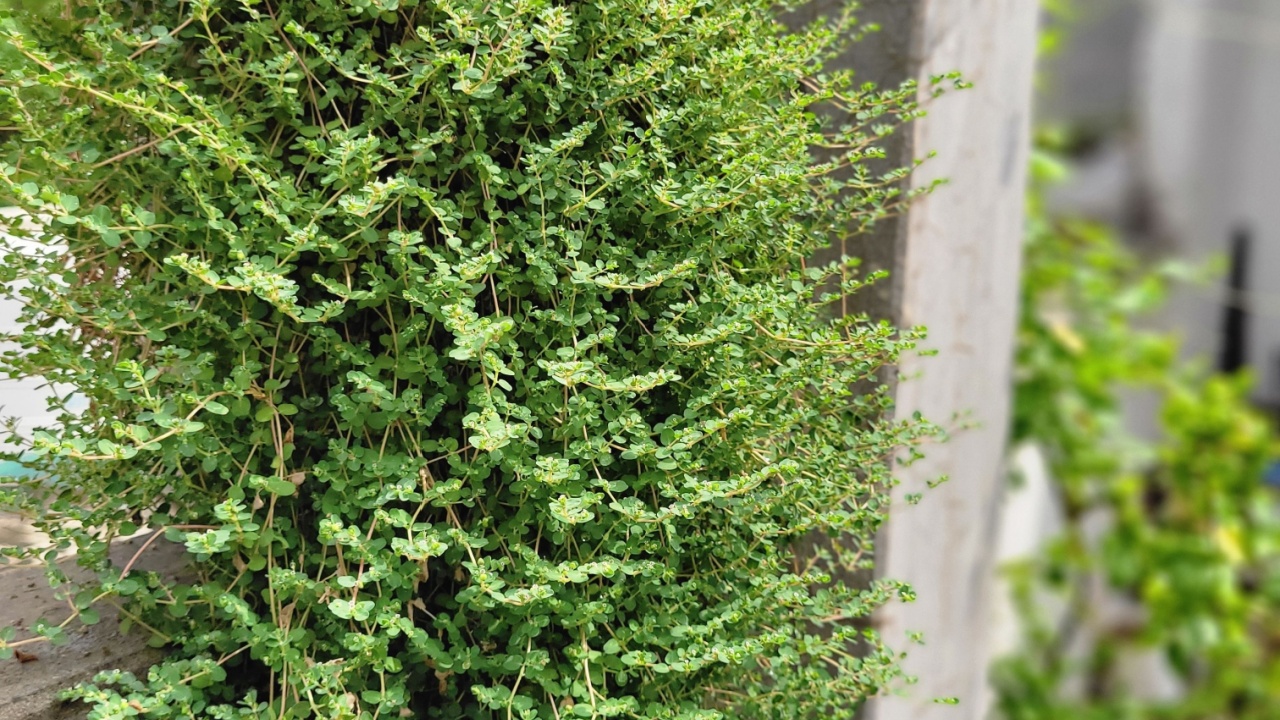
According to Savvy Gardening, Iowa State University researchers found that interplanting tomatoes with thyme reduced egg-laying by yellow-striped armyworms, one of the more destructive tomato pests. Thyme grows as a low, spreading mat, making it a natural living mulch for tomato beds.
It is perennial, so keep in mind that if you rotate your tomatoes to a new bed each year, the thyme will need to move too.
The 4 Plants You Should Never Grow With Tomatoes
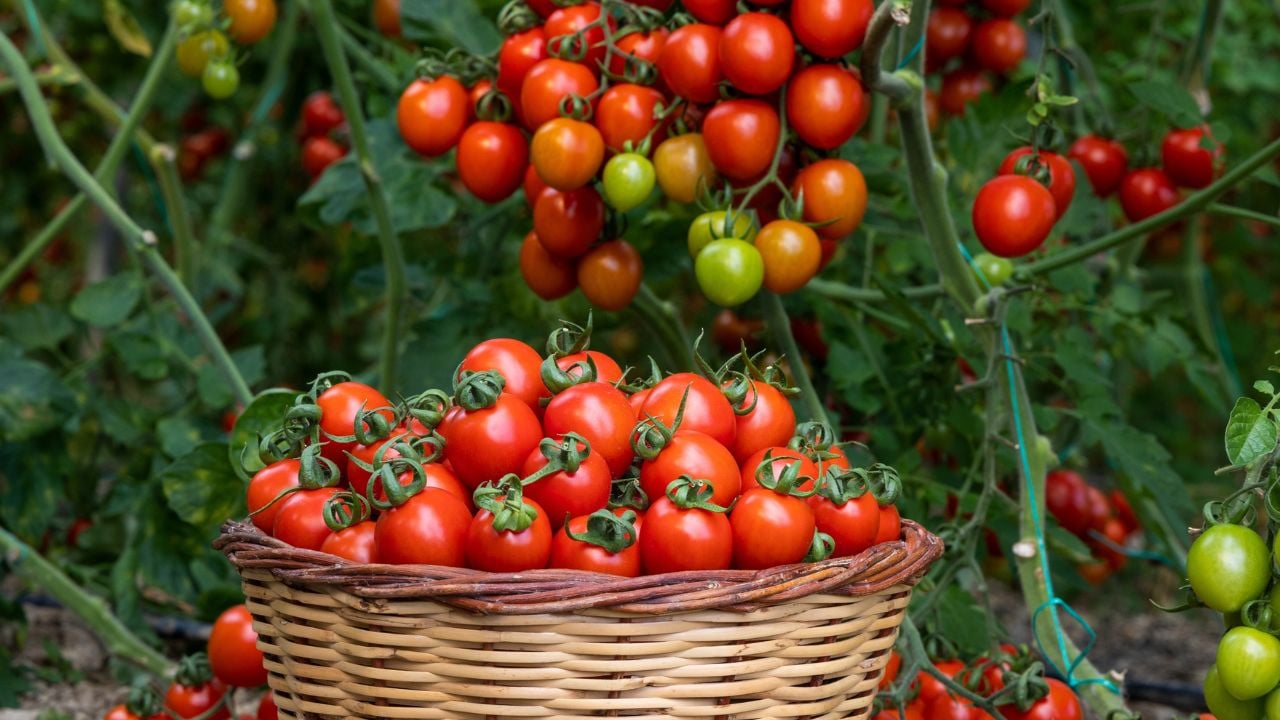
The companion planting world is full of mistakes dressed up as good advice. These four plants appear on friendly companion lists all the time, and all four have a documented case against them.
1. Fennel
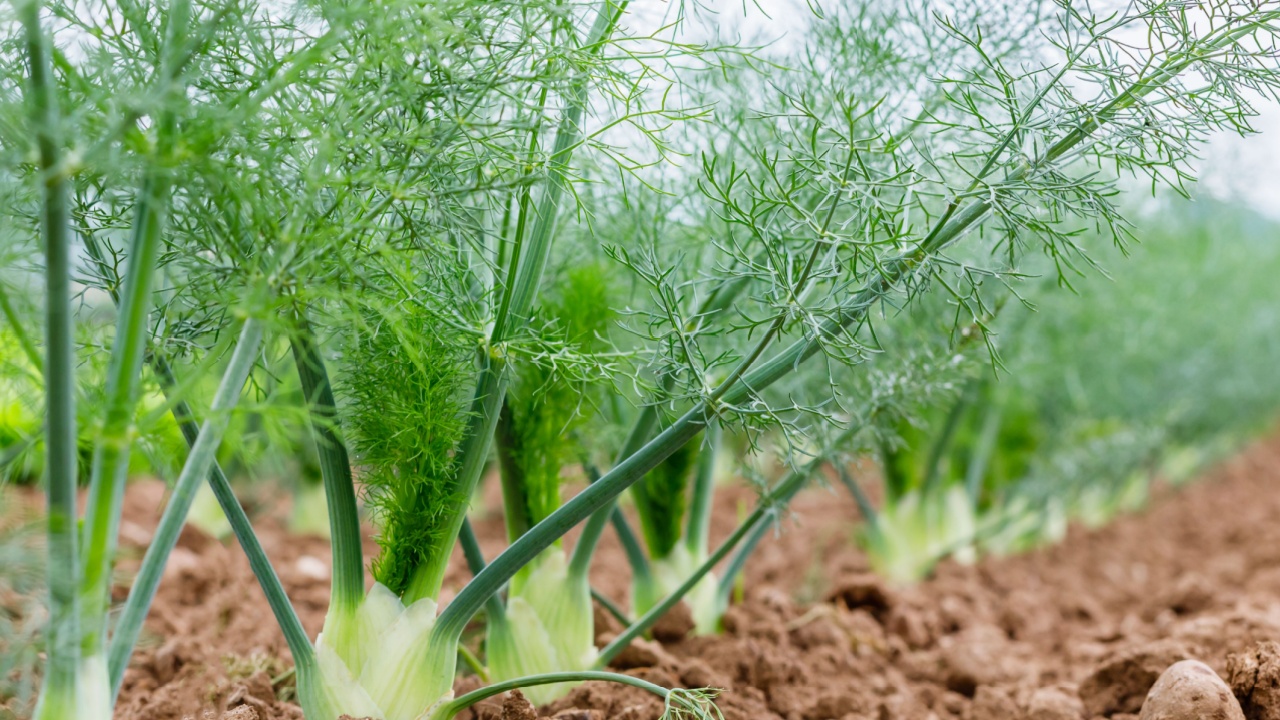
Fennel is probably the most dangerous plant you can put near tomatoes. It releases allelopathic compounds that actively inhibit the growth and development of nearby plants, and tomatoes are particularly sensitive. Keep fennel in a separate bed, far away.
2. Mint
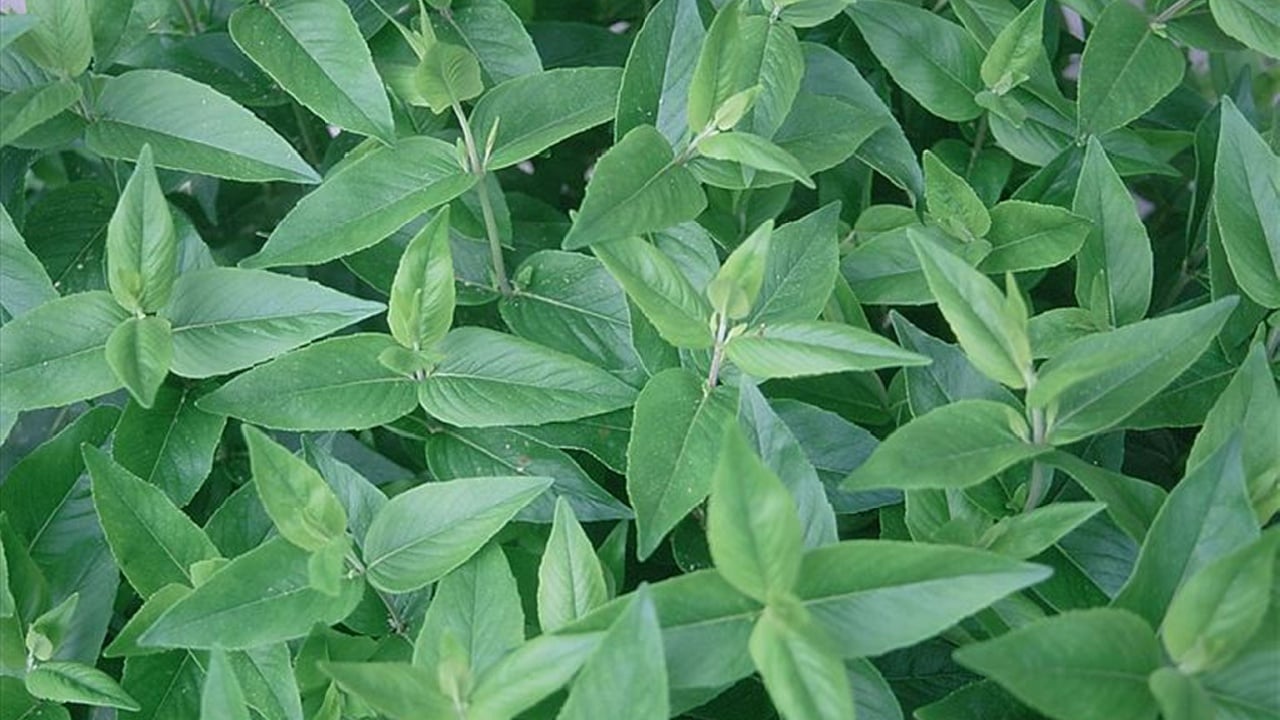
Mint is widely sold and widely planted next to tomatoes, and this is a genuine error. Maturing mint releases compounds that retard tomato growth. The internet loves pairing them, but experienced gardeners who have watched their tomatoes underperform next to mint know better.
3. Dill
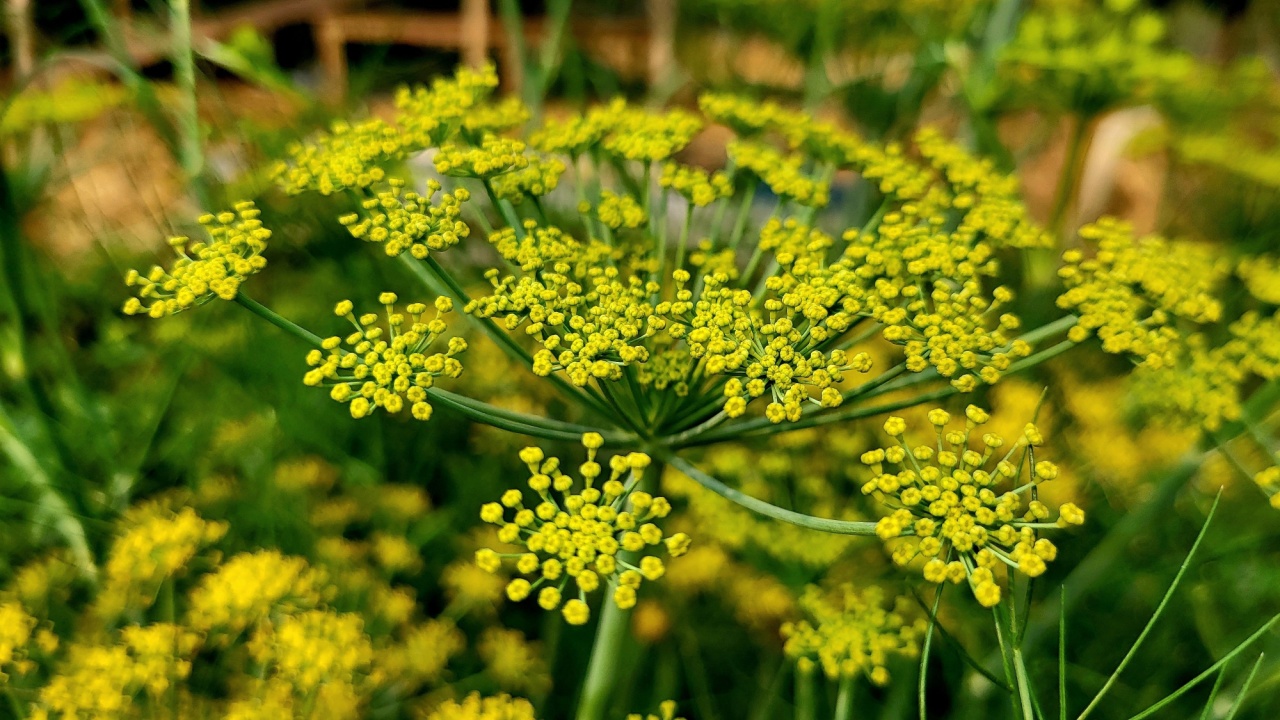
Dill is a case study in frenemy plants. Young dill attracts beneficial insects; mature dill attracts tomato hornworm moths and has allelopathic properties that stunt tomato growth. If you grow dill, keep it well away from the tomato bed.
4. Mediterranean herbs

Mediterranean herbs, like rosemary, sage, lavender, and most high-dry-sun herbs, prefer lean, low-fertility, well-drained soil. Tomatoes are heavy feeders that need consistent water and rich amendments. Sharing a bed forces one of them to suffer, and it is usually the herb. These plants are beautiful; they simply belong elsewhere in the garden.
What Companion Planting Can (and Can’t) Do For You

Companion planting is not a substitute for healthy soil, proper watering, and attentive gardening. It will not eliminate pests entirely, and it will not rescue a tomato bed with underlying problems. What it can do is tilt the ecosystem in your favor by attracting more beneficial insects, reducing pest pressure at the edges, and making better use of every inch of your growing space.
The companion planting advice most worth trusting is the advice backed by research: basil’s defense-priming is confirmed, asparagus and tomato’s mutual protection is documented, and thyme’s armyworm deterrence comes from university studies. Much of the rest is tradition, and tradition is worth something in the garden, but it should be held a little more lightly.
A Garden That Works With Itself
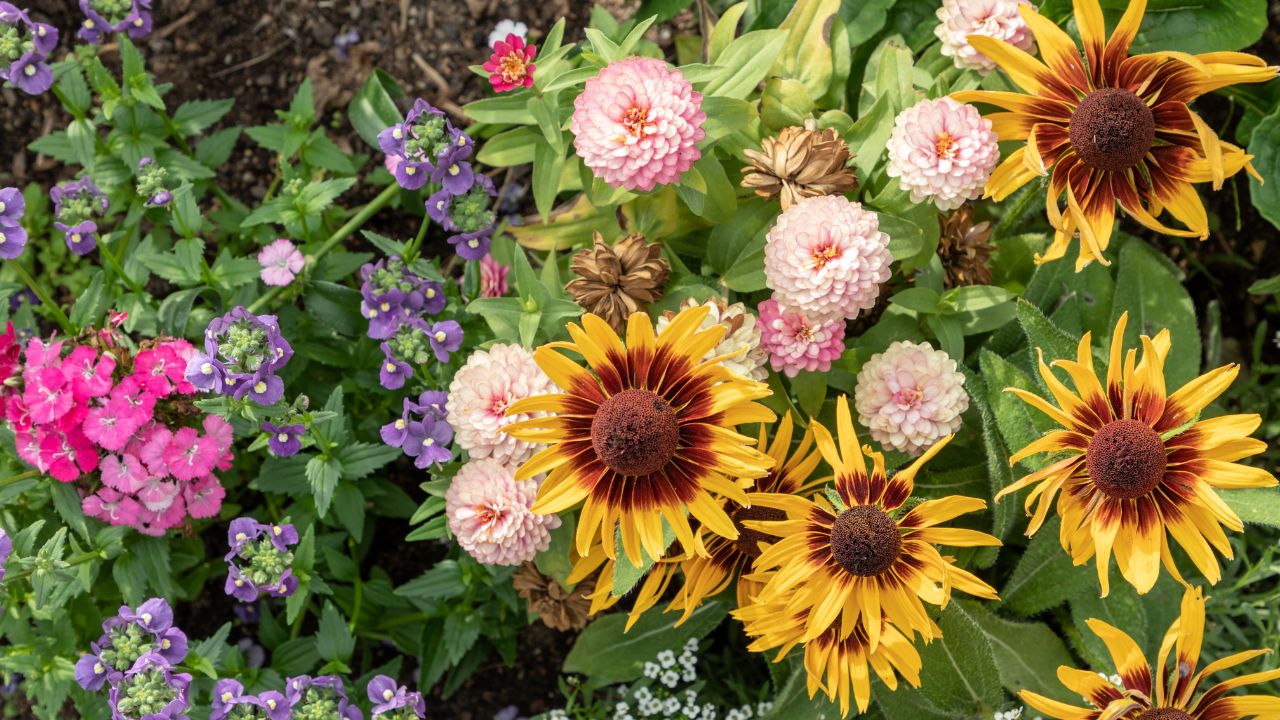
With planting season approaching, March is the right time to think through bed placement. Tuck basil between plants rather than in a separate row. Place marigolds around the outer border. Start sunflowers now if stink bugs are a regular problem in your area, since they need to be flowering when your tomatoes peak. Plant nasturtiums and calendula at the edges as sacrifice zones. Lettuce and carrots can go in early, before tomatoes are transplanted.
You do not need a perfect companion planting plan. You need a handful of good ones, planted with a little intention, and you need to leave the bad actors out. Start with basil and marigolds if nothing else. Add nasturtiums for pest interception. Tuck lettuce in the shade. The garden will take it from there, doing exactly what gardens do best when they’re given the right company: finding its own balance.
Read More
Do these 12 raised garden bed tasks before March ends, or lose your head start
12 vegetables to direct sow in the garden right now in March