Still Frozen, Still Busy: Your February Garden Checklist (Zones 1–3)
February can feel like the longest month for gardeners in cold climates. The ground is frozen, snow is deep, and the arrival of seed catalogs makes it tempting to rush ahead.
There aren’t many parts of the United States that are home to USDA Plant Hardiness Zones 1-3. However, areas of northern Minnesota, North Dakota, and Montana fall within those zones, and gardeners in these areas should treat February as primarily a planning and preparation month. With soil inaccessible and lethal cold still likely in the forecast, most meaningful garden work this time of year happens indoors.
Plan First, Plant Later
Because growing seasons are so short in Zones 1-3, seed inventory and early ordering (before seeds run out) are a priority this month. February is the time to compare catalogs, check seed viability, label packets, and decide what’s truly worth growing this year.
This is also a great time to review last year’s garden notes and make note of what thrived, what stalled, and what bolted to help refine spacing, crop rotation, and realistic expectations for the year ahead.
Garden mapping and journaling throughout the growing season can help to set you up for success when spring finally does arrive.
Starting Seeds Indoors
Late February is appropriate to start seeds if you’re planning to grow slow, cool-hardy, long-season plants like onions, leeks, and celery. Clean and sanitize seed trays, test grow lights, and manage indoor air dryness before sowing.
Protect What’s Already Out There
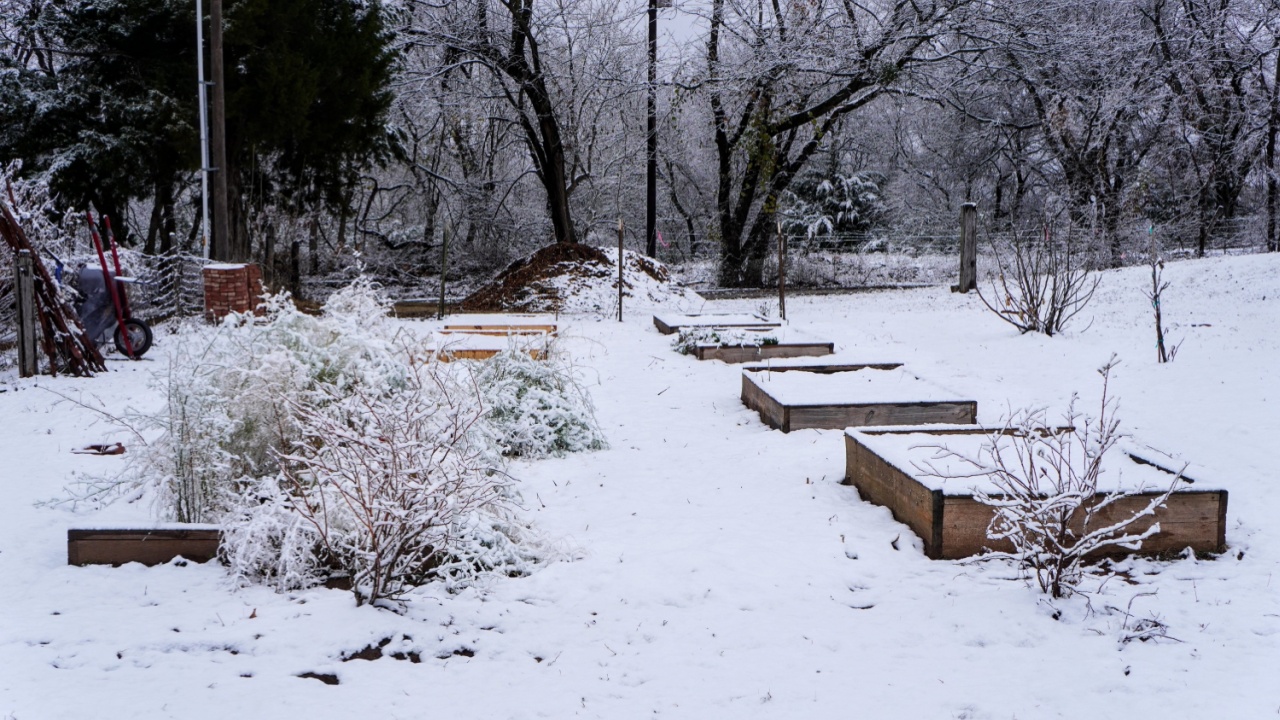
Outdoor work in February focuses on protection. Leave snow on garden beds, because it acts as natural insulation to plants.
Monitor snow load on evergreens after heavy storms, and reinforce tree guards against rabbits and deer, which cause more damage under snow than many expect.
Greenhouse owners should inspect structures for cracks, heat leaks, and rodent entry points—cold frames can fail under extreme cold if overlooked.
Prepare for an Unpredictable Spring
With frost dates becoming less reliable, flexibility is key. Order row covers, hoops, and frost protection supplies now, if you don’t already have them. Soil testing kits can also be ordered this month, even though testing waits until spring temperatures thaw.
Compost may be frozen solid, but planning new bins or spring amendments to beds now saves time later.