It’s Orchid Season: How These Exotic Blooms Became Household Favorites
Every year, as winter slowly fades, orchids quietly take center stage, brightening window sills, lining grocery store aisles, and showing up as the go-to houseplant. They feel modern and approachable, offering an array of vibrant colors and shapes that brighten the winter gloom.
Orchids didn’t become popular overnight. Their journey from ancient forests to everyday homes is a story shaped by science, obsession, and cultural meaning.
These blooms have been captivating humans for far longer than most people realize, which explains why they still feel special, even now.
Ancient Plants With Deep Cultural Roots
Orchids are among the oldest flowering plants on Earth, evolving 100–120 million years ago and surviving mass extinctions long before humans appeared. By the time that people encountered orchids in the wild, they already possessed astonishing complexity.
In China and Japan, orchids were admired as early as 3,000–4,000 years ago. Confucius praised them for their fragrance and moral symbolism, using orchids as metaphors for virtue, integrity, and friendship. These values still shape how orchids are perceived today.
In Ancient Greece, orchids took on a different meaning. Their name comes from orchis, meaning testicle, inspired by the paired tubers of some species. This association linked orchids to fertility myths and early medicinal folklore, influencing both language and science.
Western scientific study of orchids began around 300 BC, when Theophrastus, one of Aristotle’s students, documented them in early botanical texts.
However, orchids truly exploded into public consciousness after European explorers encountered tropical epiphytic orchids in the New World.
Making Their Way to Europe
By the 1500s, orchids appeared in European herbals, often surrounded by superstition and exaggerated medical claims. Vanilla, the first economically significant orchid, was already transforming global taste after Spanish explorers introduced it to Europe from Mesoamerica.
The orchid obsession peaked in Victorian England. Rare orchids became status symbols, and “orchid fever” swept through elite society. Collectors risked their lives in jungles where many never returned. As Norman McDonald later wrote, “When a man falls in love with orchids, he’ll do anything to possess the one he wants… It’s a sort of madness.”
A turning point came in 1818, when William Cattley successfully bloomed a South American orchid in England, launching the iconic Cattleya genus. Botanist John Lindley followed, publishing cultivation guides that transformed orchids from mysteries into manageable plants.
Charles Darwin deepened public fascination by proving orchids evolved intricate pollination strategies, strengthening his theory of natural selection. Still, one problem remained: orchid seeds couldn’t grow without fungi. That changed in 1922, when biologist Lewis Knudson developed a sterile germination method, unlocking mass cultivation.
Orchids in Modern Day
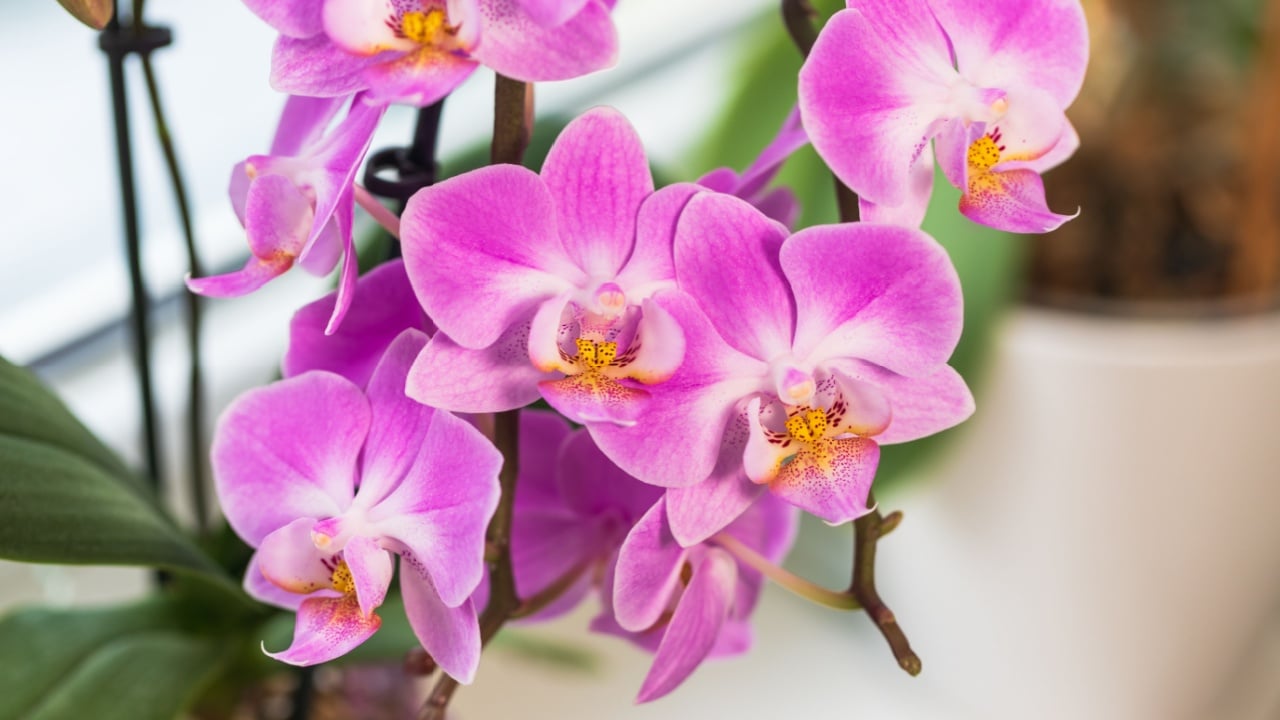
Hybridization and efficient growing shifted orchid trends throughout the 20th century, eventually elevating Phalaenopsis orchids because they were long-lasting, easy-to-grow, and ideal for home life. As a result, orchids swiftly moved from aristocratic greenhouses to grocery stores without losing their allure.
Today, orchids remain economically and culturally significant, from floriculture and fragrance to vanilla production. Orchids have survived extinction, obsession, and reinvention, proving that their popularity is a legacy.