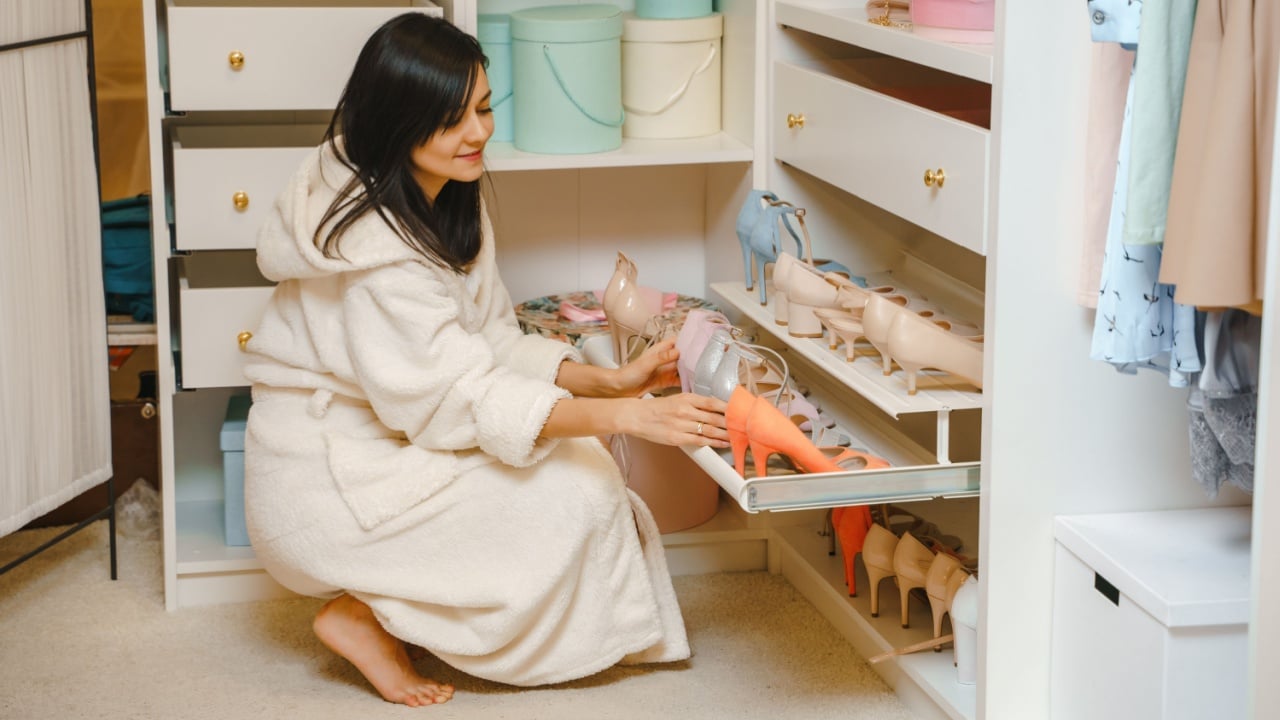
12 Storage Hacks to Tackle That Overflowing Closet
Does this scene ring a little too true? You open your closet, only to find a jumble of clothes that somehow leaves you with nothing to wear. Your favorite sweater slips under a pile of scarves, shirts slide off hangers, and everything you pull out looks as though it has been asleep for days. A cluttered closet does more than make you look rumpled. It steals time from your morning and adds a quiet kind of pressure you might feel all day.
The good news is that you do not need a new wardrobe or a larger room to fix it. A few clear steps can transform that cramped corner into a space that actually helps you get ready instead of slowing you down. It feels good to see everything neatly in place, and even better when you can grab an outfit without hunting for it.
Here are 12 practical storage ideas to help you reclaim your closet, protect your clothes, and bring a bit of ease back into your mornings.
1. Add a Second Hanging Rod
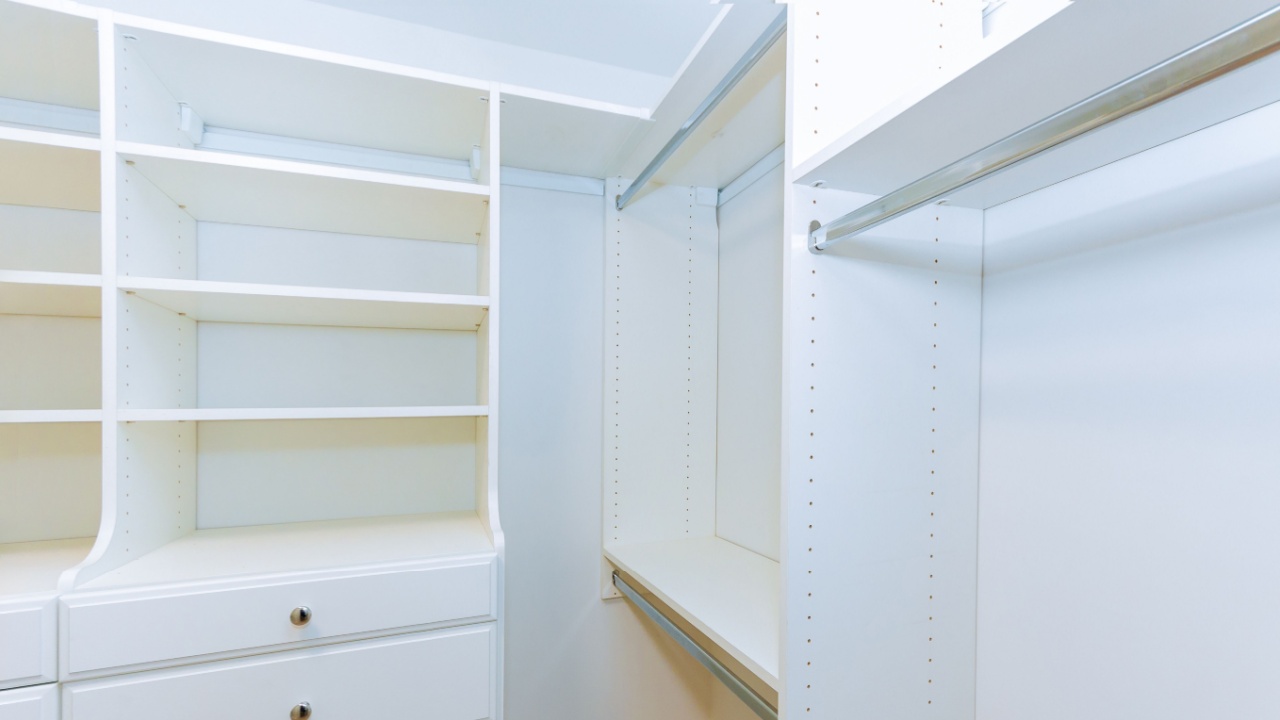
By installing a second rod, either below your current one or higher up, you double your hanging space without expanding the closet footprint. This is especially handy if you mostly have shorter items like shirts, blouses, skirts, or folded pants.
When you install, leave enough clearance between rods so clothes don’t bunch up. Use the top rod for shorter tops/jackets and the bottom for pants or skirts. If you rent or don’t want to drill, a tension rod can sometimes work as a temporary second rod.
2. Hanger hacks

Turn all your hangers so they face the same direction to start. Each time you wear an item and return it to the closet, flip the hanger so the hook faces the opposite way. Over time, you’ll easily spot what you actually use and what is just taking up space.
You can use slim hangers that take up far less space horizontally than bulky plastic or wooden hangers. Its Non-slip coats help garments stay put, which means less time chasing stray clothes and fewer wrinkles.
3. Stackable Storage Boxes
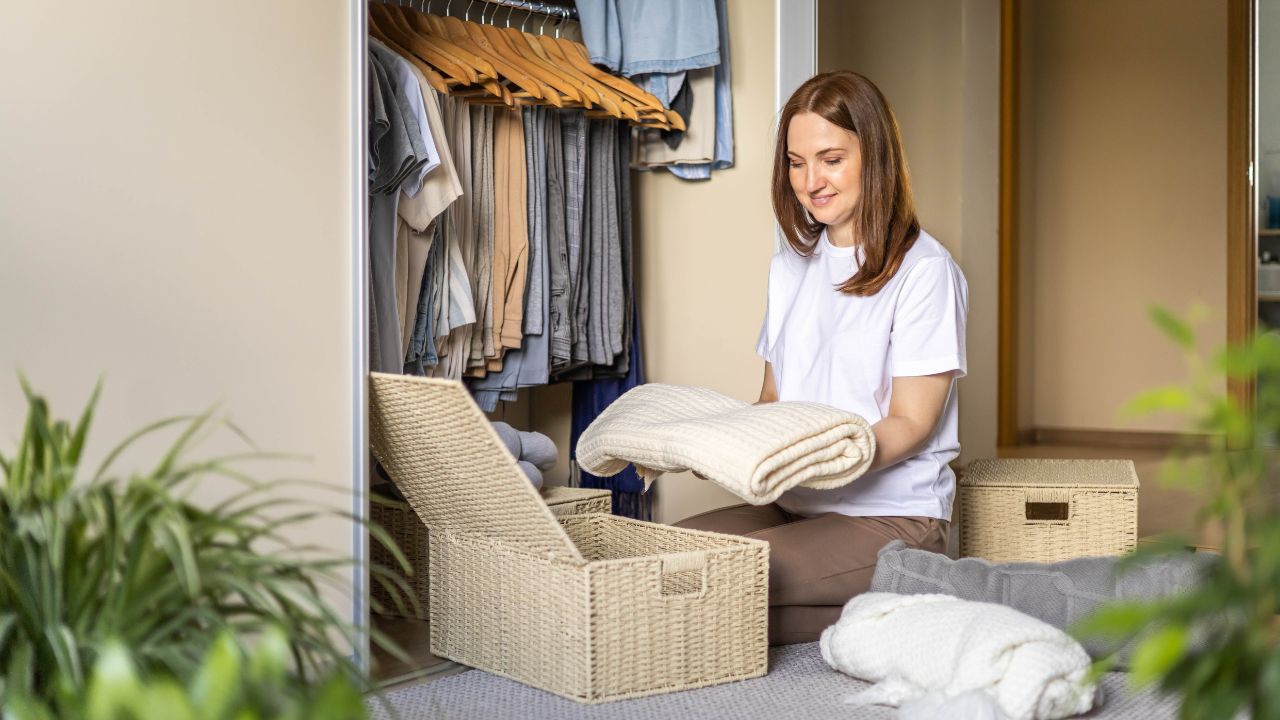
Use bins, boxes, or baskets to store folded clothes, scarves, hats, accessories, or seasonal wear. They’re especially useful on shelves or the top closet space.
Bins give each category of items a designated “home,” cutting down clutter and making it easier to grab what you need without messing up the rest. Clear or labeled containers make items visible, which saves time and avoids repeated digging around.
4. Use the Inside of Doors
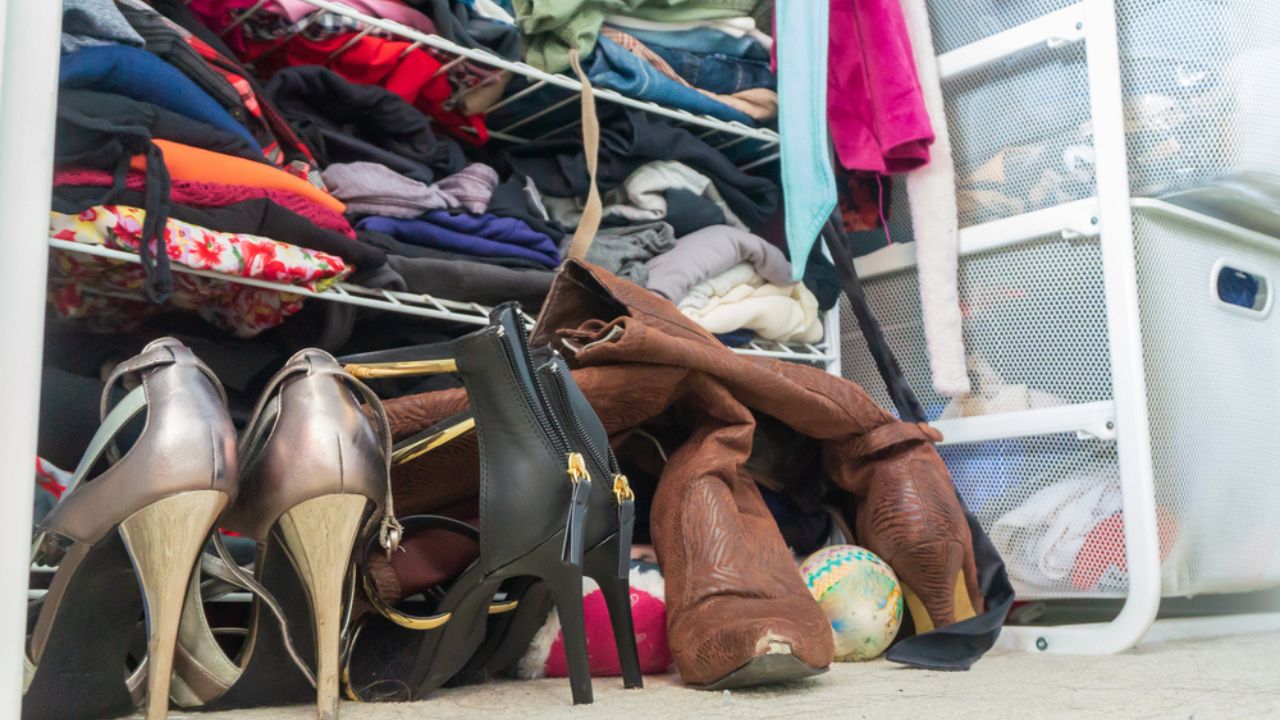
The inside (or back) of your closet door is often wasted space. Installing over-the-door shoe bags, slim racks, or hooks gives you extra storage for shoes, belts, bags, scarves, hats, or accessories.
Choose organizers with clear pockets or compartments so you can see what’s inside. Reserve door space for lighter items rather than heavy coats. Keep door movement in mind to ensure that organizers don’t obstruct opening/closing.
5. Maximize Vertical & High/Low Space
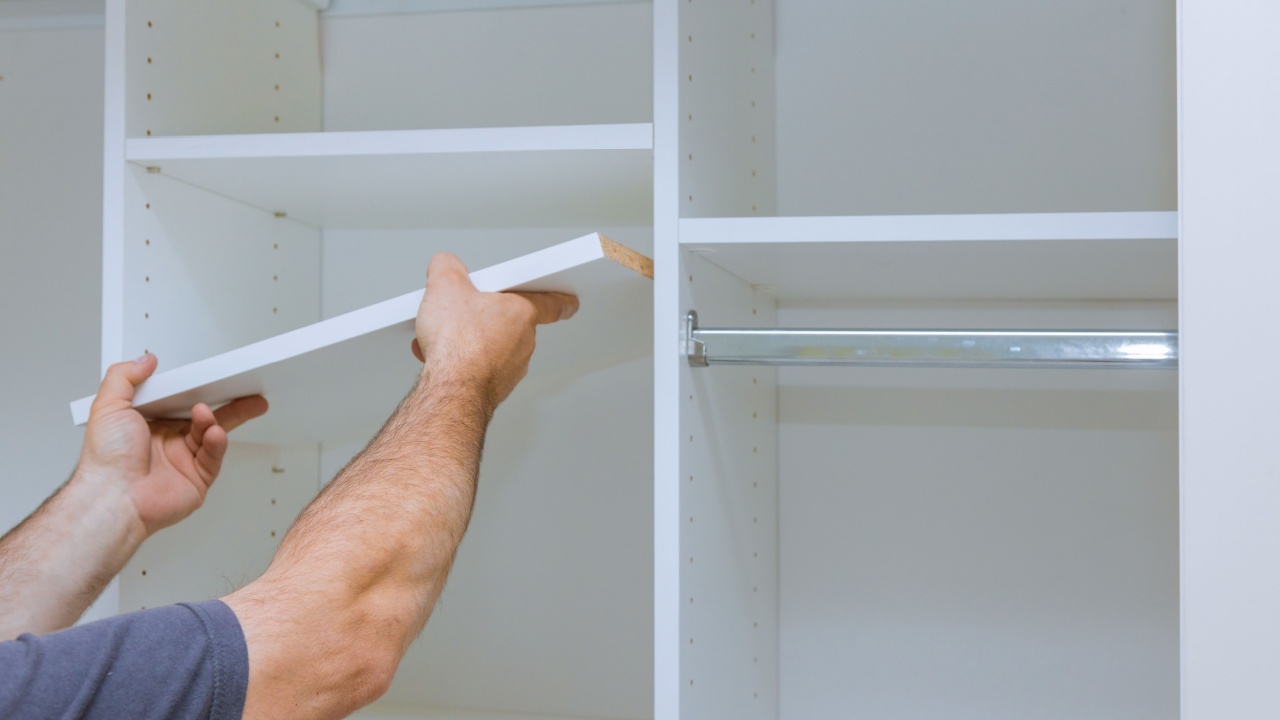
Don’t ignore the gap above hanging clothes or under shelves. Add extra shelves, stacking bins, or upper storage units for items you don’t use daily, like off-season clothes, bags, spare bedding, or rarely used shoes.
Vertical space is often wasted in closets. Using high shelves or stacking bins turns underutilized space into efficient storage, freeing up prime space at eye level for items you use regularly.
6. Zone Your Closet
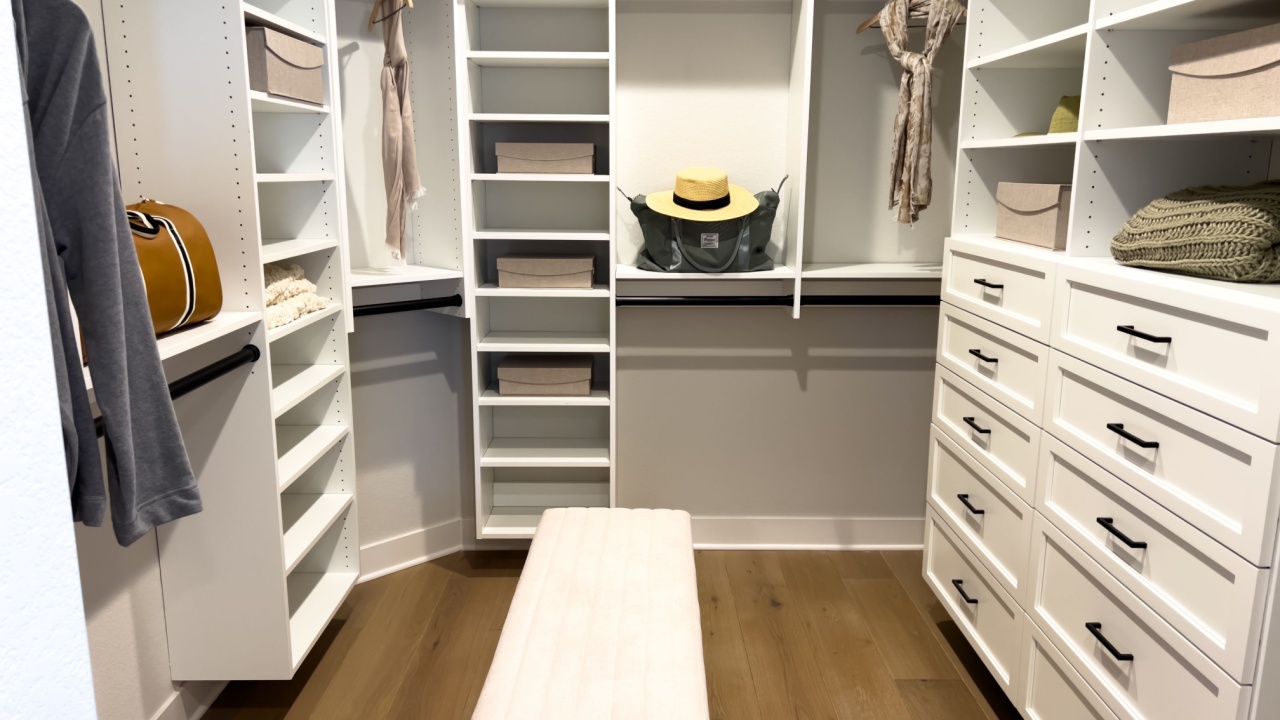
Rather than dumping everything into one big pile, divide your closet into zones for everyday wear, work clothes, formal clothes, seasonal items, accessories, shoes, etc. Put frequently used items front/center, lesser-used or seasonal stuff up high or to the side.
Take everything out once in a while, say every 3–6 months, re-evaluate what you actually wear vs what sits unused. Move out items you don’t need right now and store or donate them. Seasonal rotation, like winter coats vs summer clothes, helps keep zones relevant.
7. Use Drawers, Dividers, or Modular Inserts for Small Items
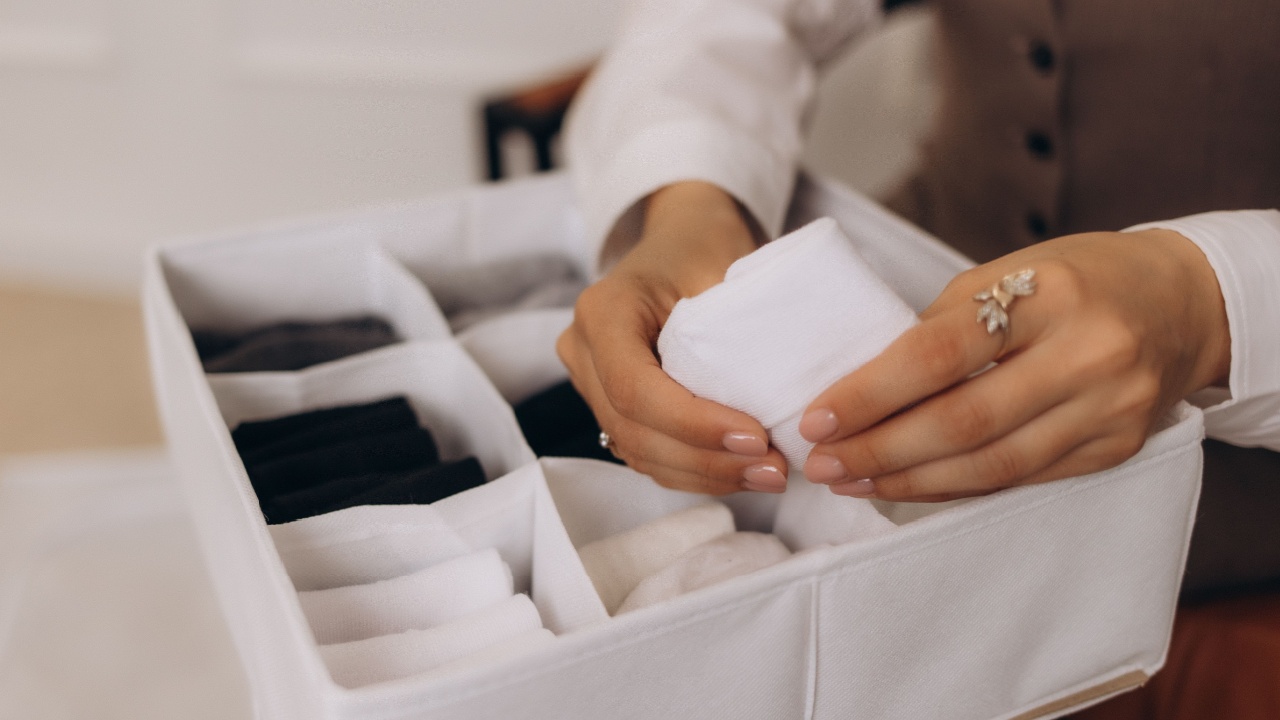
For small items like socks, underwear, belts, scarves, jewelry, etc., drawers or modular inserts/dividers are perfect because they help eliminate rummaging around. This keeps small things contained, visible, and easy to grab.
Small items often create chaos because they get mixed with bigger clothes or end up lost in bins. Dividers or small drawers give each item a “place,” so when you open the drawer, you see everything at once.
8. Incorporate Good Lighting
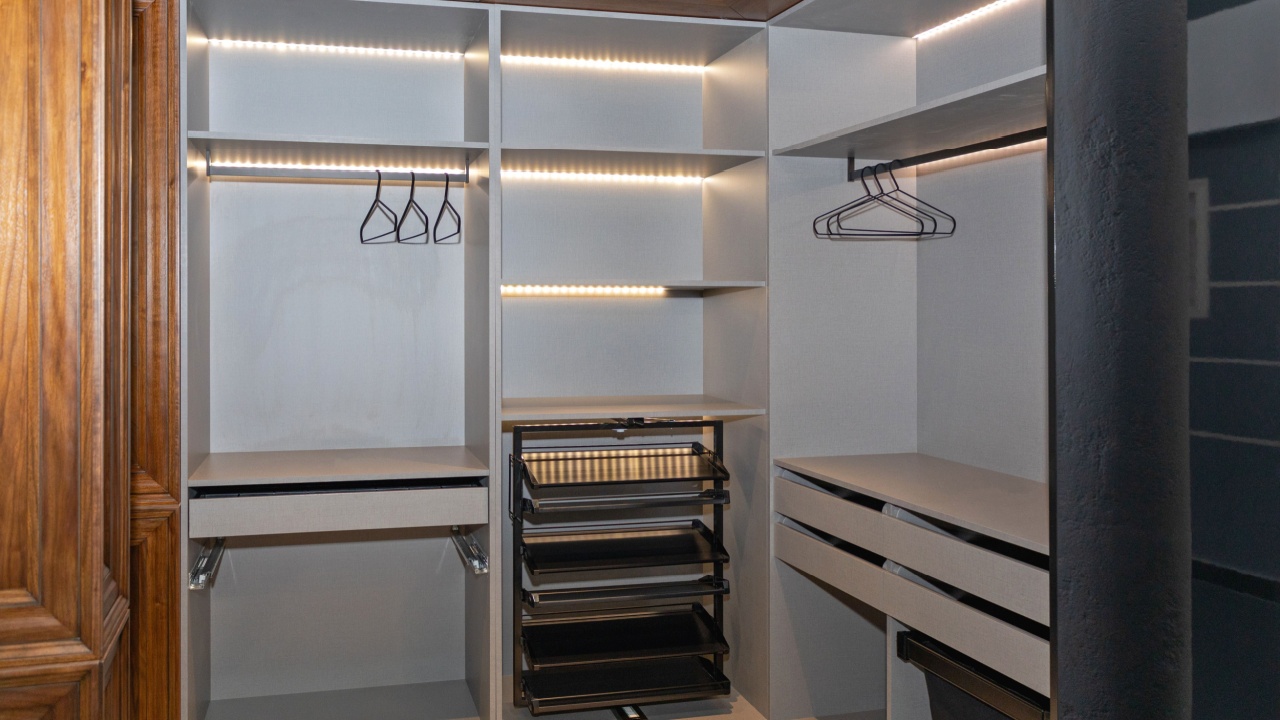
Closets are often dark, and poor lighting makes even a well-organized space inefficient. Adding LED strips or motion-sensor lights inside helps you see what’s there, makes colors easier to distinguish, and transforms the closet into a more usable space.
Pick battery-operated or plug-in LED strips for easy installation (no wiring needed). Place lights in corners or at shelf edges to avoid shadows. Clean periodically to remove dust and ensure lights remain effective.
9. Store Off-Season Items Elsewhere
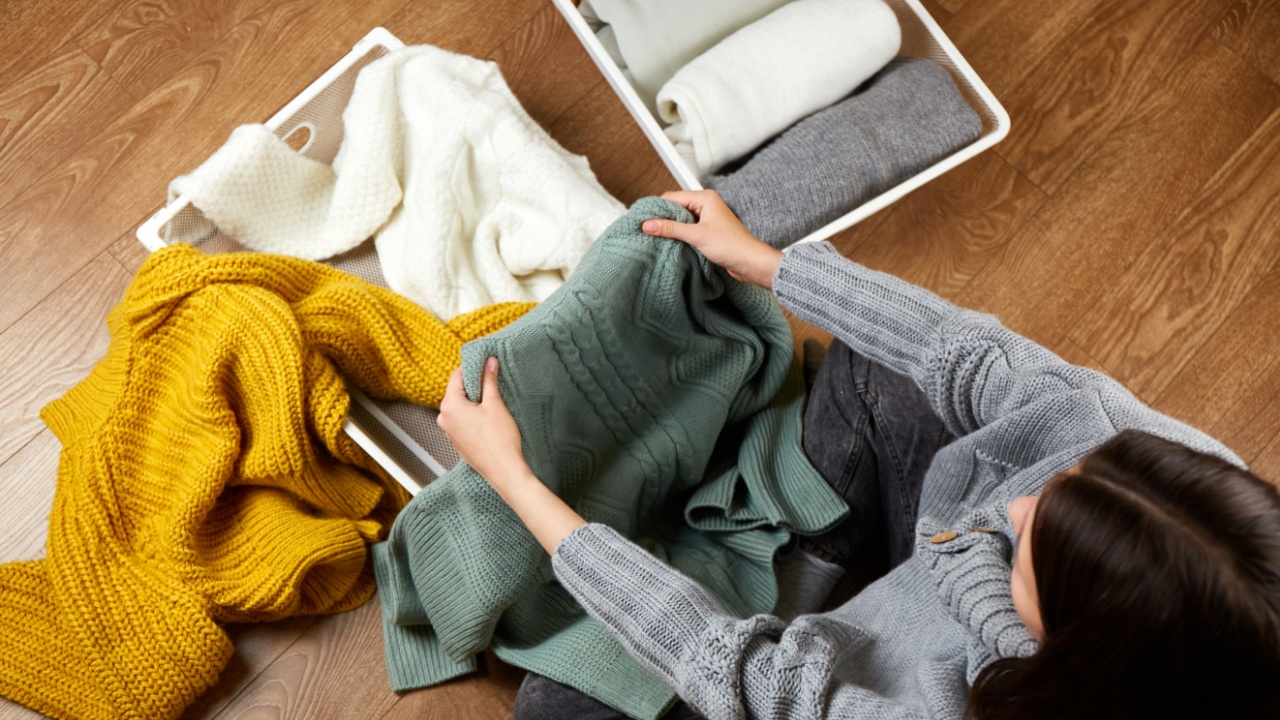
Instead of keeping all clothes year-round, rotate seasonally. Store out-of-season items (heavy coats, winter sweaters, scarves) somewhere else, such as high shelves, under the bed, or in vacuum-sealed storage.
Seasonal rotation frees up valuable closet space when you don’t need certain items. This will give you more room for current season essentials. It also reduces clutter and makes finding what you need simpler.
10. Portable Organizer for Flexible, Mobile Storage
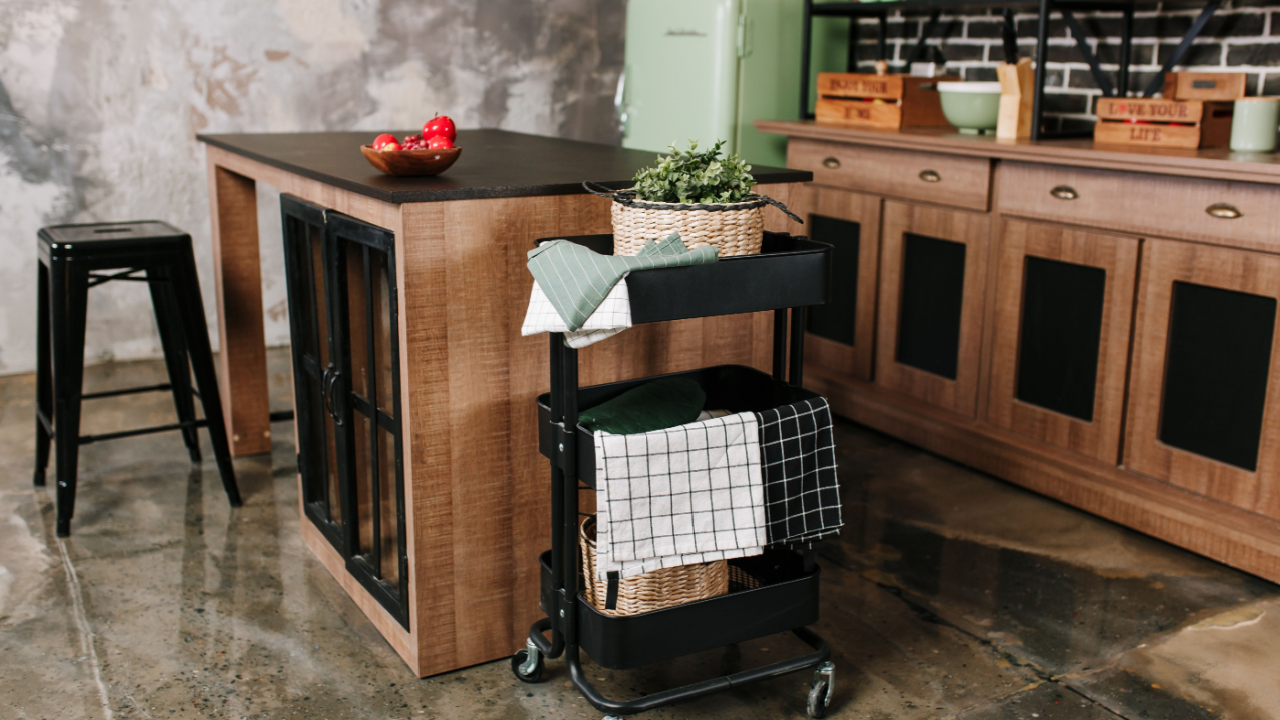
If your closet is shared, small, or just chaotic, a small rolling cart or portable organizer gives you extra flexible storage for things like shoes, accessories, workout clothes, or seasonal wear.
A cart can slide in or out as needed, giving you easy access to frequently used items without rearranging the whole closet. It’s especially useful when your closet layout limits built-in storage; portable units adapt to changing needs.
11. Install a Built-In Closet Island or Dresser
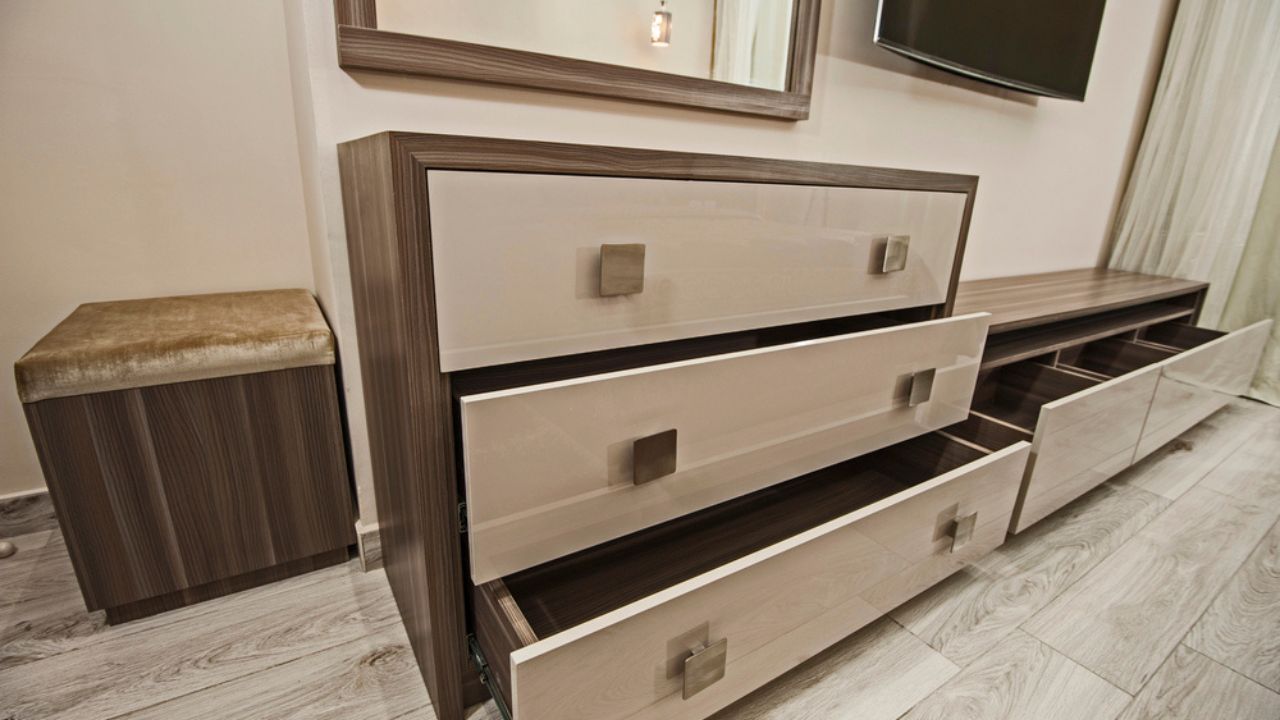
If you have a larger closet or walk-in wardrobe, adding a small built-in island (dresser with drawers) or a built-in shelving unit can greatly expand storage. This gives you dedicated space for folded clothes, accessories, jewelry, or a dressing corner.
If building from scratch: choose sturdy materials, proper drawer slides, and design according to your storage needs (e.g. number of drawers vs hanging space). If retrofitting existing closets, measure carefully so doors/rods don’t clash. Periodically declutter drawers because it’s easy to let junk accumulate there.
12. Keep It Fresh

No matter how organized you get, your closet will creep back into chaos unless you maintain it. Once every few months, clean your closet, review each item, and decide what to keep, donate, or store. This keeps your space manageable long-term.
Use the “12-month rule”: if you haven’t worn something in the past year, consider donating or storing it. Keep a donation bag or box in the closet, and when it is full, take it out. Combine declutter sessions with seasonal rotation good time to reassess what stays.