11 Small Kitchen Organization Ideas to Make Cooking Easier
A small kitchen can feel like a big challenge. Limited counter space, cramped cabinets, and a general lack of storage can turn the simple act of cooking into a frustrating puzzle. But the heart of your home shouldn’t be a source of stress. With a bit of creativity and some smart organization, you can transform even the most compact kitchen into a functional, inviting, and surprisingly spacious-feeling area.
Making the most of your kitchen isn’t about major renovations; it’s about using the space you have more effectively. These organization ideas will help you declutter your counters, streamline your cooking process, and create a kitchen you genuinely love spending time in. From vertical storage solutions to clever furniture choices, get ready to unlock your kitchen’s full potential.
Note: What is considered a “small” kitchen depends on a family’s size and preferences. Regardless, these tips will all work.
1. Add a Problem-Solving Peninsula or Island
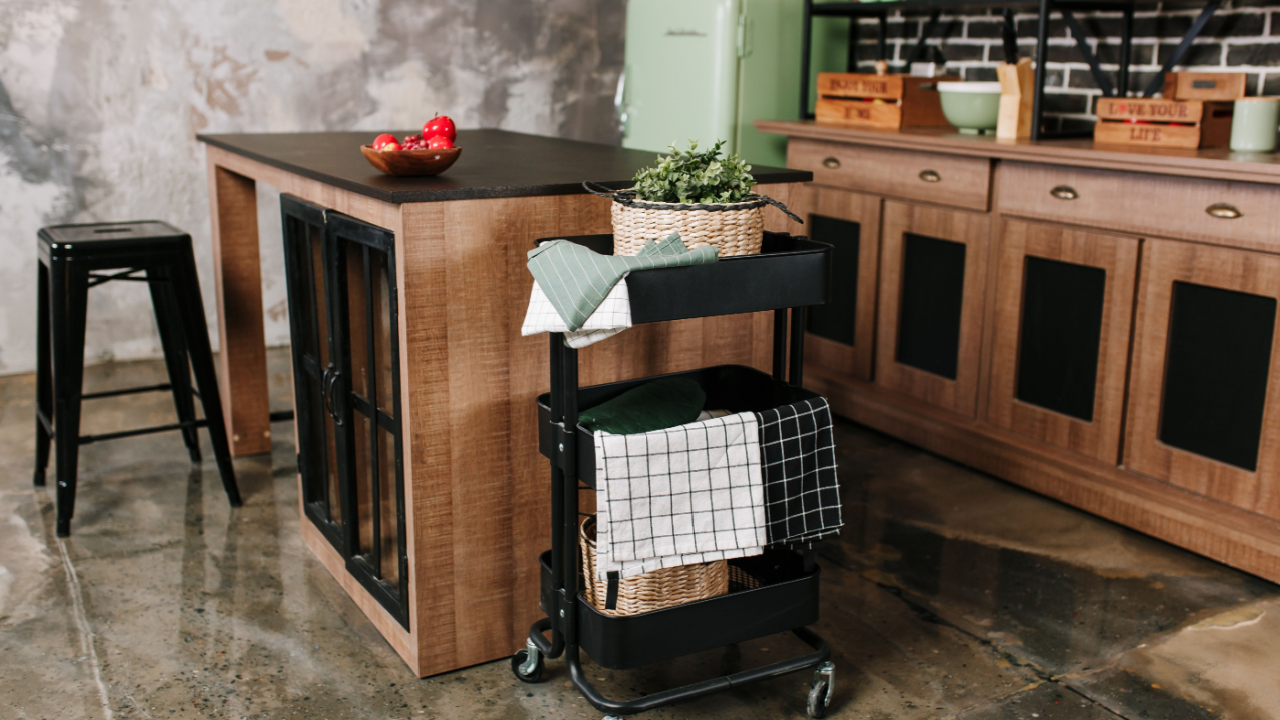
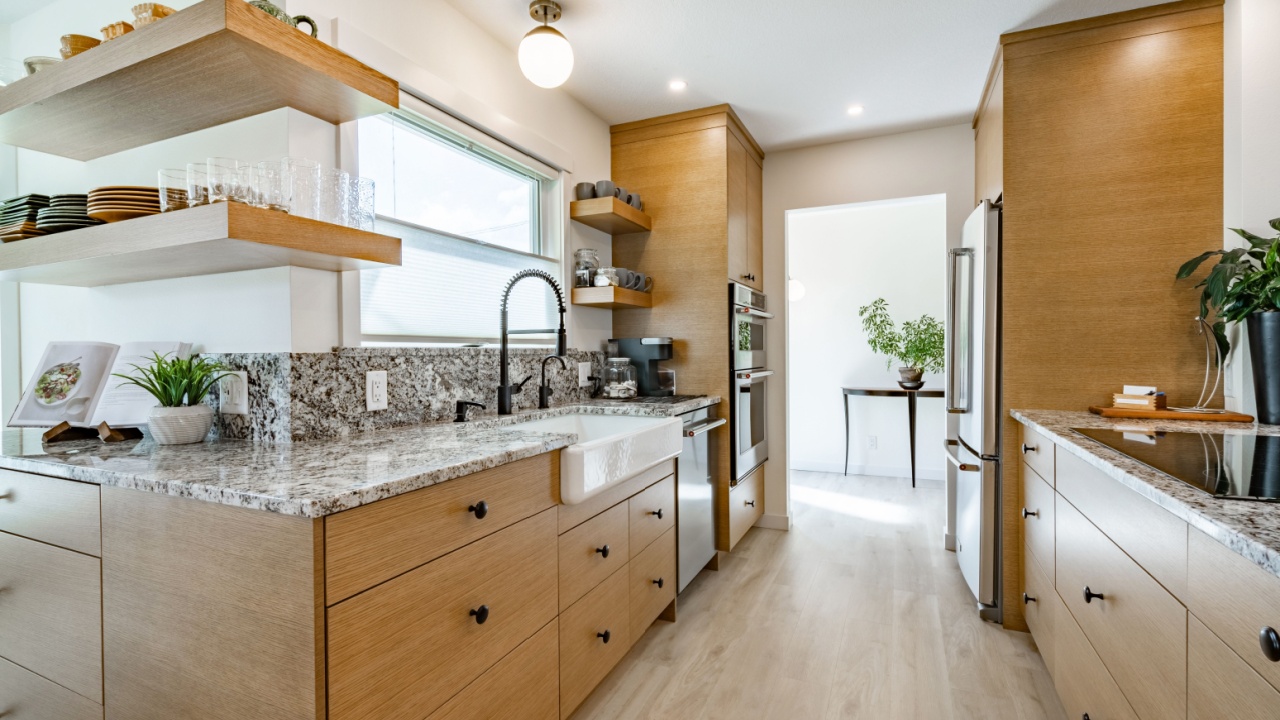
A small island (built in or even a rolling cart) is an easy way to add more space. A kitchen peninsula offers many of the benefits of an island but is designed for spaces that can’t accommodate a freestanding unit. It attaches to a wall on one side, acting as a natural bridge between your kitchen and an adjacent living or dining area. This creates a defined kitchen zone without closing it off completely.
Why it works: An island or peninsula is a multitasker. It provides extra counter space for meal prep, a casual spot for breakfast with a couple of stools, and valuable storage underneath. You can install cabinets, drawers, or open shelving below the countertop to house everything from pots and pans to cookbooks.
Next Steps:
- Assess Your Space: Determine the best wall to attach a peninsula or add an island. Ensure it won’t block major traffic flow.
- Plan for Storage: Decide if you prefer open shelving for easy access and display or closed cabinets for a cleaner look.
- Professional Help: While a DIY project is possible, you may want to consult a carpenter or kitchen designer to ensure the peninsula is sturdy and integrates well with your existing layout.
2. Utilize Behind-the-Door Storage
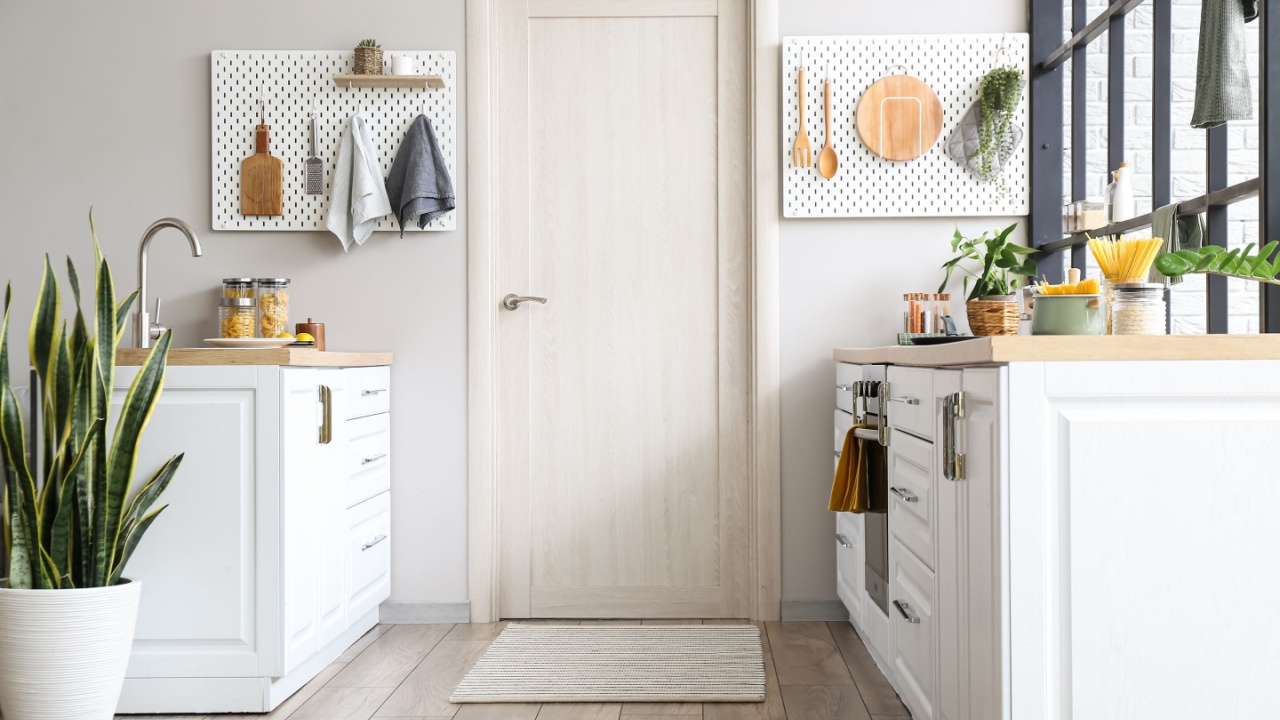
One of the most underused areas in any room is the space behind a door. In a small kitchen, this forgotten spot can become a powerhouse of organization. A narrow set of shelves or a hanging organizer can turn this sliver of wall into a functional pantry for frequently used items.
Why it works: This solution is brilliant for its efficiency. It keeps items visible and within reach without taking up valuable cabinet or counter space. It’s perfect for storing baking supplies in clear jars, organizing spices, or hanging aprons and dish towels.
Next Steps:
- Measure Carefully: Measure the space between the door frame and the wall, and check the clearance needed for the door to open fully.
- Choose Your Organizer: Options range from slim rolling carts that can be tucked away to wall-mounted spice racks or custom-built shallow shelves.
- Decant and Label: For a cohesive look, transfer dry goods like flour, sugar, and pasta into matching airtight containers. Use clear labels so you can quickly identify what you need.
3. Go Bold with Patterned Flooring
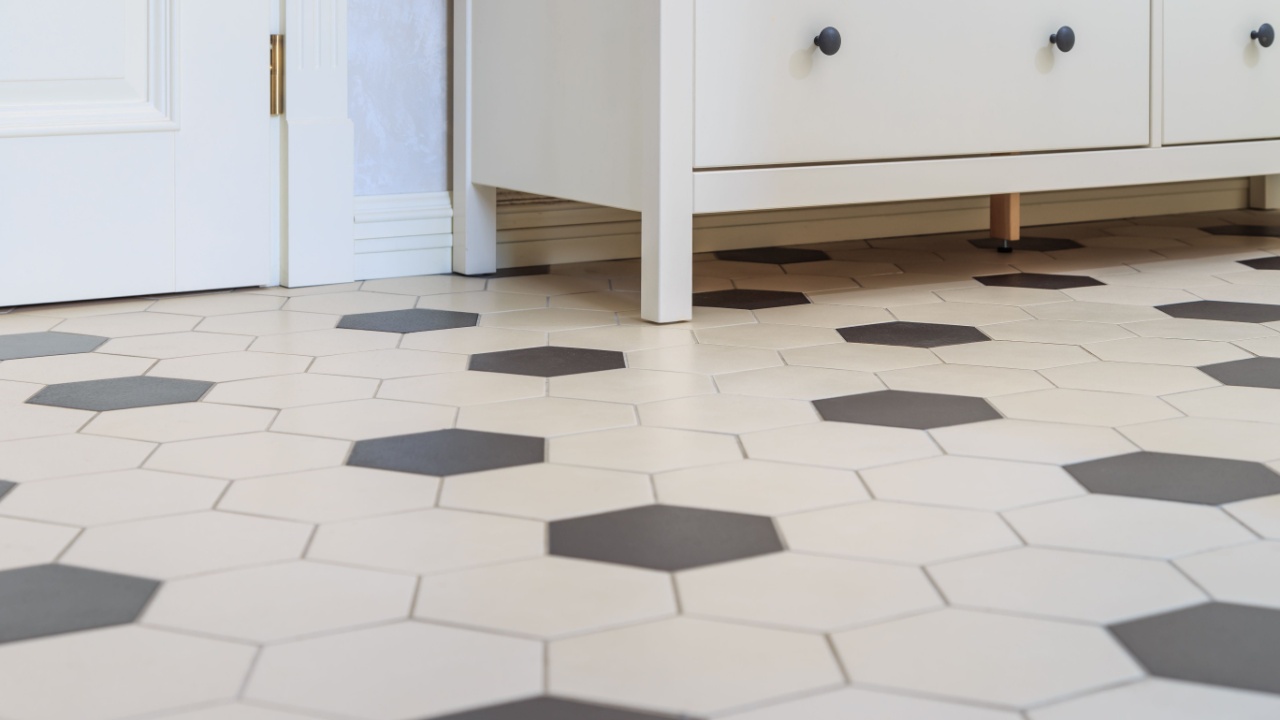
While it might seem counterintuitive, a bold pattern on the floor can actually make a small kitchen feel more dynamic and intentionally designed, drawing attention away from its size. A striking geometric tile or a classic checkerboard pattern can inject personality and style into a compact space.
Why it works: A patterned floor acts as a focal point, creating visual interest that makes the room feel more curated. When you have a “wow” moment underfoot, the eye is less focused on the limited square footage. It’s an opportunity to express your style without cluttering the walls or counters.
Next Steps:
- Keep it Balanced: To avoid overwhelming the space, pair a bold floor with simple, clean finishes for your cabinets, countertops, and backsplash.
- Explore Materials: Porcelain and cement tiles offer durable and beautiful options. For a more budget-friendly and DIY approach, consider high-quality peel-and-stick vinyl tiles, which come in a huge variety of patterns.
- Get Samples: Before committing, bring home a few sample tiles to see how they look in your kitchen’s specific lighting.
4. Ditch the Upper Cabinets

Removing some or all of your upper cabinets is a bold move that can dramatically open up a small kitchen. It instantly makes the space feel taller, brighter, and less top-heavy. Replace them with open shelving to maintain storage while creating an airy, modern aesthetic. (Just be warned, this means it’ll need to stay organized and dust-free, something some people aren’t a fan of.)
Why it works: Upper cabinets can create a boxed-in feeling. Open shelves, on the other hand, provide visual relief and make the walls recede. This is also a great way to display your favorite dishes, glassware, and serving pieces, turning everyday items into decor.
Next Steps:
- Be Selective: Use open shelves for items you use regularly to prevent them from gathering dust. Think daily-use plates, bowls, coffee mugs, and glasses.
- Style with Intention: Group items by color or material for a curated look. Mix in a small plant or a piece of art to add personality.
- Ensure Strong Support: Make sure your shelves are properly installed with brackets that can handle the weight of your dishes. Anchor them into wall studs for maximum security.
5. Create a Cohesive Color Palette
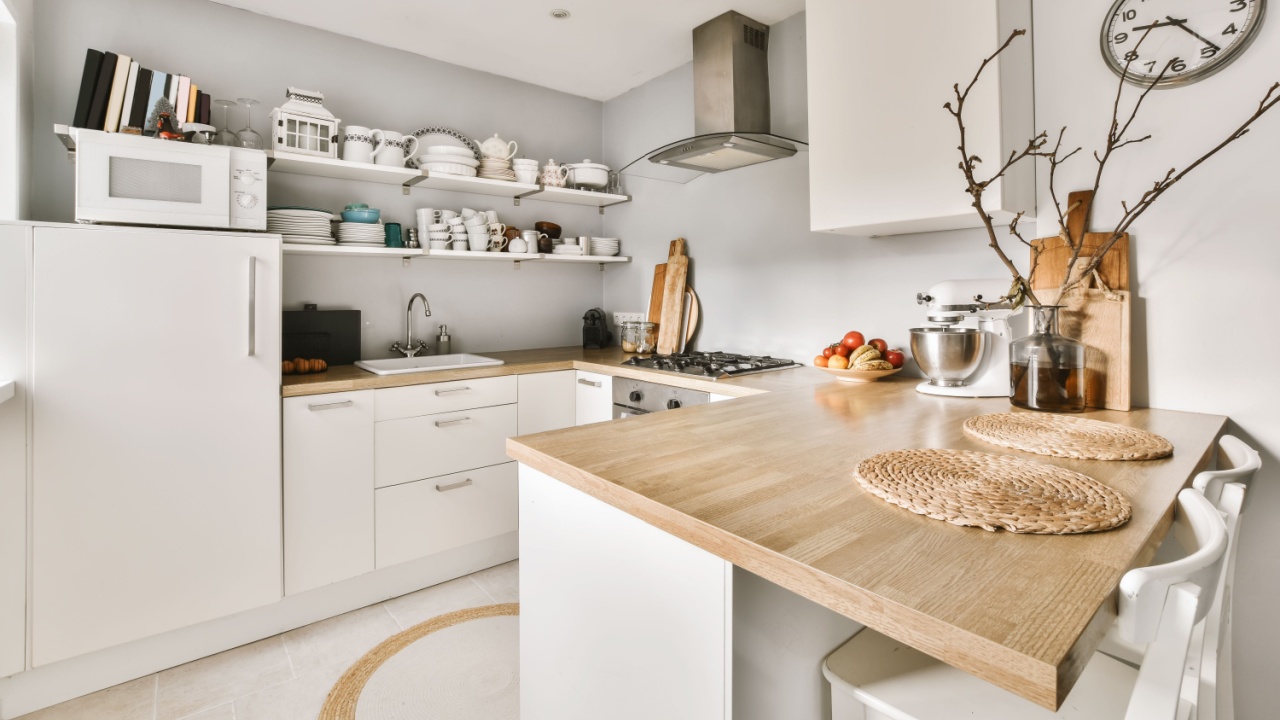
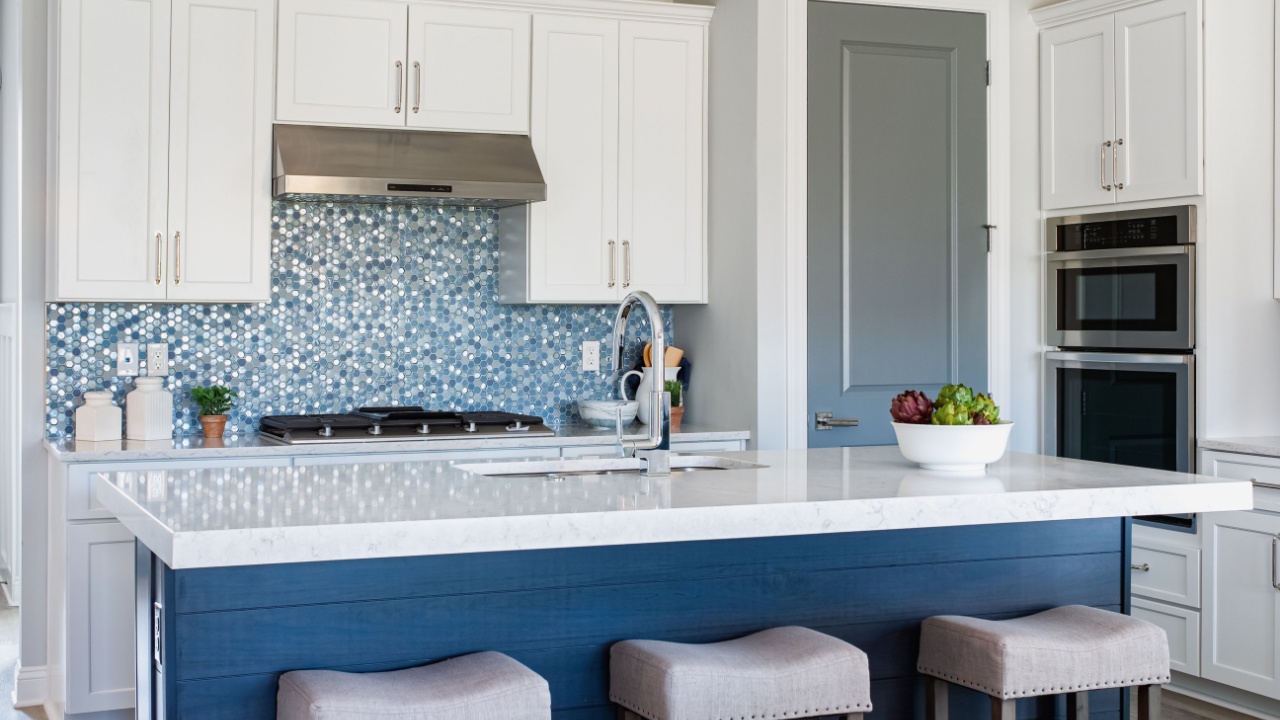
In a small space, a chaotic mix of colors and materials can feel jarring and cluttered. A simple, cohesive color scheme can make your kitchen look more polished, intentional, and serene. This doesn’t mean it has to be boring; you can use a primary color with one or two accent shades to create a harmonious look.
Why it works: A limited color palette unifies the space, allowing the eye to move smoothly without interruption. This visual continuity helps the kitchen feel larger and less cluttered. Using a light color for the walls and cabinets can also help reflect light, making the room feel brighter.
Next Steps:
- Choose a Core Color: Start with a neutral or a soft color you love for the main elements, like cabinets and walls.
- Add Accents Sparingly: Introduce a bolder accent color through smaller, easily changeable items like a tea kettle, dish towels, a vase, or bar stools.
- Consider Texture: Even within a single color family, you can add interest by mixing textures, a glossy backsplash with matte cabinets, for example.
6. Squeeze in Extra Seating
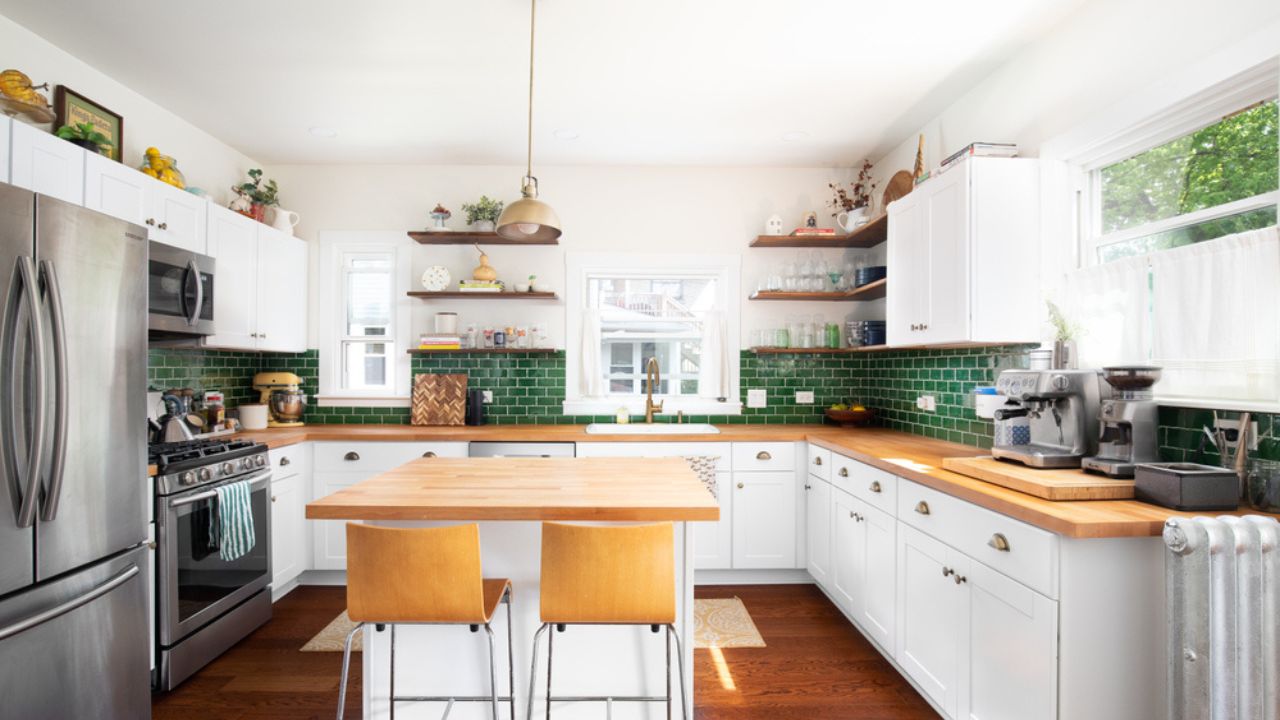
Finding a place to sit and enjoy a cup of coffee or a quick meal can be tough in a small kitchen. A floating countertop or a small, wall-mounted drop-leaf table can create a functional dining spot without sacrificing precious floor space.
Why it works: This strategy utilizes unused corner or wall space to add function. A floating counter maintains an open feel, and tuck-under stools can be completely hidden when not in use. This prevents bulky tables and chairs from cluttering your main work area.
Next Steps:
- Identify an Unused Nook: Look for a small stretch of wall or a corner that isn’t part of your primary cooking triangle (stove, sink, fridge).
- Select Smart Seating: Choose backless, low-profile stools that can slide completely under the counter to keep walkways clear.
- DIY or Buy: You can create a floating bar with a simple piece of butcher block and sturdy wall brackets, or purchase a ready-made wall-mounted table.
7. Use an All-White Palette

It’s a classic design trick for a reason: an all-white kitchen feels bright, clean, and spacious. White reflects light, which visually expands a room and makes it feel more open and airy. It also provides a versatile, timeless backdrop that you can easily update with accessories.
Why it works: White cabinets, walls, and backsplashes create a seamless look that tricks the eye into seeing a larger space. It erases visual boundaries, making the kitchen feel less confined. You can then add warmth and personality through natural textures.
Next Steps:
- Layer Textures: To prevent an all-white kitchen from feeling sterile, incorporate different materials. Think about a butcher block countertop, a subtly textured tile backsplash, a woven rug, or wooden accessories.
- Add Contrast: Introduce small touches of black or a metallic finish (like brass or chrome) through hardware, faucets, and light fixtures to ground the space and add a touch of sophistication.
- Easy Maintenance: Choose wipeable, semi-gloss paint for walls and easy-to-clean materials for backsplashes to keep your white kitchen looking fresh.
8. Create Depth with a Dark Accent Wall

While light colors are a safe bet, a dark and moody accent wall can add surprising depth and sophistication to a narrow or small kitchen. A deep navy, charcoal gray, or forest green wall can become a stunning focal point, making the space feel more curated and less utilitarian.
Why it works: A dark color on one wall creates an illusion of depth, making the wall appear to recede. This is especially effective in a long, narrow galley kitchen. It provides a dramatic backdrop for open shelving, artwork, or a metallic pot rack, turning a simple wall into a statement piece.
Next Steps:
- Choose the Right Wall: Select a wall at the end of a galley kitchen or one that doesn’t have too many cabinets or windows.
- Balance with Light: Pair the dark accent wall with lighter colors on the other walls and cabinets to keep the room from feeling too heavy.
- Enhance with Lighting: Good lighting is key. Ensure the area has sufficient task lighting or a stylish fixture to highlight the dark wall and prevent it from feeling gloomy.
9. Choose Thoughtful Cabinet Colors
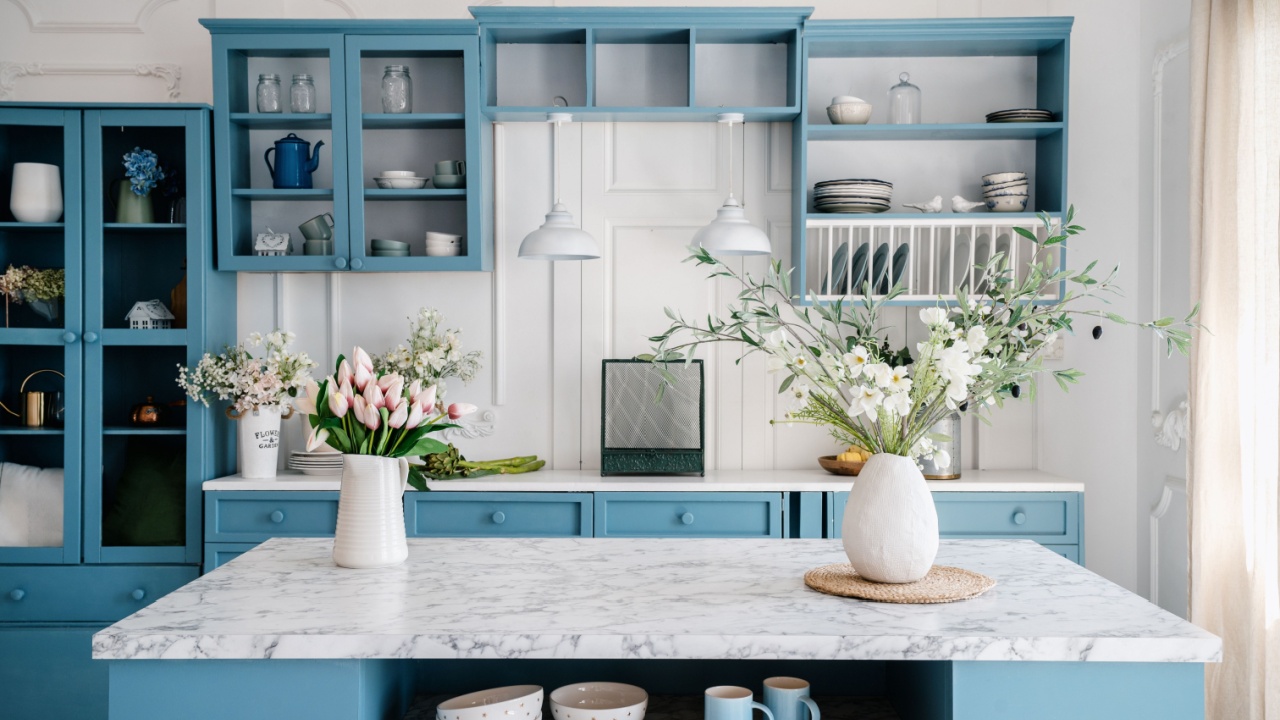
The color of your cabinets has a massive impact on the overall feel of your kitchen. Instead of a standard neutral, consider a soft, unexpected color like a powder blue, sage green, or pale yellow. This adds a dose of personality and charm that distracts from the kitchen’s small dimensions.
Why it works: A unique cabinet color creates a strong design statement, making the kitchen feel custom and thoughtfully planned. Lighter hues still help the space feel open, while the color itself adds character that a plain white cabinet might lack. It draws the eye to the beautiful color rather than the lack of space.
Next Steps:
- Get Swatches: Paint large sample boards with your top color choices and observe them in your kitchen at different times of day.
- Vertical Illusions: Consider pairing a fun cabinet color with a vertical shiplap or beadboard backsplash. The vertical lines will draw the eye upward, making the ceiling feel higher.
- Consider Two-Toned: For a modern look, you could paint the lower cabinets a color and leave the upper cabinets (or open shelves) white or a lighter shade to keep the space feeling open.
10. Make a Creative Island
If a built-in island or peninsula isn’t an option, get creative with a freestanding piece. A narrow console table, a sturdy bookshelf, or a rolling kitchen cart can serve as a functional island, providing much-needed prep space and storage.
Why it works: This approach is flexible and often more affordable than custom cabinetry. An open-shelf design, like a bookshelf, provides storage without adding visual bulk. A rolling cart offers the ultimate flexibility you can move it where you need it for prep and push it aside to clear space when you’re done.
Next Steps:
- Measure Your Path: Make sure you have at least 36 inches of clearance around the island for comfortable movement.
- Think Outside the Box: Look at furniture not specifically designed for kitchens. A vintage dresser or a metal-and-wood bookshelf can be topped with a custom piece of stone or butcher block to create a unique and functional island.
- Prioritize Open Storage: Baskets and bins on open shelves can keep smaller items organized and easily accessible.
11. Go Vertical with a Pot Rack

In a small kitchen, cabinet space is prime real estate. Free up your lower cabinets by hanging your pots and pans from a ceiling-mounted or wall-mounted pot rack. This not only saves space but also keeps your most-used cookware within easy reach.
Why it works: This solution utilizes vertical space, which is often overlooked. It turns your collection of pots and pans into a rustic, chef-inspired design element. Having them out in the open means you’ll never have to dig through a cluttered cabinet to find the right pan again.
Next Steps:
- Choose the Right Rack: For high ceilings, a hanging rack works well. For lower ceilings or limited overhead space, a wall-mounted bar-style rack is a better choice.
- Secure Installation: This is critical. Pot racks must be securely anchored into ceiling joists or wall studs to support the weight of your cookware. If you’re unsure, hire a professional for installation.
- Curate Your Collection: A pot rack looks best when it holds an attractive and coordinated set of cookware. Hang your best pieces and store mismatched or less-used items elsewhere.
Your Kitchen Transformation Awaits
Organizing a small kitchen is your opportunity to be clever and creative. By implementing even a few of these ideas, you can make your space more efficient, beautiful, and enjoyable to cook in. Start with the tip that feels most achievable for you, whether it’s adding a simple set of shelves or painting your cabinets a fresh new color.
Once your kitchen is in order, why stop there? Explore more of our articles for tips on organizing every room in your house and cultivating a beautiful garden to bring fresh ingredients right to your newly organized kitchen.