

We blink, and the digital landscape shifts. Just as families get comfortable with one set of apps or devices, the ground moves beneath us. As we look toward 2026, the way households interact with technology is poised for another evolution. We are moving away from the era of hyper-curated feeds and unmonitored access toward a time of chaotic authenticity, artificial intelligence in the toy box, and a return to analog roots.
For parents, staying ahead of the curve is less about chasing the newest gadget and more about understanding how these tools shape our children’s development and social lives. From toddlers chatting with teddy bears to teenagers trading smartphones for flip phones, here are the major trends families can expect to see in the coming year.
1. The Return of the “Dumb” Phone

Image Credit: Real_life_photo / Shutterstock.
Smartphones have dominated the last decade, but a counter-trend is gaining momentum. More families are realizing that constant internet access isn’t always a good thing. As a result, many are switching to “dumb” phones or flip phones that only call and text.
This shift comes from a desire to escape constant notifications and algorithms. For teens, a retro flip phone is becoming a trendy way to step back from the digital race. For parents, it’s a simpler, safer option for a child’s first phone. By 2026, we might find a balance between staying connected and disconnecting intentionally.
2. AI Toys Enter the Playroom
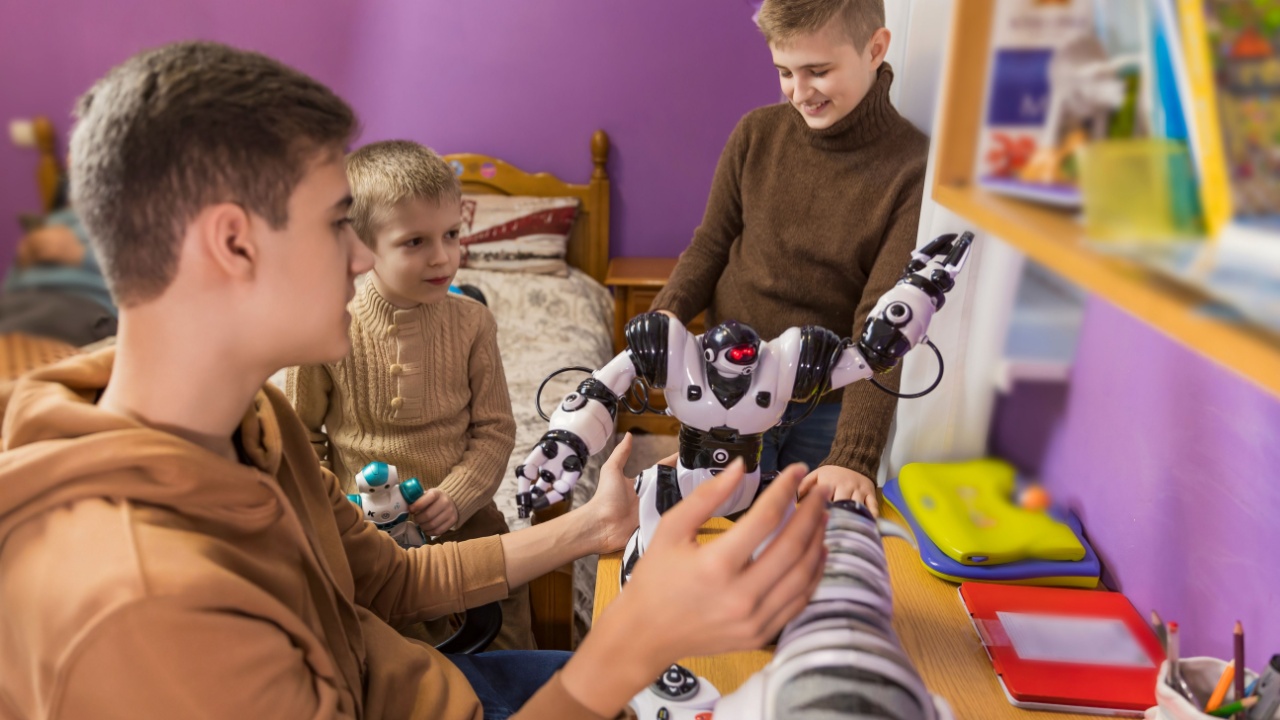
Image Credit: Shutterstock.
Artificial Intelligence is moving beyond computer screens and into toys. Manufacturers are now adding generative AI to dolls, robots, and stuffed animals. Imagine a teddy bear that doesn’t just repeat pre-recorded phrases but has real conversations, answering questions and remembering past chats.
While these toys offer exciting educational benefits, they also raise privacy concerns. For example, smart toys like the Kumma Bear show the risks of connecting a child’s microphone to the internet. Parents need to stay alert about the data these toys collect and how it’s being used.
Parental safety checklist:
- Does the toy require Wi-Fi or Bluetooth? If so, is the connection secure?
- Look specifically for how voice data is stored and used.
- Supervise play sessions to see how the AI responds to the child’s questions.
3. The Rise of “Personality Pics” Over Curation

Image Credit: Worawee Meepian / Shutterstock.
The era of the perfectly polished Instagram aesthetic is fading. In its place, we are seeing the rise of “photo dumps” and “personality pics.” This trend involves posting carousels of blurry, unedited, or mundane photos that capture the reality of life rather than a highlight reel.
Younger generations are rejecting the pressure to look perfect online, especially in a world flooded with AI-generated imagery. Authenticity is the new currency. For families, this is a positive shift. It suggests a move away from the anxiety-inducing need for validation through likes and toward using social media as a digital scrapbook of real memories.
4. Broadcast TV Gets the Influencer Treatment
Image Credit: Shutterstock.
For years, streaming services like Netflix and YouTube were the go-to for kids’ entertainment. But now, broadcast television is making a comeback. Shows like Dancing with the Stars are bringing in huge audiences by casting social media influencers and TikTok stars.
By connecting the phone screen to the living room TV, networks are getting Gen Z and Gen Alpha interested in watching shows on a regular schedule again. This gives families a chance to watch TV together, something that became less common with streaming services that show everyone different things.
5. Emojis Embrace the Abstract

Image Credit: Shutterstock.
If you send a “laughing crying” face to a teenager in 2026, you might be revealing your age. The visual language of youth culture is becoming increasingly abstract and chaotic.
The standard laugh emoji has been replaced by the skull to represent “I’m dead” (from laughing), and increasingly, by random symbols like a cowboy hat or a clown.
This evolution is not just about being cool; it is about conveying complex, layered emotions that standard emojis fail to capture. It creates an “insider” language that separates the generations.
6. The “Sharenting” Pushback

Image Credit: Shutterstock.
For over a decade, parents have documented their children’s lives online, often without consent. As the first generation of “posted” children enters adulthood, we are seeing a significant pushback against “sharenting.” Kids are becoming acutely aware of their digital footprint before they are even old enough to manage it themselves.
In 2026, expect to see more families having serious discussions about digital privacy boundaries. Some teenagers are requesting that parents delete old photos, while others are asking for veto power over new posts. This shift emphasizes respect for a child’s autonomy and right to privacy.
7. Kid-First Hardware Becomes the Standard
Image Credit: Shutterstock.
Handing a ten-year-old a retired iPhone was once the standard operating procedure for a “first phone.” This approach is changing. The market is seeing a surge in kid-friendly devices designed specifically for safety from the ground up (like the Bark Phone), rather than adult devices with restricted settings.
These devices often look like modern smartphones but come with non-removable parental controls, limited app stores, and no access to web browsers. This hardware-first approach removes the constant battle of kids finding workarounds for software limitations.
Navigating the Future

Image Credit: Shutterstock.
The technology landscape of 2026 offers both challenges and opportunities for connection. The goal is not to fear these changes but to adapt to them with intention.
Choose one area, whether it is locking down privacy on AI toys or swapping a smartphone for a simpler device, and make a change that benefits your household.