
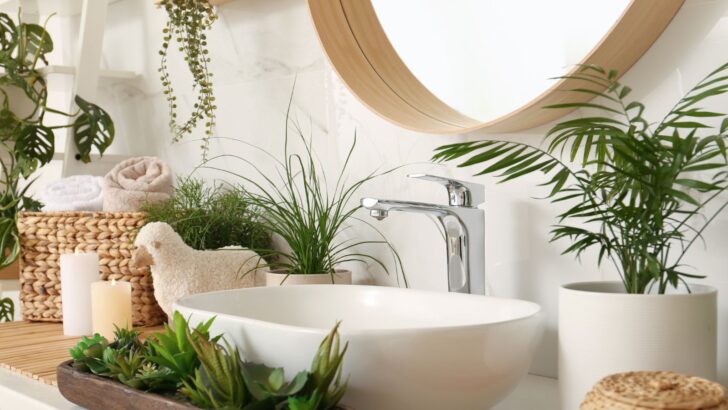
Steamy showers and foggy mirrors are just a normal part of bathroom life. While a good exhaust fan does its job, sometimes the lingering dampness feels like you’re living in your own personal cloud.
Before you resign yourself to a perpetually misty existence, consider a greener solution. Certain plants are naturals at soaking up excess humidity, turning your steamy sanctuary into a place where both you and your new green friends can thrive. They’re like little dehumidifiers with leaves, and they look much better than a plastic box humming in the corner.
Here are 12 plants that will love helping with the humidity situation in your bathroom.
1. Bird’s Nest Fern

Image Credit: Shutterstock.
This fern gets its name from the way its new fronds unfurl from a fuzzy center, looking a bit like a nest full of eggs. Its crinkly, bright green leaves add a pop of texture and life to a space that can feel a little sterile. Bird’s Nest Ferns are native to rainforest floors, so they are perfectly comfortable with the lower light and high humidity found in most bathrooms. They absorb moisture right through their leaves, helping to keep the air feeling fresher.
Quick Scan:
- Light: Prefers indirect light. Direct sun will scorch its leaves, which is a plant’s way of getting a really bad sunburn.
- Water: Keep the soil consistently moist but not waterlogged. Water around the base, not into the central “nest,” to avoid rot.
2. Spider Plant
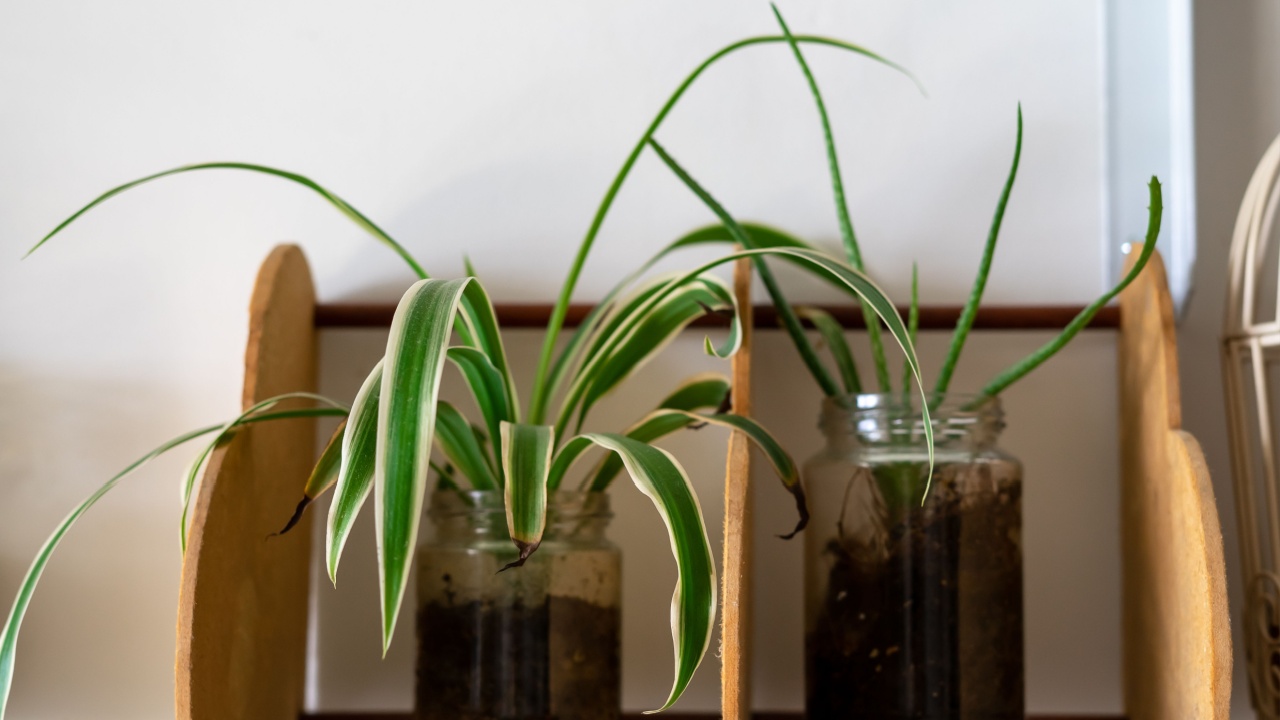
Image Credit: Shutterstock.
The spider plant is forgiving, looks great in a hanging basket, and sprouts tiny “spiderettes” that dangle from the main plant. These little plantlets are easy to propagate, meaning you can have a whole family of spider plants from just one parent. Their arching leaves are efficient at absorbing airborne moisture, and they are known for being easy to care for, even for those who claim to have a “black thumb.”
Quick Scan:
- Light: Happy in bright, indirect light but will tolerate lower light levels.
- Water: Water thoroughly when the top inch or two of soil is dry. They are pretty tough if you forget once in a while.
3. Peace Lily
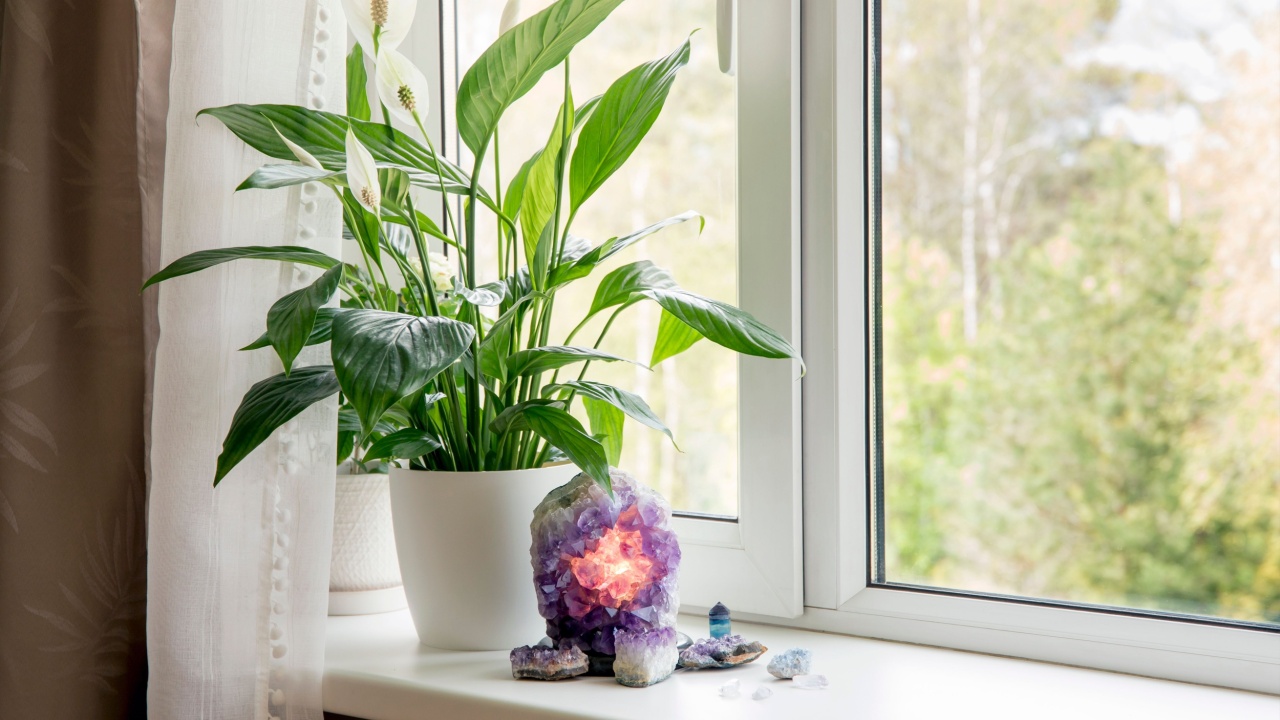
Image Credit: Shutterstock.
With its elegant white flowers and deep green, glossy leaves, the Peace Lily brings a sense of calm to any room. It’s not a true lily, but it’s a true champion in humid conditions. This plant absorbs moisture from the air through its large leaves, and it has the added benefit of being a great air purifier. It will even give you a clear signal when it’s thirsty by dramatically drooping its leaves, then perking right back up after a drink.
Quick Scan:
- Light: Thrives in medium to low indirect light. It can even produce its white spathes in lower light.
- Water: Prefers moist soil. Water when the top inch feels dry, or when it starts to look sad and droopy.
4. English Ivy
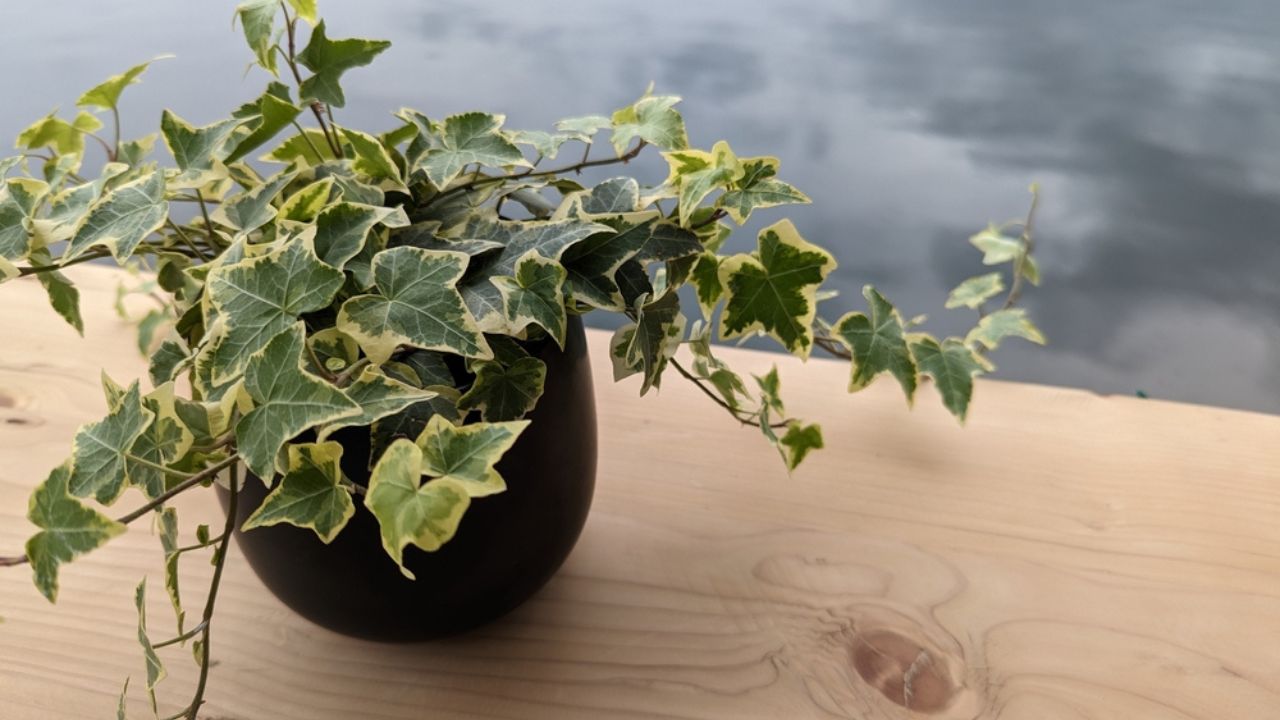
Image Credit: Shutterstock.
English Ivy is a timeless climber that can be trained to cascade gracefully from a shelf or hanging planter. Its dense foliage is great at absorbing ambient moisture. This plant is hardy and grows quickly, adding a touch of old-world charm to your bathroom. It’s an effective helper in managing the room’s humidity levels, all while looking quite sophisticated.
Quick Scan:
- Light: Does well in a range of light conditions, from low to bright indirect light.
- Water: Water when the soil surface feels dry. It doesn’t like to sit in soggy soil.
5. Boston Fern
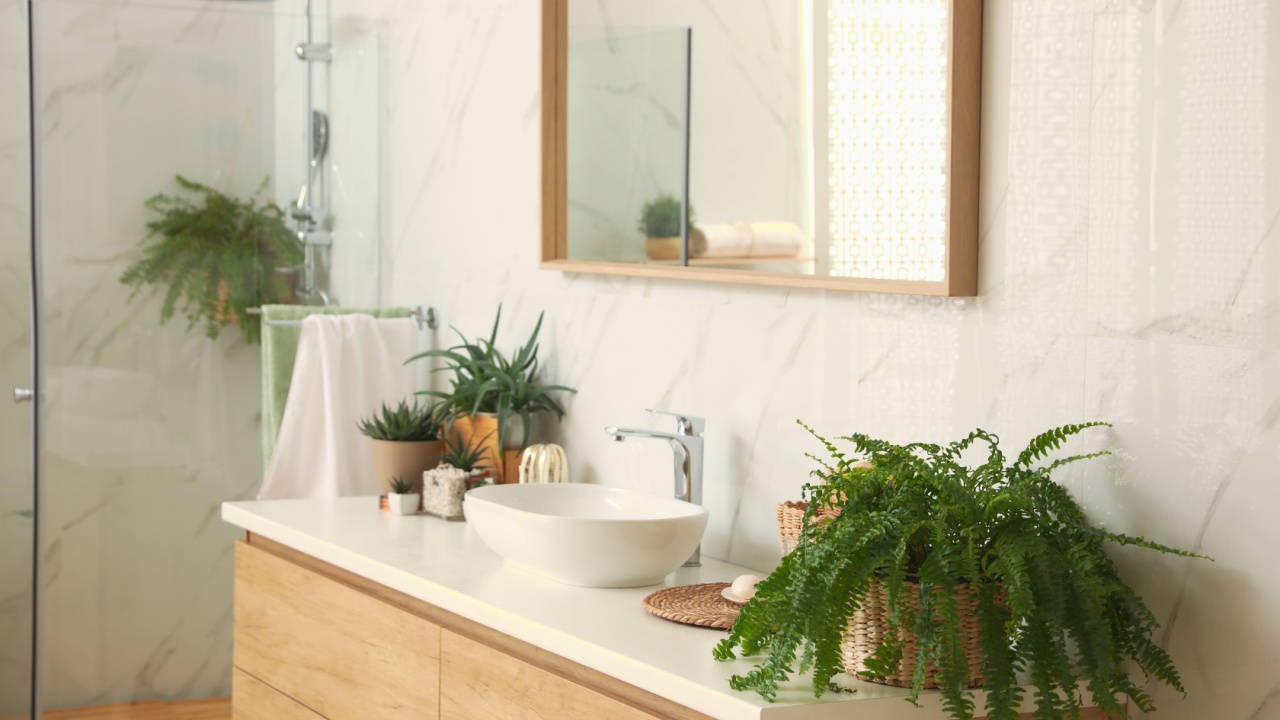
Image Credit: Shutterstock.
The Boston Fern is the quintessential bathroom plant, with lush, feathery fronds that seem to explode out of the pot. These ferns are humidity lovers, originating in subtropical and tropical habitats. They are one of the most effective plants for soaking up moisture, which helps them maintain their vibrant green appearance. A happy Boston Fern can make any bathroom feel like a mini rainforest.
Quick Scan:
- Light: Needs bright, indirect light. Too much shade will cause sparse fronds.
- Water: The soil should be kept consistently damp. This is a thirsty plant that will appreciate the bathroom’s moisture.
6. Azalea
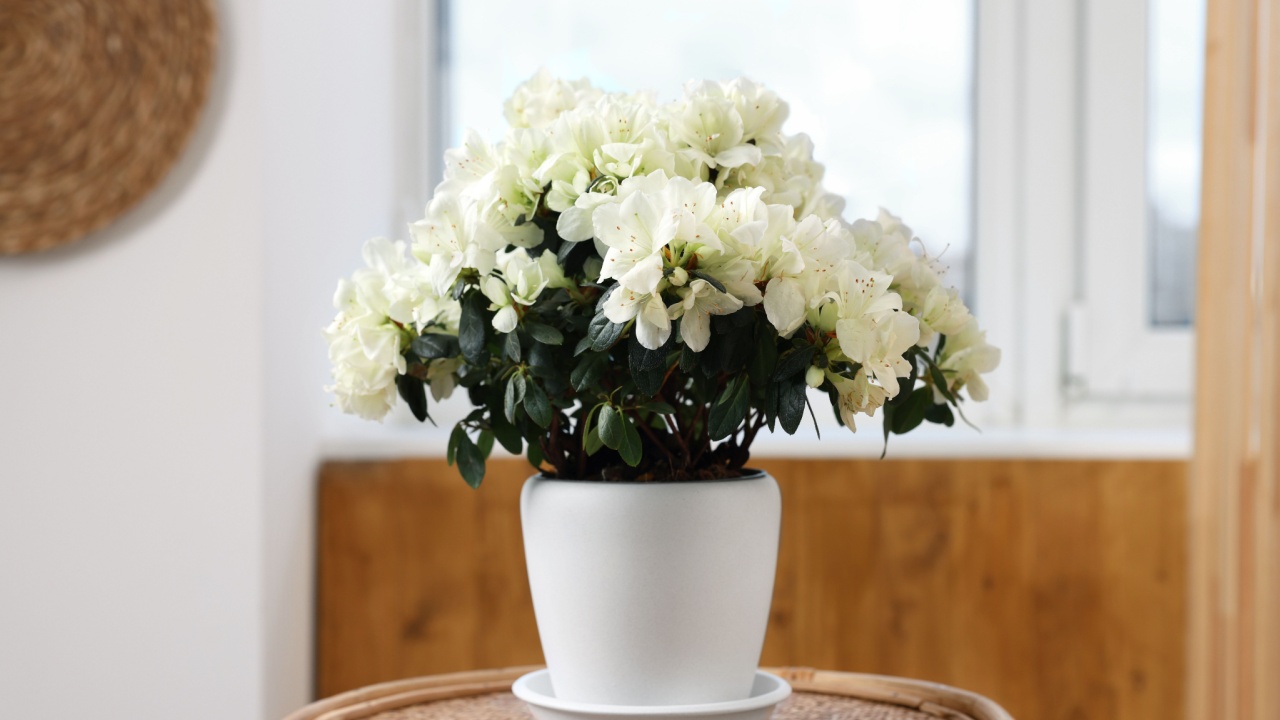
Image Credit: Shutterstock.
Bringing an Azalea into your bathroom introduces a stunning burst of color. These flowering shrubs can be grown indoors and appreciate the high humidity a bathroom offers, which helps them keep their blooms looking fresh. While they require a bit more attention than some other plants on this list, their beautiful flowers are a worthy reward. The moist environment helps them thrive and absorb water through their leaves.
Quick Scan:
- Light: Needs a spot with bright, indirect light to encourage flowering.
- Water: Keep the soil evenly moist. They have fine root systems that don’t like to dry out completely.
7. Aloe Vera
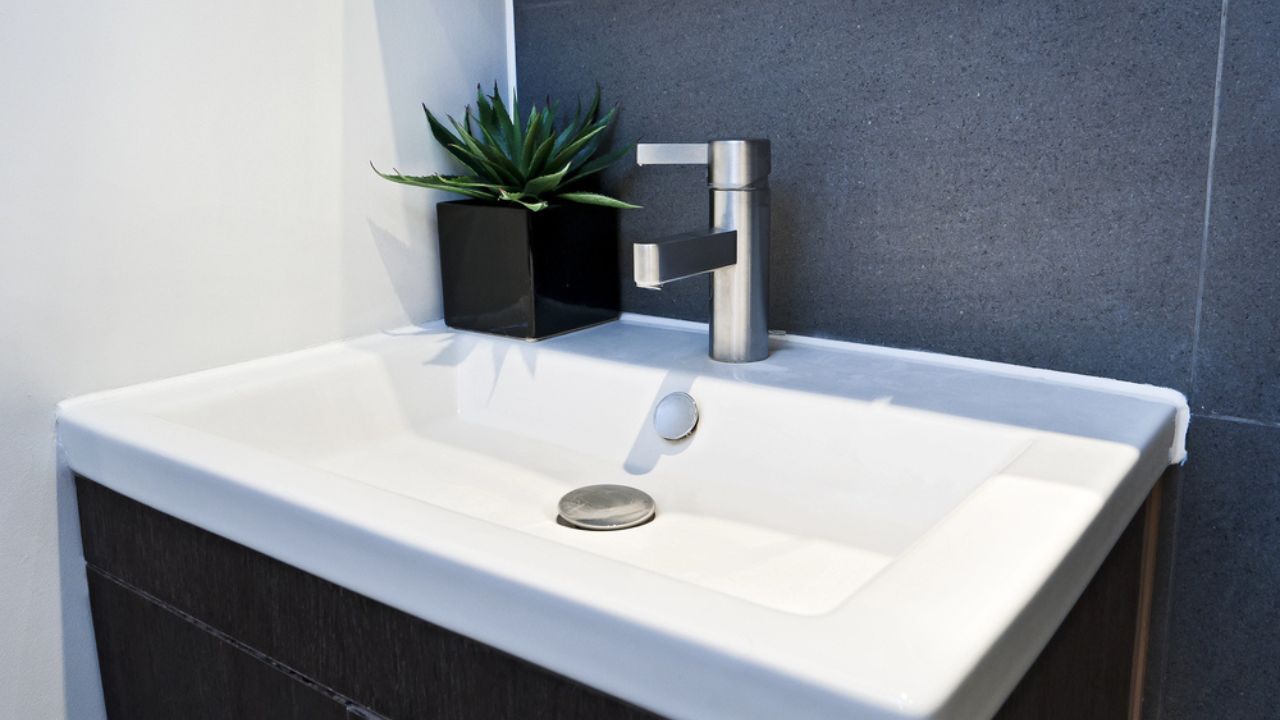
Image Credit: Deposit Photos.
Known for the soothing gel inside its leaves, Aloe Vera is also a capable succulent for a bathroom setting. While many succulents prefer dry conditions, aloe can tolerate a bit more humidity than its desert cousins. It’s a low-maintenance plant that adds a modern, sculptural element. Placing it on a windowsill where it can get some light will keep it happy.
Quick Scan:
- Light: Prefers bright, indirect sunlight. A bathroom window is often a great spot.
- Water: Water deeply but infrequently. Let the soil dry out completely between waterings to prevent root rot.
8. Calathea
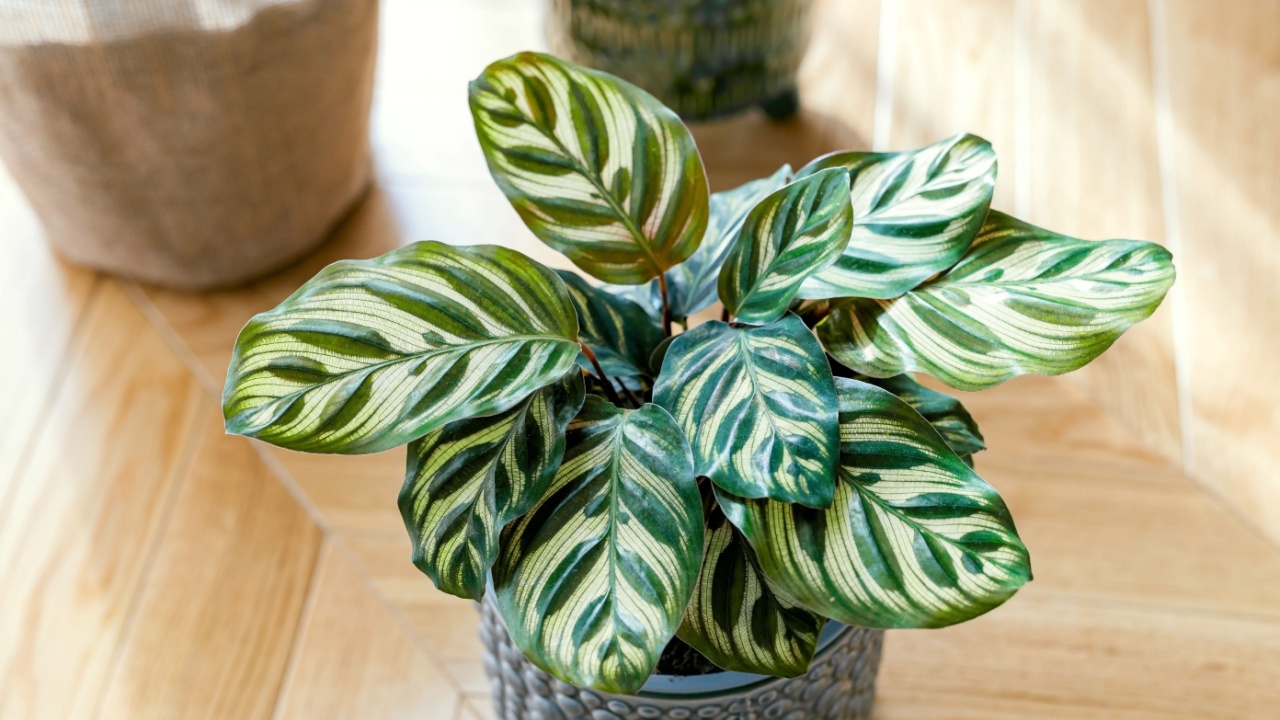
Image Credit: Shutterstock.
Calatheas, also known as prayer plants, are famous for their stunning, patterned foliage. Their leaves often have intricate designs in shades of green, pink, and white. These plants fold their leaves up at night, like hands in prayer, and lower them during the day. They are native to tropical jungle floors, so the high humidity of a bathroom is perfect for them. It helps prevent their leaf edges from turning brown and crispy.
Quick Scan:
- Light: Prefers medium to bright indirect light. Direct sun can fade the leaf patterns.
- Water: Keep the soil consistently moist but not soggy. Use filtered or distilled water if your tap water is hard.
9. Snake Plant
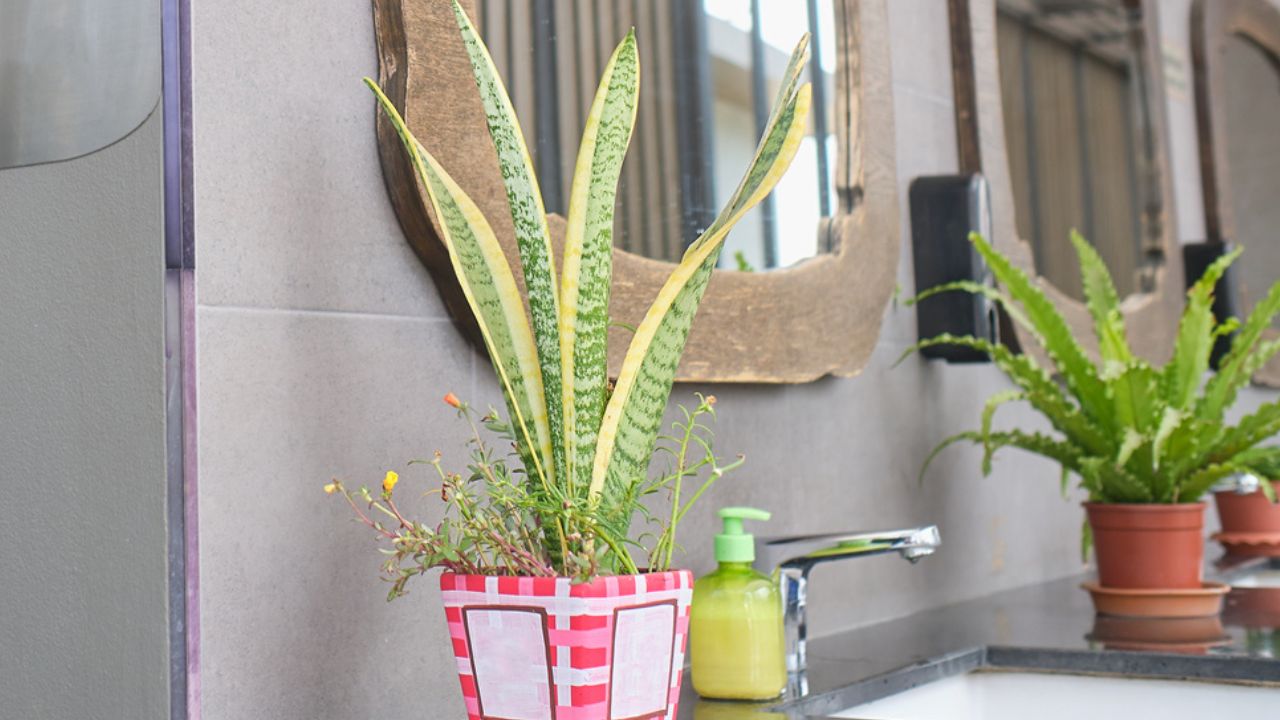
Image Credit: Shutterstock.
The Snake Plant is nearly indestructible, making it a popular choice for beginners. Its stiff, upright leaves give it a modern look, and it can survive in a wide range of conditions. While it is drought-tolerant, it adapts well to the higher humidity of a bathroom, absorbing moisture through its leaves. It’s also a fantastic air purifier, working day and night to filter the air.
Quick Scan:
- Light: Extremely tolerant. It can handle low light and bright, indirect light.
- Water: Let the soil dry out completely between waterings. It’s more likely to suffer from too much water than too little.
- Why it works: Its hardy nature means it will be just fine with the fluctuating humidity and light in a bathroom.
10. Tillandsia (Air Plant)
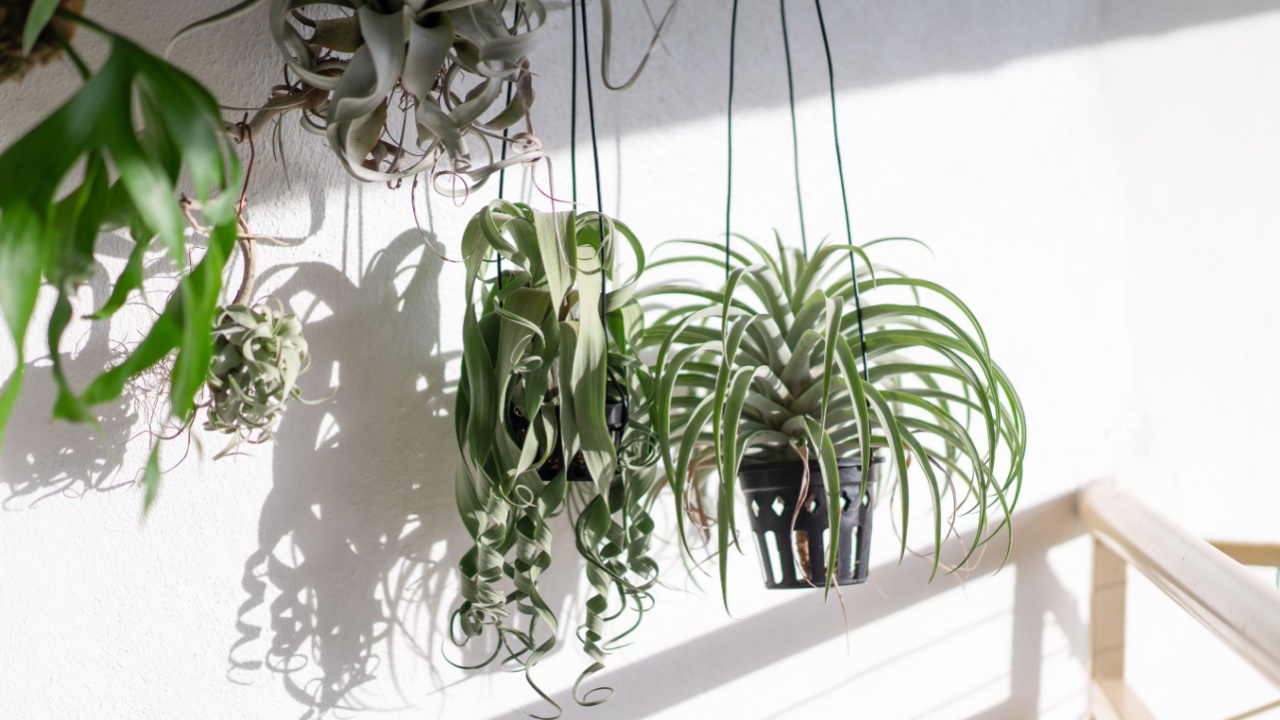
Image Credit: Shutterstock.
Tillandsia, or air plants, are unique because they don’t need soil to grow. They absorb all the water and nutrients they need through their specialized leaves. You can mount them on wood, place them in a terrarium, or just set them on a shelf. The high humidity in a bathroom is a huge plus for them, as it provides a constant source of moisture. They just need a good soak every week or two to supplement what they get from the air.
Quick Scan:
- Light: Bright, indirect light is best.
- Water: Mist them a few times a week and submerge them in water for 20-30 minutes every 1-2 weeks.
11. Dracaena

Image Credit: Shutterstock.
The Dracaena family includes a wide variety of plants, many of which feature long, strappy leaves, sometimes with colorful variegation. They are known for being adaptable and easy to grow indoors. Many types of Dracaena appreciate higher humidity, which helps keep their leaf tips from browning. They are steady growers that add vertical interest to a room.
Quick Scan:
- Light: Most prefer medium indirect light. Low light can cause them to lose their variegation.
- Water: Water when the top half of the soil is dry. They are sensitive to fluoride, so using filtered water can be beneficial.
12. Zanzibar Gem (ZZ Plant)
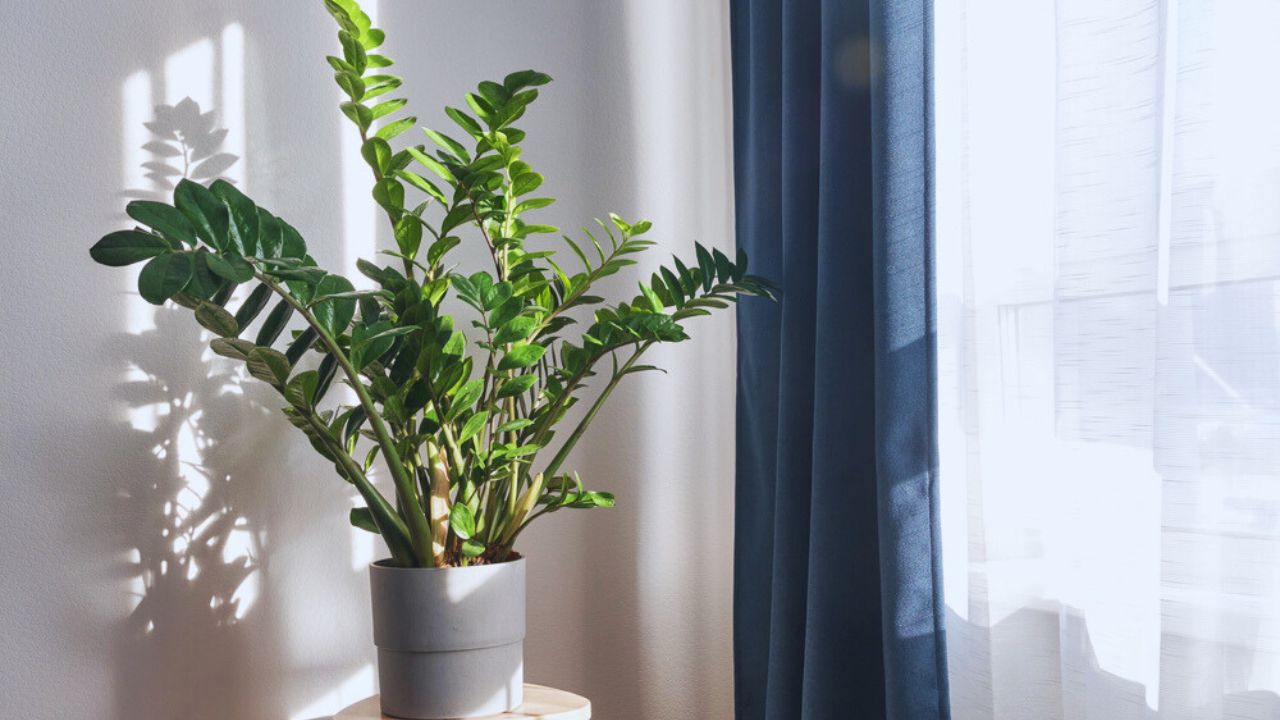
Image Credit: Shutterstock.
The ZZ Plant is another low-maintenance superstar. With its wide, dark green, waxy leaves, it can look so perfect that guests might think it’s artificial. It is incredibly drought-tolerant and can survive in very low light, making it suitable for bathrooms without windows. While it doesn’t need high humidity, it tolerates it perfectly well, quietly doing its thing in a corner without any fuss.
Quick Scan:
- Light: Thrives in low to bright indirect light. Avoid direct sun.
- Water: Water only when the soil is completely dry. Overwatering is its main enemy.
Let Your Plants Thrive
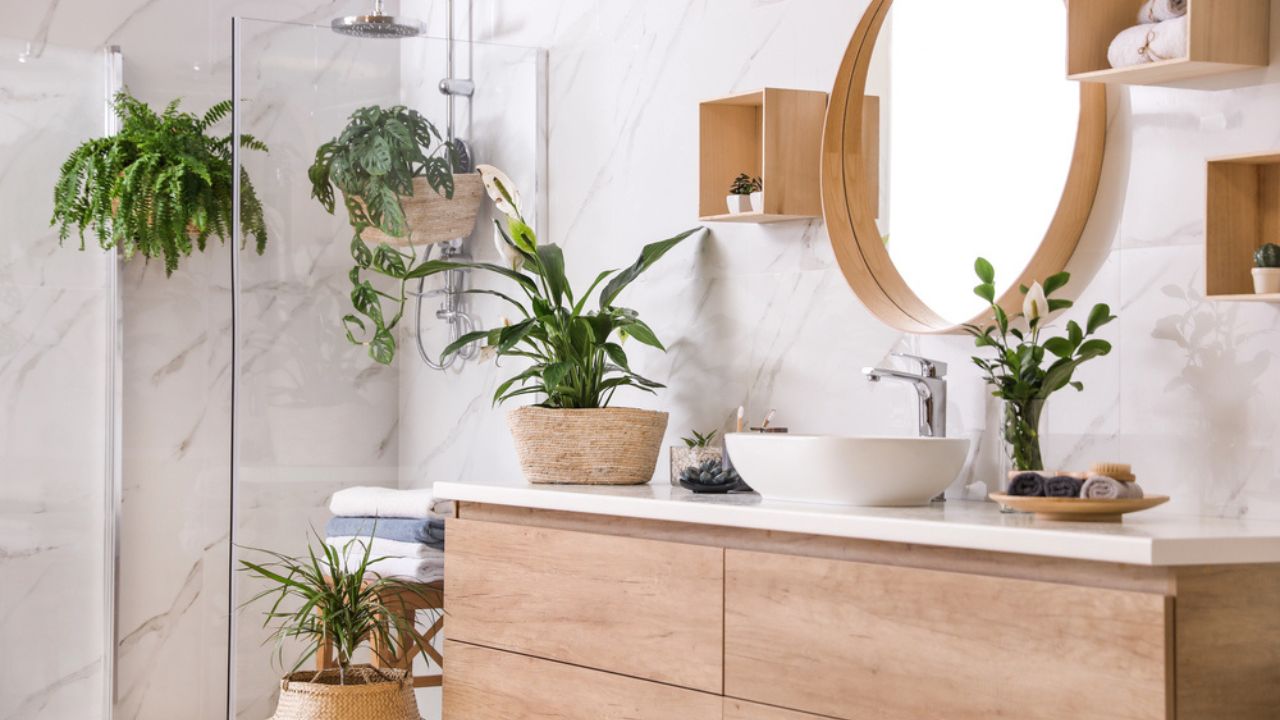
Image Credit: Deposit Photos.
Choosing a plant for your bathroom is less about finding a miracle worker and more about finding a partner that enjoys the same spa-like conditions you do. The plants on this list are all well-suited to the task, but their happiness still depends on a few basics. Before you bring one home, take a moment to observe your bathroom’s light. Is there a window that gets morning sun, or is the room lit only by a lightbulb? Your light situation is the most important factor in your choice.
Once you have your new plant, give it a home in a pot with drainage holes. No plant likes to have “wet feet,” and sitting in a puddle of water is a quick way to cause problems. Even humidity-loving plants need their soil to dry out a bit. With the right light and proper drainage, your new green roommate will be perfectly happy to help you manage that post-shower steam.