
Felt Like You Were Melting Last Month? July Was the Hottest Month Ever Recorded Across the Lower 48
If this July felt unusually hot to you, you weren’t wrong. The month actually broke a national temperature record that had stood for decades.
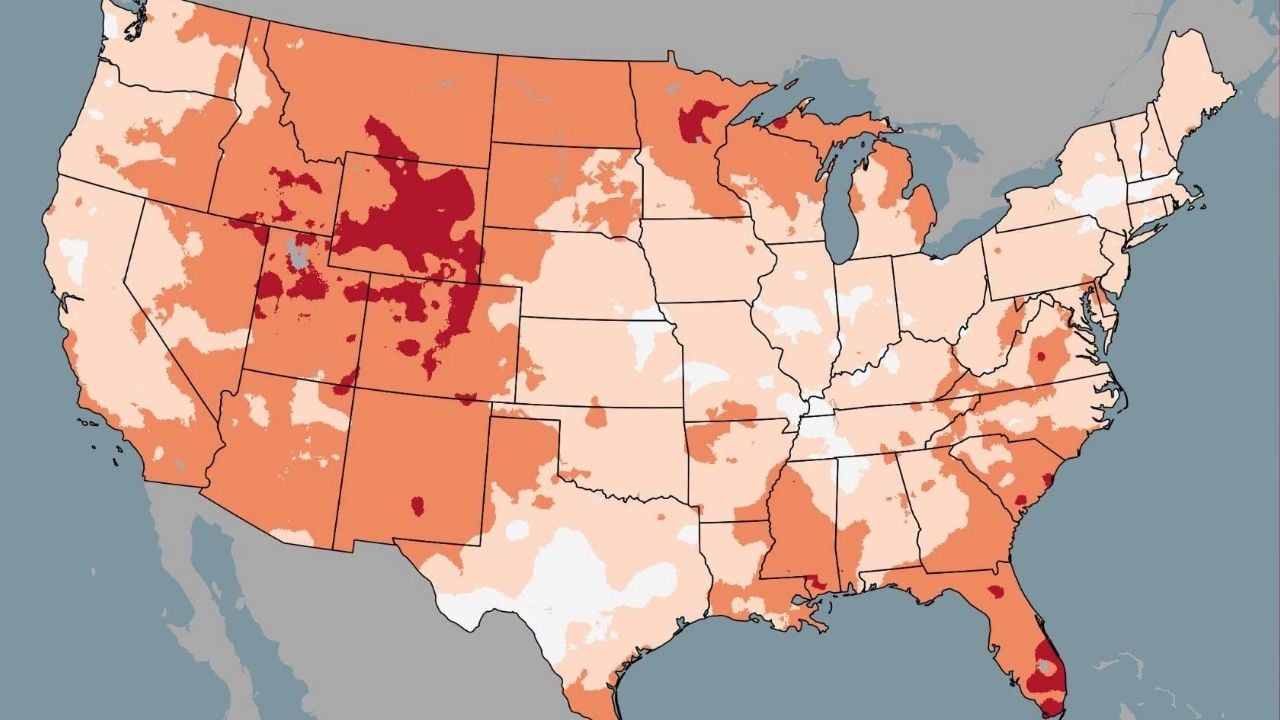
The contiguous United States averaged 76.9 degrees during July 2026, according to the National Oceanic and Atmospheric Administration. That was 3.3 degrees above the 20th-century average, making July the hottest month in the agency’s 132-year record.
This finding only applies to the Lower 48. Alaska experienced its coolest July since 2008, while Hawaii’s average temperature ranked near the middle of its 36-year record.
This doesn’t mean that every single place experienced over-the-top temperatures. However, every contiguous state was at least 1 degree above its 20th-century average, and all 48 ranked within the warmest third of their July records.
The previous records came from 1936 and 2012
Embedded media follows. Please allow a moment for it to load.
The official NOAA Facebook post shared the agency’s temperature and precipitation findings for July. The national average finished approximately 0.1 to 0.2 degrees above the previous marks set in July 1936 and July 2012. The 1936 record occurred during the Dust Bowl, a period remembered for extreme heat, drought and severe dust storms.
Thirteen states recorded one of their five hottest Julys. Wyoming experienced its hottest July and its hottest month on record, finishing 6.3 degrees above average and 0.9 degrees above its previous July record set in 2007.
Record-warm nights helped raise the average
Daytime maximum temperatures across the Lower 48 averaged 89.5 degrees. That was 2.9 degrees above average and ranked sixth among all months recorded by NOAA.
It seems that there wasn’t even relief at night in July. Overnight temperatures were even more unusual for the month. The average minimum was 64.2 degrees, making July the warmest month on record for nighttime lows. That figure was 3.7 degrees above average, exceeding the previous record from July 2022 by 0.7 degrees.
Warm nights can make extended periods of heat particularly difficult because temperatures provide less relief after sunset. The National Weather Service warns that heat can worsen existing medical conditions and advises people to check on children, older adults and others who may be especially vulnerable.
Nationally dry conditions included regional floods
The Lower 48 received an average of 2.55 inches of precipitation during July, approximately 0.23 inches below the 20th-century average. That placed the month within the driest third of the historical record.
“It’s not good when you’re breaking records from the Dust Bowl, which we are in this case,” said meteorologist Jeff Masters of Yale Climate Connections via PBS News. “And that was a crazy sort of situation where you put tens of millions of people in motion. You had this great migration because of the drought and the heat that hit the center of the U.S. — just a cataclysmic event in U. S. history. If we’re exceeding records from The Dust Bowl, that says that we’re in deep trouble.”
Drought covered approximately 48.5% of the contiguous United States as of Aug. 4, an increase of 0.7 percentage points from the end of June.


