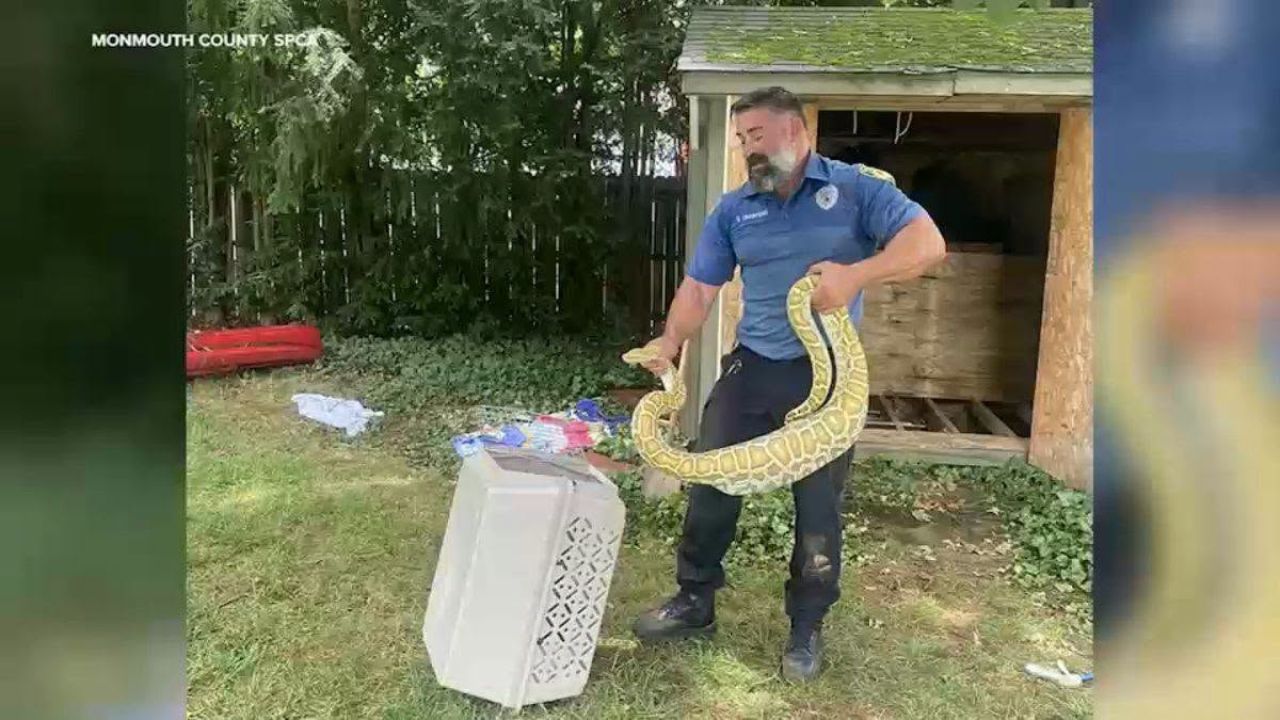
An 8-Foot Burmese Python Was Found Under a New Jersey Shed After Eating an Opossum
An 8-foot-long Burmese python was found hiding underneath a shed in a backyard in Freehold, New Jersey, with a big bulge in its middle section from its recent meal. According to 6ABC, animal control officers from the Monmouth County SPCA went to the scene after the snake was spotted on a homeowner’s property.
Carrying out the rescue required some dismantling. Since the python had taken refuge under the shed floor, a local contractor helped remove the floorboards so the rescue workers could safely access the animal. The animal control officers then carefully took the snake away, making sure not to injure either the python or the rescuers.
X-rays taken by the veterinary staff at the Monmouth County SPCA showed that the snake had recently eaten a large opossum. The snake was then thoroughly examined, which revealed it had been digesting the animal for a while before being removed from its hiding spot.
The python is currently being looked after temporarily as authorities arrange a permanent home for it. After its evaluation, the snake was placed in a secure enclosure, and the SPCA said it had worked with reptile experts at F&F to arrange for it to be given to an experienced, properly licensed snake handler. If no legal owner turns up, the python will remain in permanent care with its new caretaker.
Why Was a Burmese Python in a New Jersey Backyard?
Since the Burmese python isn’t native to New Jersey or anywhere in North America, a wild snake being found under a shed must have been released or have escaped from a pet store. This species is native to Southeast Asia and is in demand in the exotic-pet trade; although the hatchlings are small, they grow to become some of the largest snakes in the world and can exceed 15 feet in length, growing larger than most owners can accommodate. An 8-foot snake in a residential garden was very likely obtained from captivity and not from the wild.
The Monmouth County SPCA used this case to remind everyone that exotic pets should never be released into the open. It argued that animals which have been let loose can endanger native wildlife, present a risk to other pets, and usually fail to survive on their own. Burmese pythons have already caused serious ecological harm in areas where they’ve become established, especially in the Florida Everglades, where released and escaped pets have decimated native mammal populations.
What to Do If You Can No Longer Care for an Exotic Reptile
Letting go of an exotic pet is not only harmful, but illegal in many places. The SPCA advises anyone who can’t look after an exotic reptile to contact a licensed rescue group or an animal shelter for assistance instead. When an animal is handed over to an approved rescue organization, it’s then sent to someone who has the necessary facilities and legal authority to keep it.
Potential owners are also advised to find out before getting the animal what the adult size, lifespan, and care needs of an exotic species are. That’s because a snake that grows to 15 feet and lives for many decades, for example, is a long-term commitment. It could cause some owners to give up the animals when they can no longer look after them. It’s important to do the responsible thing for both the animal and other humans as well as other small creatures.