Three Years After a Flood Wrecked Their Bridge, Farmers in This Grecian Town Still Drive Across It
Farmers and residents in the villages around Larissa in central Greece are still crossing a bridge that floodwaters buckled almost three years ago. Why? Because going around it can add more than 20 miles to their trips.The Paleopyrgos bridge over the Pineios River was one of dozens wrecked when Storm Daniel hit the region in September 2023. It’s never been repaired, however, according to The Drive. Traffic across it is officially banned, but nothing physically stops anyone from crossing.
The bridge linked the coastal municipalities of Tempi and Agia to Larissa and the farmland around it, according to GreekReporter. With that connection gone, the only other route runs by way of the national highway, which local reporting puts at a detour of roughly 15 to 25 miles in place of a crossing that used to be a couple of miles. Farmers moving tractors between their fields and neighboring settlements take the damaged bridge instead.
The span never fell into the river. Its center section dropped until it sat close to the water. It stayed attached at both ends, and drone footage published by local outlet LarissaNet shows vehicles rolling down into the dip and climbing back up the far side. It seems no one is affected by the potential dangers of using the bridge and instead relies on this hometown bridge to continue getting them wherever they’re going.
Residents said in June that the restoration they were promised had not started. They have also warned that the wrecked span could become a hazard of its own during another serious flood, since it sits in the river’s path. A second damaged bridge nearby, largely swept away in the same storm, has not been rebuilt either.
What Storm Daniel Did to Thessaly
View this post on Instagram
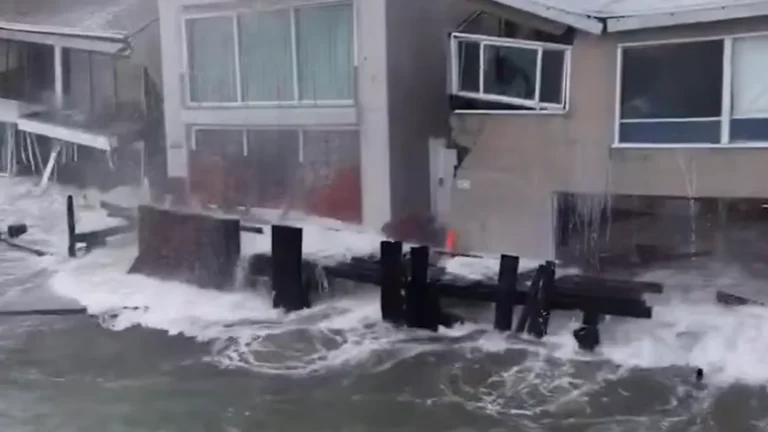
The storm arrived in September 2023 and was the most intense Greece had recorded. It dropped months’ worth of rain in a matter of hours onto the Thessaly plain, the country’s most fertile farmland, and turned it into an inland sea. Seventeen people died. Crops were washed out, tens of thousands of animals drowned, and hundreds of residents were airlifted or pulled from flooded homes by boat. Storm Elias followed weeks later.
The damage to infrastructure was enormous, with 79 bridges destroyed across Thessaly. Prime Minister Kyriakos Mitsotakis called the two storms the worst floods in Greek history and put the total cost of repair above 3 billion euros, according to Agence France-Presse in April 2024. Visiting Thessaly then, he said, “the road network will be rebuilt better than before.” A prosecutor separately ordered an investigation into what caused the flooding and how authorities handled it.
Why Residents Keep Taking the Risk
The choice for those who live in the city is a dangerous, fast crossing or a long safe one. It’s really not close, either. Farmers watch the clock and the fuel gauge, and a detour measured in tens of miles takes a bite out of every working day. The residents crossing that bridge know precisely what condition it is in. So it makes sense to them to take a chance and shave off some time.
Visitors are a separate problem. Tourists heading for the coastal villages often have no idea the connection was severed, and they find out when they reach the bridge, at which point their own detour begins. Navigation systems have reportedly kept routing drivers to the crossing. Local officials banned traffic on the bridge without installing barriers or posting anyone there, which leaves the ban resting entirely on a sign. And it doesn’t look like anyone will stop using the bridge anytime soon.