This Backyard Pond Was Meant for Frogs. The Neighborhood Cats Disagreed.
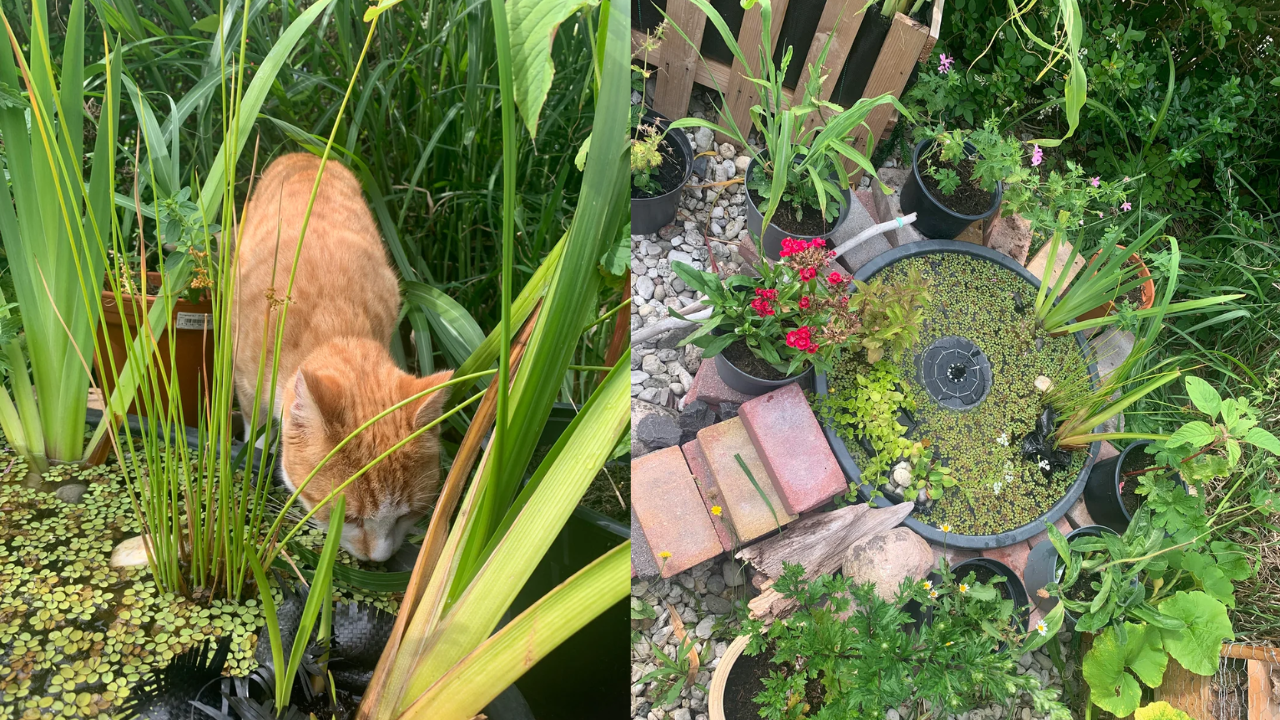
One Redditor built a backyard pond to attract frogs to their garden. As it turns out, it’s brought completely different visitors: the neighbor’s cat and other felines. User r/Entire-Writing-3701 shared photos to the r/gardening community about a week ago and collected more than 1,000 upvotes and 150 comments on their example, showing the critters that gravitated toward their garden.
Many commenters reached the same conclusion: if the pond has no frogs, the cat is probably the reason. Several mentioned that an outdoor cat will hunt frogs, birds, rabbits, and other small animals that venture near the water. Others said the same thing happens at their birdbaths, where a lurking cat scares off birds and leaves them, as one put it, with “a water bowl for a kitty.”
The thread turned into a swap of backyard pond stories, many of them about wildlife nobody invited. Pond owners described raccoons pulling out pumps for a nighttime swim, skunks passing through, and goldfish vanishing overnight. The most common suggestions to help attract frogs and push away were a motion-activated sprinkler aimed at the pond and a taller birdbath that a cat cannot easily stake out.
A recurring theme was the roaming cat itself. Several people urged the gardener to talk to the neighbor and ask that the cat be kept inside, and a few pointed to the wider problem of free-roaming cats and native wildlife. That last point is backed by a well-known body of research on how much outdoor cats actually kill.
Why the Cat, and Not Frogs, May Be Showing Up
My pond is attracting the neighbour’s cat instead of frogs
by
u/Entire-Writing-3701 in
gardening
In the United States, free-roaming cats are one of the largest human-linked killers of small wildlife. A 2013 study by scientists at the Smithsonian Conservation Biology Institute and the U.S. Fish and Wildlife Service, published in Nature Communications, estimated that cats kill 1.3 to 4.0 billion birds and 6.3 to 22.3 billion mammals in the contiguous U.S. each year, according to the American Bird Conservancy. Most of that toll comes from un-owned feral cats, with pet cats responsible for a smaller share.
However, feral cat numbers are hard to count, and the study’s authors were clear about that. Even so, the same research found that outdoor cats are likely the single largest source of human-caused death for American birds and mammals, and cats also prey on frogs, lizards, and other small pond visitors. A cat that patrols a pond can thin out the frogs before they ever settle in, which lines up with what the gardener described.
How Can Pond Owners Keep a Cat Away?
You really need something that’s going to make things more uncomfortable for any potential visiting felines or other creatures to keep them out. A motion-activated sprinkler sprays a harmless burst of water when it senses movement, which tends to send a cat elsewhere without hurting it. Raising a birdbath or adding cover and shallow exits to a pond can also give frogs and birds a better chance to use the water and get away.
The other route is a conversation with the cat’s owner. Wildlife groups generally recommend keeping pet cats indoors or in an enclosed outdoor space, both to protect local animals and to keep the cat safer from cars, disease, and parasites. The most realistic path this gardener can take is implementing some mix of deterrents at the water and a talk with their neighbor, since the pond will probably keep drawing the cat over.