A Scottsdale Homeowner Heard Scratching From the Roof. It Was a Mother Bobcat and Her Kittens.
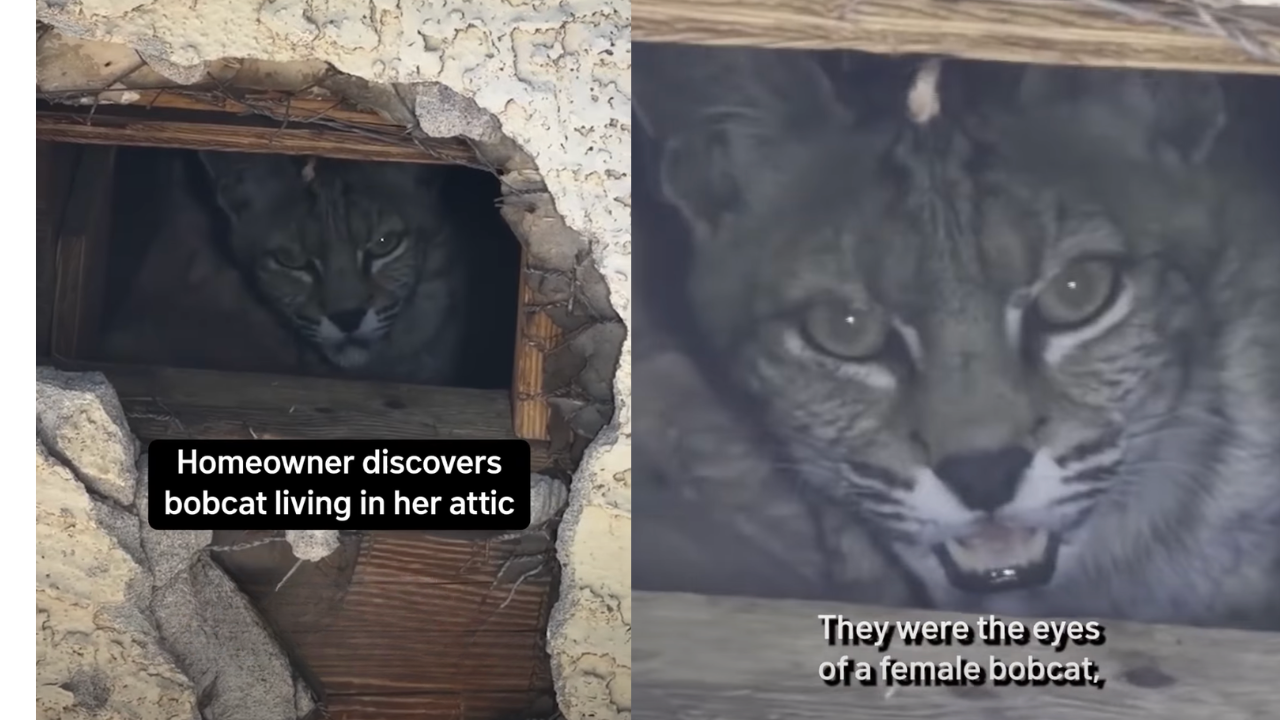
Scratching in the attic usually doesn’t mean good news. Maybe you’ve got a small animal in there. Maybe it’s something to worry about. For one homeowner in Scottsdale, Arizona, coming face-to-face with what was in their attic was a massive surprise. They had a wildlife crew climb up to check the noise. A pair of eyes glowed back at them from the dark. The culprit was a mother bobcat and her kittens, denning in a hole in the home’s roof.
Critter Evictors, a local wildlife control company, handled the incident to get up close and personal with the bobcat and its family. Verner Swenson, who went up to look, said his team usually deals with rats in attics, so this was a surprise. As he put it, “it wasn’t a raccoon, it was bobcats.” He could make out the mother and hear at least a couple of kittens moving around behind her. The space above the house had become a full-blown den, and there is video of one of the cats staring back from the opening.
Rather than trapping the family and hauling them off, the company decided to let the animal “self-evict.” The idea is to make the den uncomfortable enough that the mother decides to leave and take her kittens with her. In practice, that meant coming back every day or so, sealing openings, and leaving human scent and a steady presence around the space.
As wild as it sounds, almost none of this is unusual for the area. A bobcat denning in a suburban roof is more common than most people would guess. The eviction method the crew used also matches what wildlife officials recommend. And in the end, the bobcat did leave the area.
Why a Bobcat Would Move Into a Roof
View this post on Instagram
Bobcats are a big part of the landscape across much of Arizona, including the suburbs of Phoenix and Scottsdale. But they’re elusive and tend to avoid people, so you may just never see one. According to the Arizona Game and Fish Department, a bobcat’s shelter can include rooftops, attics, sheds, and the spaces under porches and decks. A dark, enclosed cavity in a roof is close to ideal, a convenient stand-in for the rock crevices these cats den in out in the wild.
The kittens are the key detail. Bobcats usually give birth from late spring into early summer, in litters of two or three. A mother needs a protected spot to raise them through their first weeks, and a rooftop fits that bill just fine. Bobcats also come into neighborhoods to hunt doves, quail, and other prey. Those animals gather around food from people, like birdseed and pet bowls.
The Right Way to Get One to Leave
If you’ve got a bobcat and family or other animals around, you probably want to get it to leave. When there are kittens involved, the instinct to trap the animals and drive them far away can backfire. Pull a mother out and relocate her, and you risk leaving her kittens behind to die. Arizona Game and Fish advises checking for kittens and, when they are present, tolerating the animals for a few weeks until the young are big enough to leave with their mom. Making the den unwelcoming is the goal.
For anyone facing a smaller version of this, don’t corner or handle the animal. Never seal an entry hole until you are certain everyone, mother and young, has moved out, or you will trap them inside. Officials suggest discouraging a bobcat with loud noise or a spray from a garden hose and giving a confined one a clear path to leave on its own. Once the den is empty, close the gaps and clear away the attractants, the pet food, water bowls, and easy bird feed, that made the property appealing. If things persist, you’re definitely going to want to call in a professional.