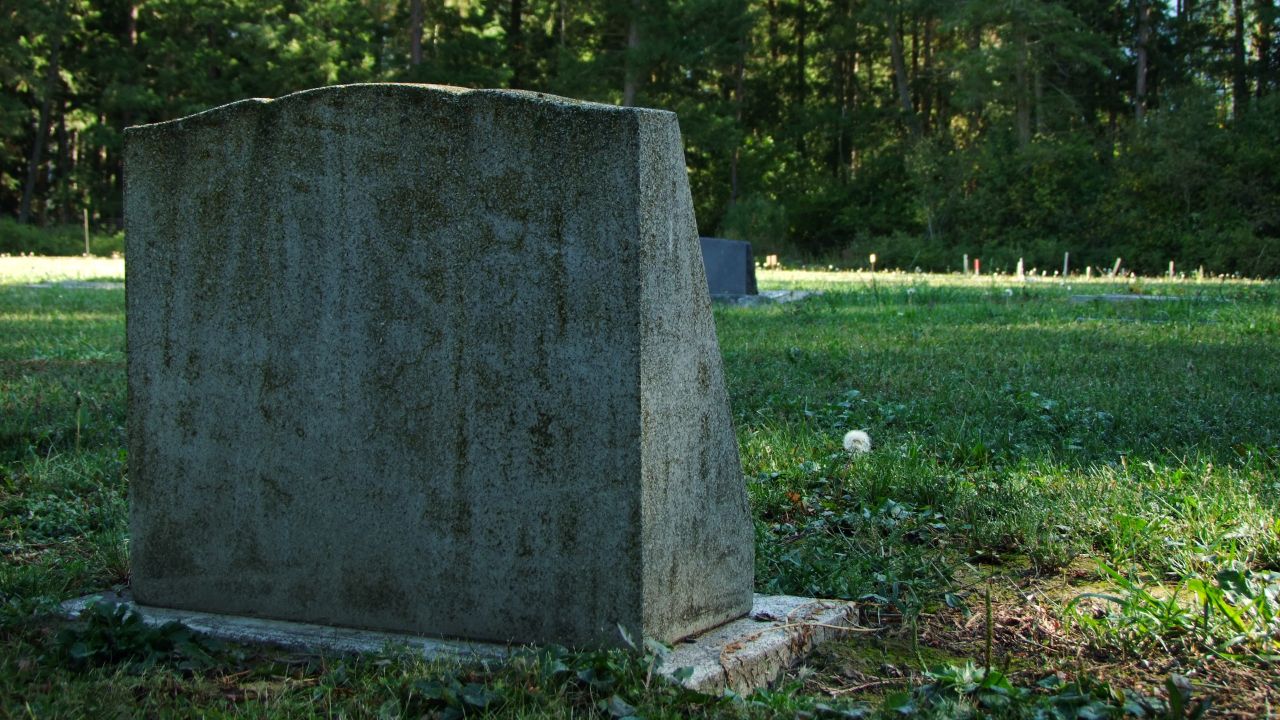
A Backyard Headstone Sent a Connecticut Historian Looking for a Lost Burial Ground
A headstone once spotted in a Connecticut backyard has reopened a local mystery about where Monroe Center’s first burial ground may have been.
Kevin Daly, historian for the Monroe Historical Society, recently spoke at Edith Wheeler Memorial Library about the Peppercorn Lease, a 1765 document tied to the town’s early burial ground, according to The Monroe Sun.
For years, some residents believed the site was behind the historic Bailey House at 150 Old Tannery Road, partly because a single headstone had stood there.
Daly’s research suggests the story is more complicated. The headstone belonged to Abel Sanford and was later returned to a family cemetery in Redding, while excavation behind the Bailey House reportedly found no evidence of a burial ground.
The 1765 Lease Described a Half-Acre Burial Ground
The Peppercorn Lease was signed by Joseph Moss, also written as Morse, in 1765, when Monroe was still part of colonial New Stratford. The Monroe Historical Society says Moss leased a half-acre of land for use as a burial ground for 100 years, with annual rent set at a single peppercorn.
The lease also required the burial ground to be fenced, a practical detail in a farming community where livestock could disturb graves if the site was left open.
The Old Clues Pointed Away From the Bailey House
Прикажи ову објаву у апликацији Instagram
Daly and Gary Thompson, interim historian for Monroe Congregational Church, studied the lease and church records to compare the old property description with Monroe Center’s modern landscape.
The lease used older terms and measurements, including rods, and described land near Brushy Ring, a stony slough, a spring, rocks, and a highway.
Daly also used LiDAR mapping to study land contours and look for terrain that matched the old description.
Only One Burial Has Been Documented So Far
Daly said he has found documentation for one person buried in the old cemetery: Charity Wheeler, who died in 1780. An old newspaper item shown during the presentation said her burial was among the last there, and that the graveyard later disappeared.
The item also said a fragment of her headstone could once be seen in an adjacent stone wall.
The Possible Site May Be on Private Property
Daly’s research led him to a private property on Church Street, across from the driveway for St. Jude, where a wooded knoll appears to match details in the lease.
He has not confirmed the burial ground’s location. Daly told the audience he would need permission from the homeowner to examine the property more closely.
For property owners, the case shows why old stones, walls, family names, maps, deeds, and local records should be checked before dismissing a strange backyard find as random. Historic clues can sit on private land for generations, and confirming them usually requires permission, careful documentation, and help from local historians or preservation officials.