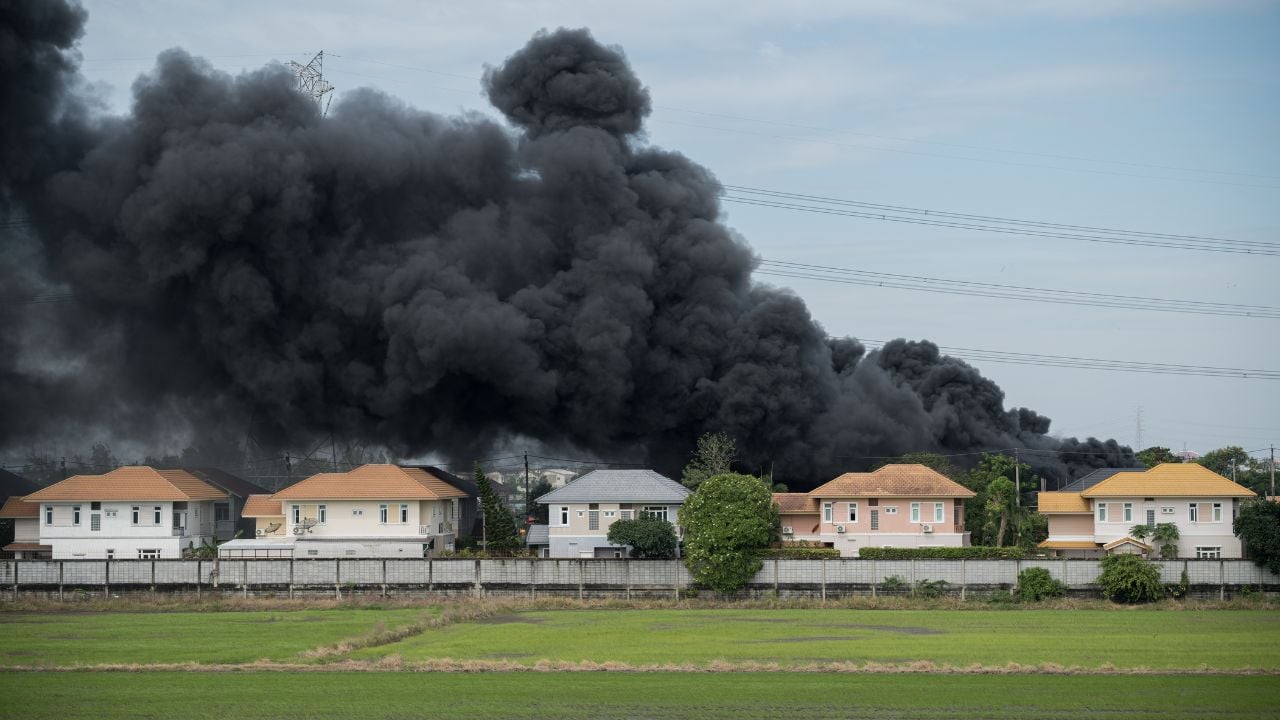
Montana Homeowners Are Paying More for Insurance as Wildfire Risk Gets Harder To Ignore
Homeowners in Montana’s Flathead Valley are seeing wildfire risk show up before flames ever reach their property. For some, the warning arrives as a higher insurance bill, a nonrenewal notice, or a buyer who cannot get coverage for a home in the woods.
According to Flathead Beacon, home insurance premiums in Montana have increased roughly 40% since 2019, while home values have climbed about 70%.
The pressure is especially sharp in northwest Montana, where many homes sit close to forests, grasslands, and other fuels that can carry wildfire toward houses.
For owners and buyers, wildfire preparation is becoming part of the cost of owning, selling, and financing a home. A property can be beautiful, remote, and valuable, but still become harder to insure if carriers view the surrounding land as too risky.
Some Buyers Can’t Get Coverage
Прикажи ову објаву у апликацији Instagram
Flathead Beacon reported that some residents have seen premiums double, triple, or quadruple, while others have struggled to find coverage at all.
One Whitefish-area homeowner told the outlet that a neighbor’s planned sale fell through because the prospective buyers could not get insurance.
That turns wildfire risk into more than a seasonal safety concern. If coverage becomes unavailable or unaffordable, a property can become harder to sell, harder to finance, and more expensive to keep.
Insurers Are Looking at More Than the Fire Station
Insurance agents and state officials told Flathead Beacon that companies are looking beyond the distance from a house to the nearest fire department.
Slope, access, fuel density, nearby vegetation, water supply, and wildfire-risk scores can all affect whether a property looks insurable.
House Bill 533, passed in 2025, requires admitted insurers that use wildfire risk scores to provide certain score information to homeowners, applicants, or their insurance producers on request. The disclosure can include the current score, the range of possible scores, who created it, when it was created, and the key factors that hurt the property’s score.
Mitigation May Affect the Insurance Conversation
The Montana State Auditor’s Office says House Bill 136 allows insurers to offer premium reductions for homeowners who invest in wildfire mitigation and resilient construction, including ignition-resistant roofs or fire-resistant siding.
Owners should ask their insurance agent what specific wildfire factors affect their policy and whether documented work could help with underwriting, renewals, or available discounts.
The Montana DNRC urges homeowners to maintain the home ignition zone, the area around a house where embers, direct flames, or radiant heat can ignite structures and nearby materials.
Insurance Is Becoming Part of Wildfire Prep
Wildfire preparation now reaches beyond defensible space and evacuation plans. In high-risk areas, it can also affect whether a home stays affordable to insure or realistic to sell.
Homeowners should document mitigation work with photos and receipts, keep gutters and decks clear, move firewood away from the house, trim vegetation, improve address visibility, and ask about neighborhood programs such as Firewise USA.
Flathead County also urges residents to work on defensible space, evacuation planning, reflective address signs, and neighborhood-level fire prevention. Those steps may not guarantee coverage, but they give owners a clearer record when an insurer, buyer, or lender asks how the property’s fire risk is being managed.