
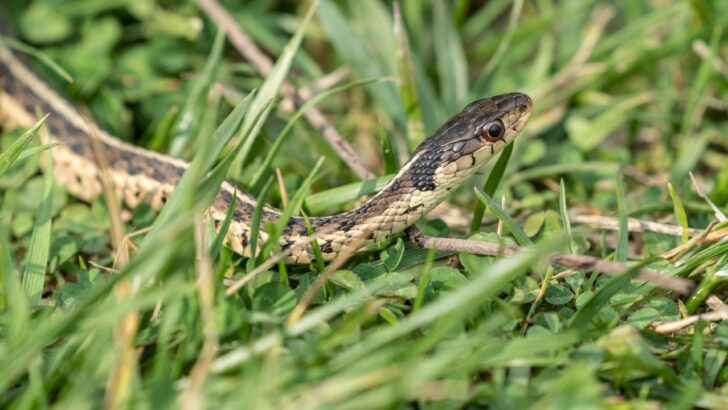
Sharing your garden with wildlife is often a rewarding experience, but some visitors are less welcome than others. While many snakes are harmless and even beneficial for controlling pests, discovering them unexpectedly can be unsettling. Understanding the subtle clues they leave behind is key to managing your garden space effectively and ensuring it remains a safe, enjoyable sanctuary for you and your family.
Learning to spot the signs of snake activity helps you address the situation before it becomes a bigger issue. Whether you aim to coexist peacefully or gently encourage them to move elsewhere, knowing what to look for is the first step. This guide will walk you through eight common indicators that you may have a snake frequenting your yard, helping you take proactive and informed measures.
1. You Find Small, Rounded Holes
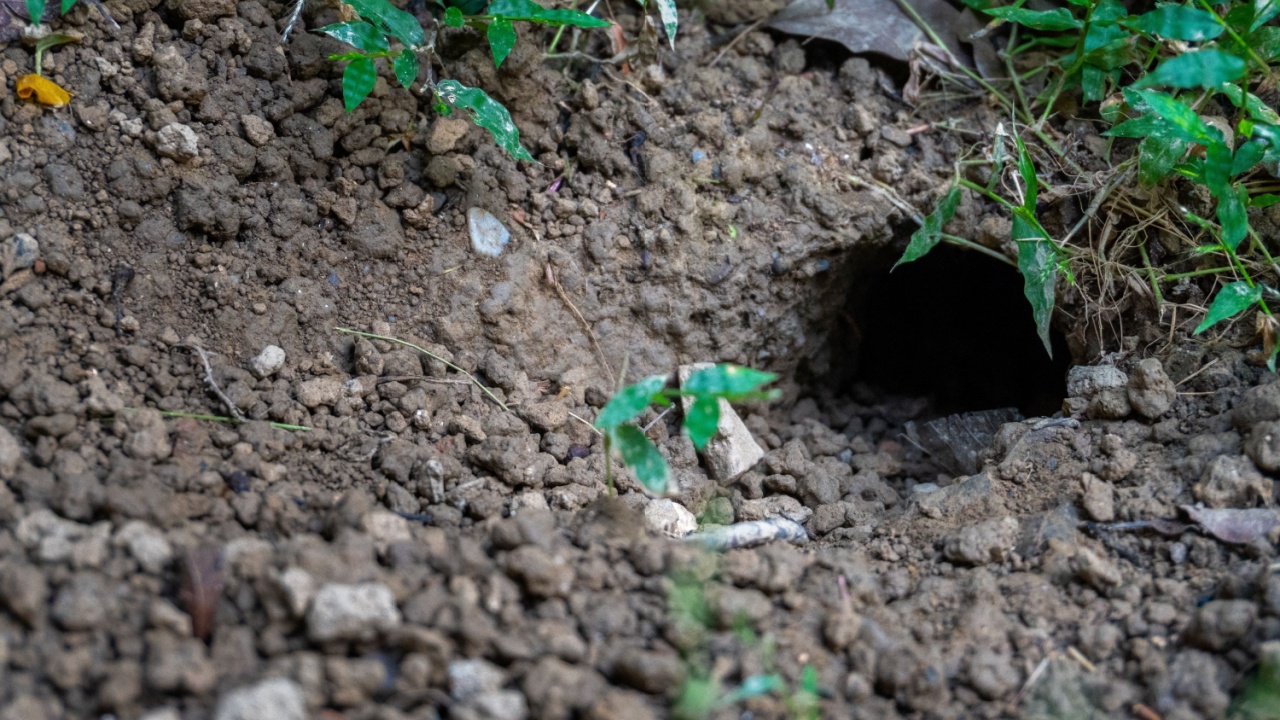
Image Credit: Shutterstock.
One of the first potential signs of snakes is the appearance of small holes in your garden beds or lawn. While many critters dig in the yard, holes repurposed by snakes often have a distinct, rounded-out appearance. Snakes are opportunists; they rarely dig their own burrows. Instead, they take over abandoned tunnels made by rodents like mice, voles, or chipmunks, sizing the entrance to their liking.
These holes, often found near foundations, under rocks, or in dense ground cover, provide snakes with a safe place to rest, digest meals, and escape predators and temperature extremes. If you notice new holes that seem smoother than typical rodent burrows, it’s a strong indicator that a snake may have moved in.
Quick Guide:
- What to Look For: Coin-sized to two-inch holes with smooth, rounded edges. Often located in sheltered areas like under woodpiles, decks, or thick mulch.
- Why It’s a Sign: Snakes occupy pre-existing tunnels from prey animals.
- Actionable Tip: Fill abandoned rodent holes with soil or gravel. This removes potential shelters and encourages snakes to look for housing elsewhere.
2. You Notice Changes in Animal Behavior

Image Credit: Shutterstock.
Your pets can be one of your best early-warning systems. If you have a dog or cat that spends time outdoors, pay attention to their behavior. A sudden fascination with a specific area, like a woodpile, thick bush, or the space under your deck, could mean they’ve detected something new. Uncharacteristic barking, growling, hissing, or intense sniffing at odd places can all signal the presence of a snake.
Beyond your pets, observe the general wildlife. Snakes are predators, and a healthy garden ecosystem is like a buffet. If you notice a sudden drop in the population of common garden critters like chipmunks, frogs, or mice, it might mean a predator has moved in. A quiet garden can sometimes be a sign that a snake is actively hunting.
Quick Guide:
- What to Look For: Pets showing unusual interest in specific spots. A noticeable decrease in the presence of small animals like mice, voles, and frogs.
- Why It’s a Sign: Animals can sense predators, and a drop in prey populations points to an active hunter.
- Actionable Tip: Trust your pet’s instincts. If they are fixated on an area, investigate cautiously to see if you can identify what has their attention.
3. You Discover Shed Skins
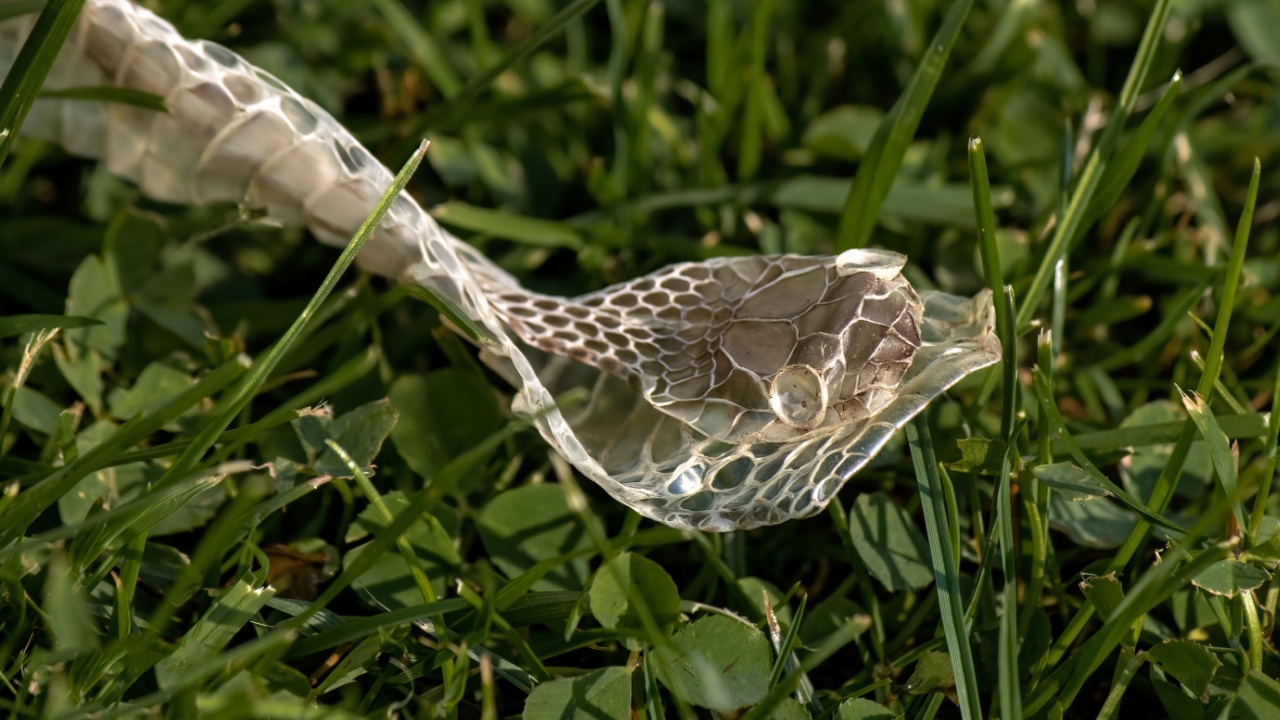
Image Credit: Shutterstock.
Finding a shed snake skin is the most definitive, unmistakable sign that a snake is living in or passing through your garden. As snakes grow, they shed their outer layer of skin in a process called ecdysis. The discarded skin is often left behind in one complete, translucent piece. You will likely find these skins in protected, out-of-the-way locations. Check along fence lines, tucked behind rocks or woodpiles, under dense foliage, or near the foundation of your home. The skin itself will look like a dry, scaly, and transparent version of the snake, sometimes retaining a faint pattern. Finding one confirms a snake is not just visiting, but is comfortable enough to undergo this vulnerable process on your property.
Quick Guide:
- What to Look For: Translucent, scaly skins, often found whole. Look in hidden, secure places.
- Why It’s a Sign: This is direct, physical evidence of a snake’s presence.
- Actionable Tip: If you find a skin, you can use its length and pattern to get a general idea of the type and size of the snake, which can help you decide on your next steps.
4. You Spot Snake Droppings
Image Credit: Krista Lundgren/USFWS USFWS Mountain-Prairie, Public Domain/Wiki Commons.
While less obvious than a shed skin, snake droppings are another physical clue. They are not always easy to spot, especially in dark soil or mulch. Snake droppings, or scat, are typically dark and log-shaped, often containing a white or yellowish urea cap at one end, similar to bird or lizard droppings. What makes snake scat distinct is its contents. Upon closer inspection, you may see remnants of their meals, such as fur, bones, or insect parts. Finding these droppings is also a reminder that snakes are present because there is a food source. If you have a known rodent problem, snakes may have arrived to take care of it for you.
Quick Guide:
- What to Look For: Dark, log-like droppings with a white/yellow cap. May contain visible fur or bones.
- Why It’s a Sign: Direct evidence that a snake is feeding and living in the area.
- Actionable Tip: The presence of droppings confirms a food source. Focus on reducing rodent populations to make your garden less attractive to hungry snakes.
5. You See Winding Snake Trails
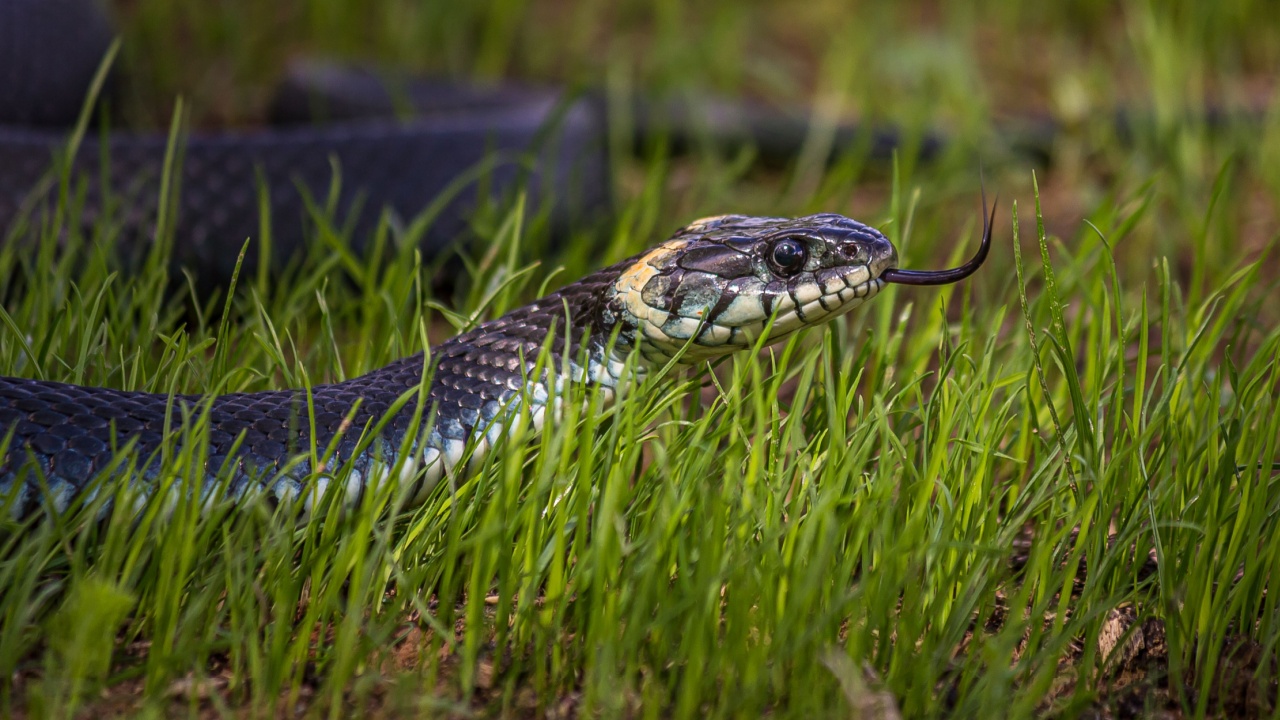
Image Credit: Shutterstock.
In a garden with areas of fine soil, sand, or thick dust, you might be lucky enough to spot the path a snake has taken. Snakes move with a distinct side-to-side motion, leaving a unique, wavy “S” pattern on the ground. These trails are a clear sign of recent activity. Look for these meandering tracks in freshly tilled garden beds, dusty areas under porches, or patches of sand. The trail can give you a sense of the snake’s size and the direction it was headed. It might even lead you directly to its preferred hiding spot or hunting ground. Unlike tracks from other animals, a snake trail is a continuous, smooth indentation in the ground.
Quick Guide:
- What to Look For: A continuous, wavy line or “S”-shaped pattern in soft soil, dust, or sand.
- Why It’s a Sign: A literal track record of a snake’s movement through your property.
- Actionable Tip: Follow the trail (from a safe distance) to identify the snake’s potential entry and exit points or hiding spots, which you can then secure.
6. You Uncover Snake Eggs
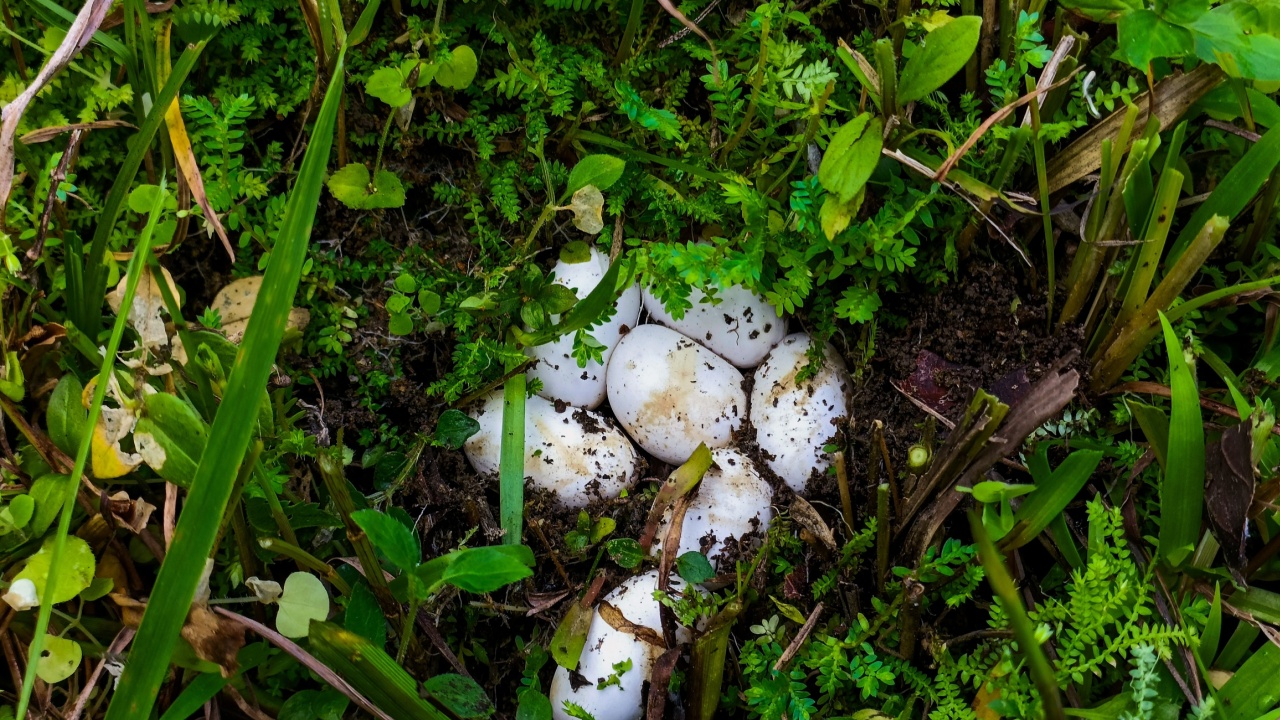
Image Credit: Shutterstock.
Finding snake eggs is a less common but very significant sign. Discovering a clutch of eggs means a snake feels safe enough on your property to reproduce. This indicates that your garden provides an ideal habitat with sufficient shelter, warmth, and food. Snake eggs are typically leathery, soft, and oblong, and are often laid in hidden, warm, and moist locations.
Look for them in compost piles, under rotting logs, in mulch heaps, or in loose soil. A clutch can contain anywhere from a few to dozens of eggs. While many snakes are beneficial, a reproducing population might be more than you bargained for. Finding eggs is a clear signal that it’s time to take more serious prevention measures.
Quick Guide:
- What to Look For: White to off-white, soft, leathery eggs, usually in clusters. Found in moist, warm, and hidden locations.
- Why It’s a Sign: Confirms that snakes have established a breeding ground in your garden.
- Actionable Tip: If you discover eggs and want them removed, contact a local wildlife removal service. They can safely relocate the nest.
7. You Notice Unusual Odors
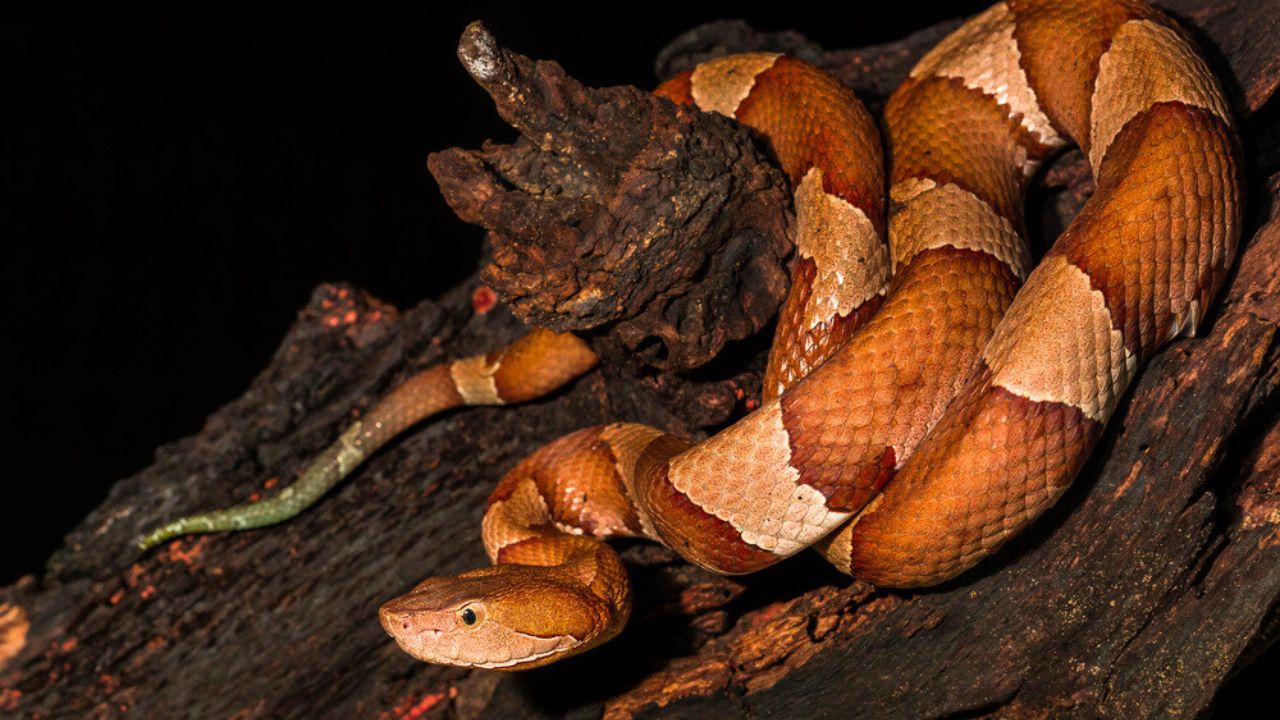
Image Credit: Shutterstock.
Some snake species emit a distinct, musky odor, especially when they feel threatened or are gathered in large numbers. This smell is often described as pungent and unpleasant. If you’re working in a specific part of your garden and notice a strange, musky scent that you can’t identify, it could be a sign of a nearby snake den (hibernaculum) or a startled snake. For example, garter snakes may release a foul-smelling musk as a defense mechanism. Copperheads are sometimes said to emit an odor that smells like cucumbers, although this is debated. If you catch a whiff of something strange and musky in your shed, under your porch, or in a rock wall, proceed with caution.
Quick Guide:
- What to Look For: A persistent, musky, or unpleasant smell in a confined or sheltered area.
- Why It’s a Sign: Snakes use scent as a defense mechanism and to mark territory.
- Actionable Tip: If you smell something odd, avoid reaching into dark, enclosed spaces. Instead, use a long-handled tool to investigate the area.
8. There’s a Sudden Increase in Insects

Image Credit: Shutterstock.
While snakes are well-known for eating rodents, many smaller snake species, like garter snakes and Dekay’s brown snakes, have a diet rich in insects, slugs, and worms. If your garden is teeming with grasshoppers, crickets, or other large insects, it can become a primary food source that attracts these types of snakes. A booming insect population turns your yard into an inviting buffet. While the snakes are providing a natural form of pest control, their presence may still be unwelcome. This sign is more about what attracts snakes than what they leave behind. Managing large insect infestations can, in turn, make your garden less appealing to them.
Quick Guide:
- What to Look For: An unusually high number of large insects like crickets and grasshoppers.
- Why It’s a Sign: A plentiful food source is the number one reason a snake will settle in an area.
- Actionable Tip: Use natural methods to control insect populations, such as introducing beneficial nematodes or encouraging birds, which will help remove the snake’s food source.
Next Steps: Prevention and Safe Management

Image Credit: Depositphotos.com.
Discovering you have snakes in your garden doesn’t have to be a cause for panic. Most are harmless and play a helpful role in the ecosystem. The best approach is to make your garden less inviting. Start by tidying up. Remove piles of wood, rocks, and debris where snakes love to hide. Keep your lawn mowed and trim back overgrown vegetation, especially around the foundation of your house. Seal any gaps or cracks in your foundation, deck, or shed to eliminate potential entry points.
Most importantly, address any rodent or insect problems to remove the primary food source. If you confirm the presence of a venomous snake or a large population, do not attempt to handle the situation yourself. Contact a local animal control or professional wildlife removal service. They are equipped to safely and humanely capture and relocate the animals, ensuring both your safety and theirs.