
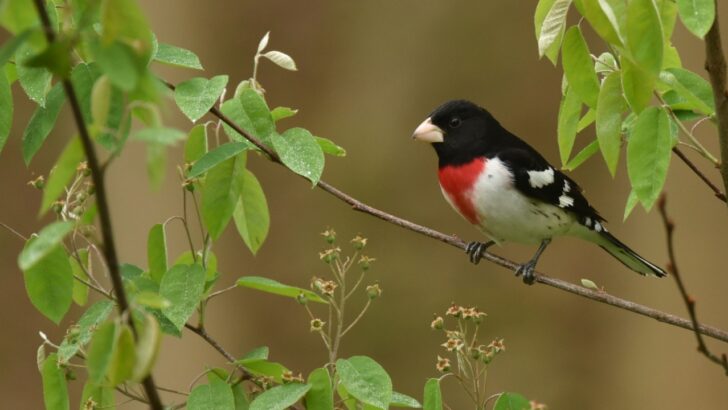
Turning your gaze to your backyard can be more than just a pleasant break; it can be the start of a genuine adventure. While you might be used to seeing robins and sparrows, a whole world of less common, more vibrant visitors could be just outside your window.
The rustle in the leaves or a flash of unexpected color might signal the arrival of a rare bird, turning a normal afternoon into a memorable wildlife encounter.
This guide will introduce you to 15 rare and beautiful bird species that have been known to visit backyards across North America. We’ll explore what makes each one unique, what they like to eat, and how you can make your garden a more inviting stopover for them. You will learn how to identify these stunning creatures and what simple steps you can take to encourage them to pay you a visit.
1. Scarlet Tanager
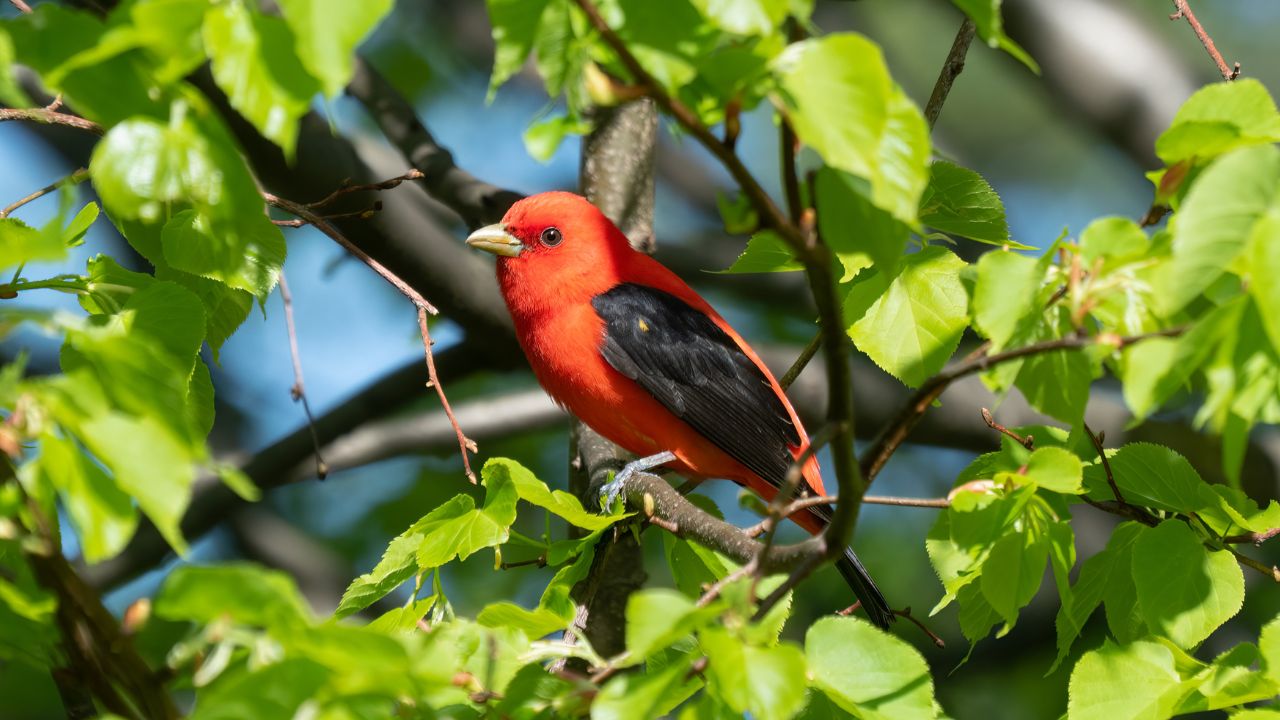
Image Credit: Rhododendrites – Own work, CC BY-SA 4.0/Wiki Commons.
The Scarlet Tanager is a truly breathtaking sight. During the breeding season, the male is an unmistakable, brilliant scarlet red with jet-black wings and tail. Females and non-breeding males are a more subtle olive-yellow, which helps them blend into the forest canopy. These birds are neotropical migrants, spending their winters in South America and flying north to the deciduous forests of eastern North America for the summer.
Their diet primarily consists of insects like caterpillars, moths, and beetles, which they skillfully pluck from high branches. They also have a sweet tooth for fruits and berries, especially in late summer. To attract a Scarlet Tanager, focus on creating a habitat that mimics their preferred forest environment.
Planting native berry-producing shrubs such as serviceberry, mulberry, or dogwood can be a powerful draw. Since they are often shy, providing a clean, quiet birdbath, especially one with a dripper or mister, can also entice them to come down from the trees for a drink.
Quick Tips to Attract:
- Plant native fruit-bearing trees and shrubs.
- Maintain mature deciduous trees like oaks and maples.
- Provide a clean, moving water source.
- Avoid using pesticides to ensure a healthy insect population.
2. Indigo Bunting
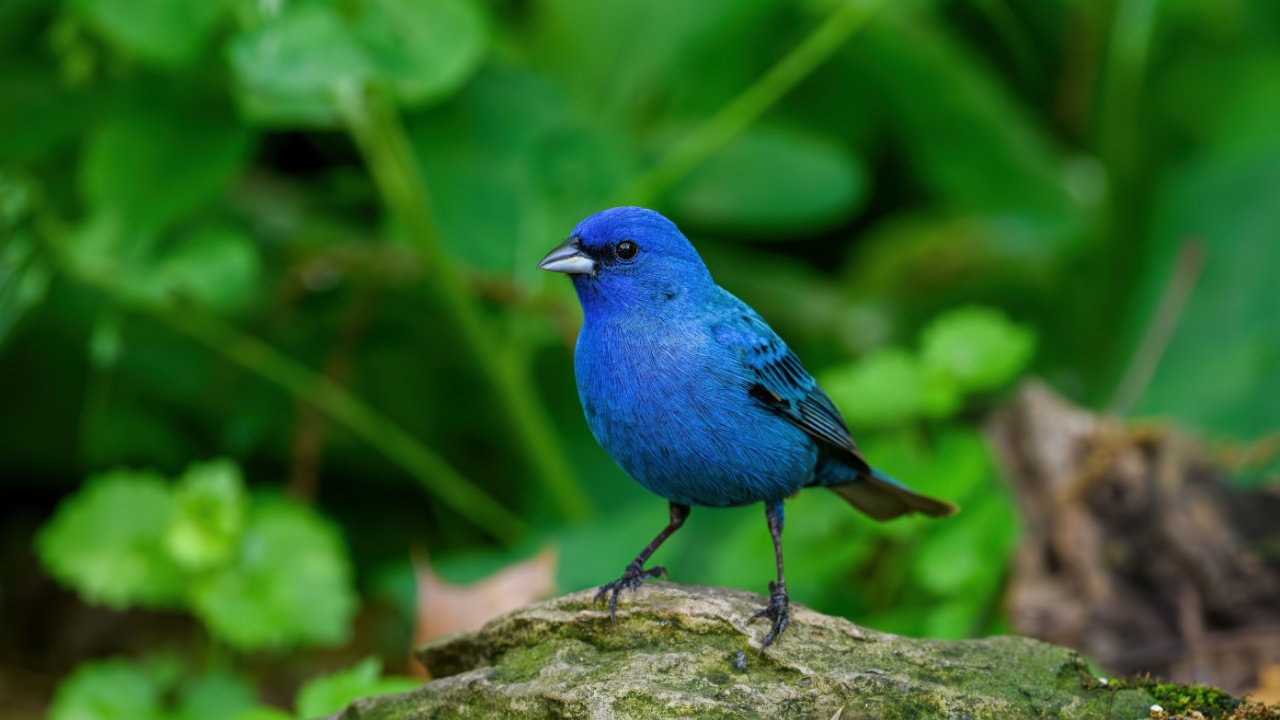
Image Credit: Shutterstock.
The male Indigo Bunting is a spectacular bird, with a dazzling, deep blue in the sunlight. Interestingly, their feathers lack blue pigment; their vibrant color is a result of light refracting through the microscopic structures on their feathers. Females are a much more understated plain brown, often with faint streaking on the breast.
These small songbirds are common in brushy, weedy fields and along the edges of woodlands. Indigo Buntings feed on a mix of small seeds from grasses and weeds, as well as insects like caterpillars and grasshoppers. They are particularly fond of thistle and nyjer seeds. You can attract them to your yard by offering these seeds in a feeder. They also appreciate a landscape with a mix of open, grassy areas and dense shrubbery for cover. Leaving a patch of your garden a little “wild” with native grasses and wildflowers can make your space much more appealing to them.
Quick Tips to Attract:
- Offer thistle (nyjer) or sunflower seeds in feeders.
- Plant native grasses and wildflowers.
- Allow some areas of your yard to grow a bit wild.
- Provide a birdbath for drinking and bathing.
3. Rose-breasted Grosbeak
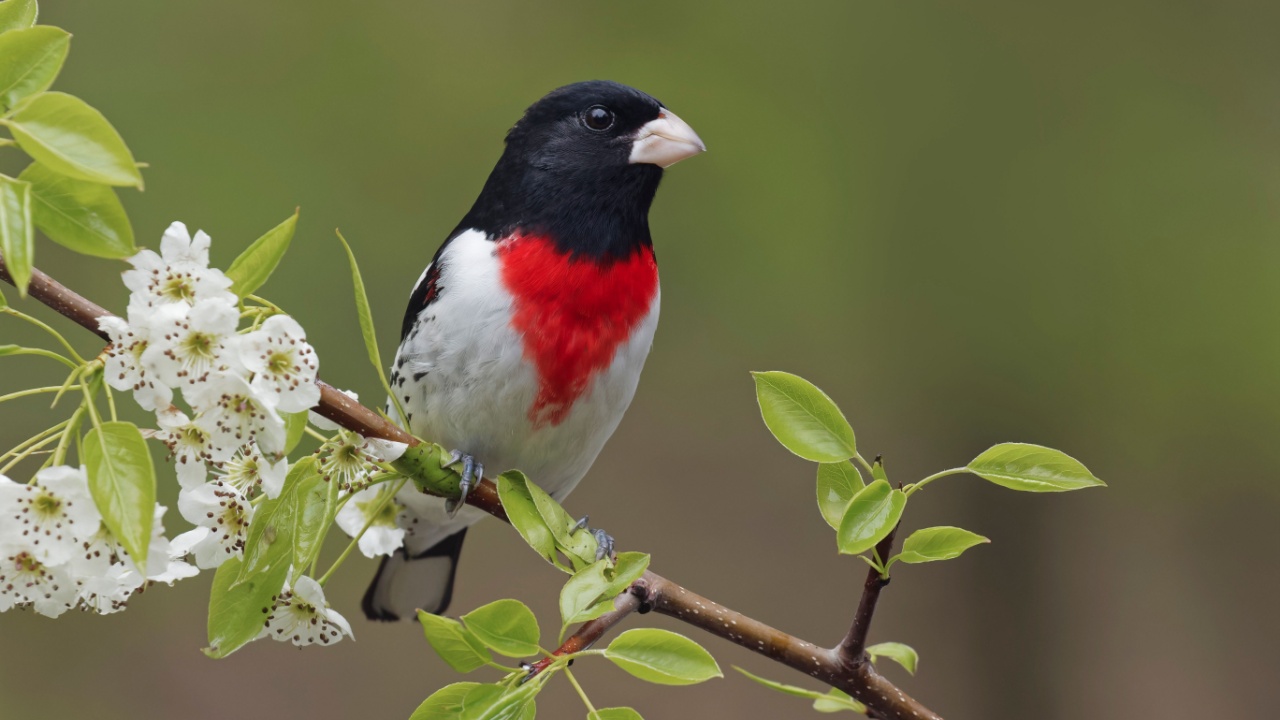
Image Credit: Shutterstock.
With his striking black-and-white pattern and a vivid, rose-red triangle on his chest, the male Rose-breasted Grosbeak is hard to miss. Females look quite different, with a brown-and-white striped pattern similar to a large sparrow. These birds have a large, triangular beak perfect for cracking open seeds and crushing insects.
They breed in deciduous forests across the eastern United States and Canada. Their diet is quite varied, including insects, seeds, and fruit. They are particularly fond of black oil sunflower seeds and safflower seeds at feeders. They will also happily eat berries from native plants.
Rose-breasted Grosbeaks are known for their beautiful, melodic song, often described as a richer, more refined version of an American Robin’s song. To attract them, ensure your feeders are stocked in the spring during their migration.
Quick Tips to Attract:
- Provide black oil sunflower and safflower seeds.
- Plant native berry-producing shrubs like elderberry and dogwood.
- Maintain a water source.
- Listen for their robin-like, operatic song from treetops.
4. Cedar Waxwing
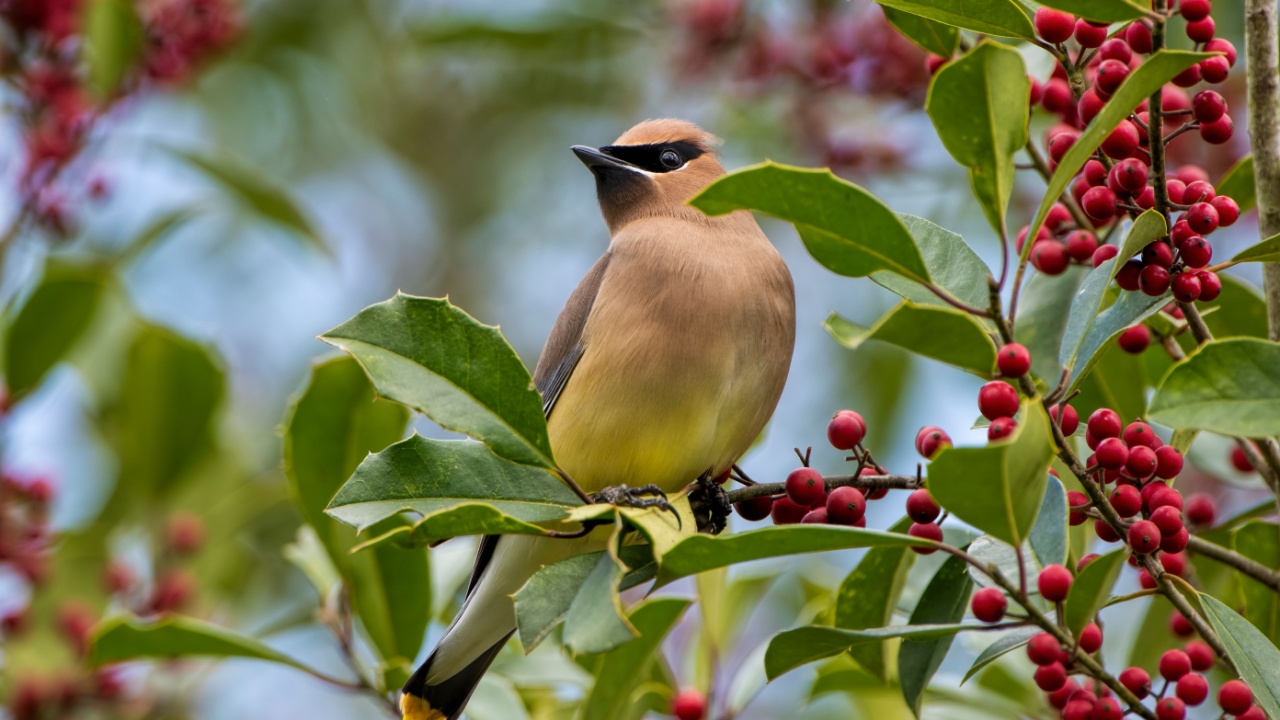
Image Credit: Shutterstock.
Cedar Waxwings are among the most elegant-looking birds you might find in your yard. They have a sleek, silky brown plumage, a crest, a black mask around their eyes, and distinctive red, waxy tips on their wing feathers.
These birds are highly social and are almost always seen in flocks, moving from one food source to another. Their diet consists almost entirely of fruit. They are famous for their love of berries and can devour the fruit from a tree in a very short time. To attract a flock of Cedar Waxwings, the best thing you can do is plant native trees and shrubs that produce small fruits, such as serviceberry, juniper, winterberry, and, of course, Eastern red cedar. They are not typical feeder birds, but they will come to a birdbath.
Quick Tips to Attract:
- Plant native fruit-bearing trees and shrubs.
- Provide a birdbath, preferably with moving water.
- Don’t be surprised if they arrive in a large, social flock.
- Listen for their high-pitched, trilling calls.
5. Baltimore Oriole
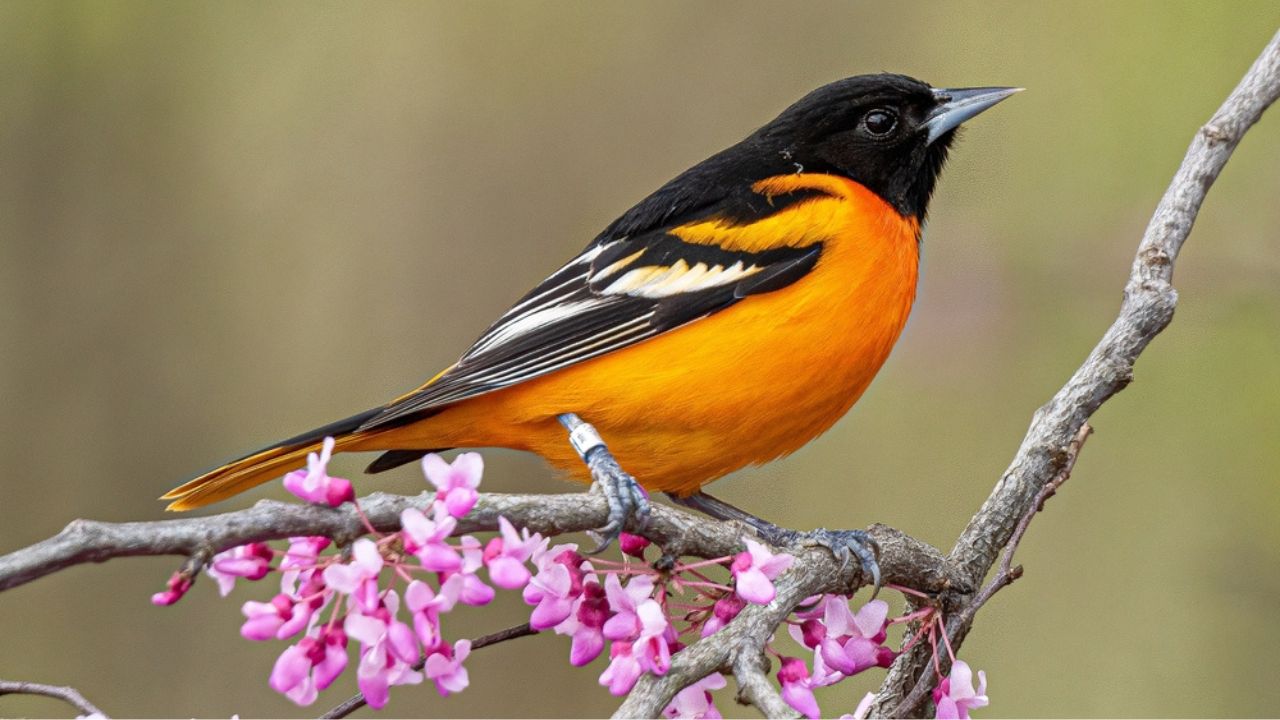
Image Credit: Shutterstock.
The male Baltimore Oriole is a flash of brilliant orange and black, a stunning combination that makes it a favorite among birdwatchers. Females are a more muted yellow-orange and brown but still quite beautiful. These birds build incredible, sock-like hanging nests woven from plant fibers, hair, and string, usually at the end of a drooping tree branch.
Orioles have a sweet tooth. They love nectar, fruit, and jelly, in addition to the insects they need for protein. To attract them, you can offer orange halves on a spike or put out grape jelly in a small dish. Specialized oriole feeders that hold nectar are also effective. Planting nectar-rich, tubular flowers like trumpet vine and honeysuckle can also draw them in.
Quick Tips to Attract:
- Offer orange halves, grape jelly, or nectar in feeders.
- Plant nectar-rich flowers like bee balm and trumpet vine.
- Look for their unique, hanging nests in tall deciduous trees.
- Leave out natural fibers like string or pet fur for nesting material.
6. Eastern Towhee
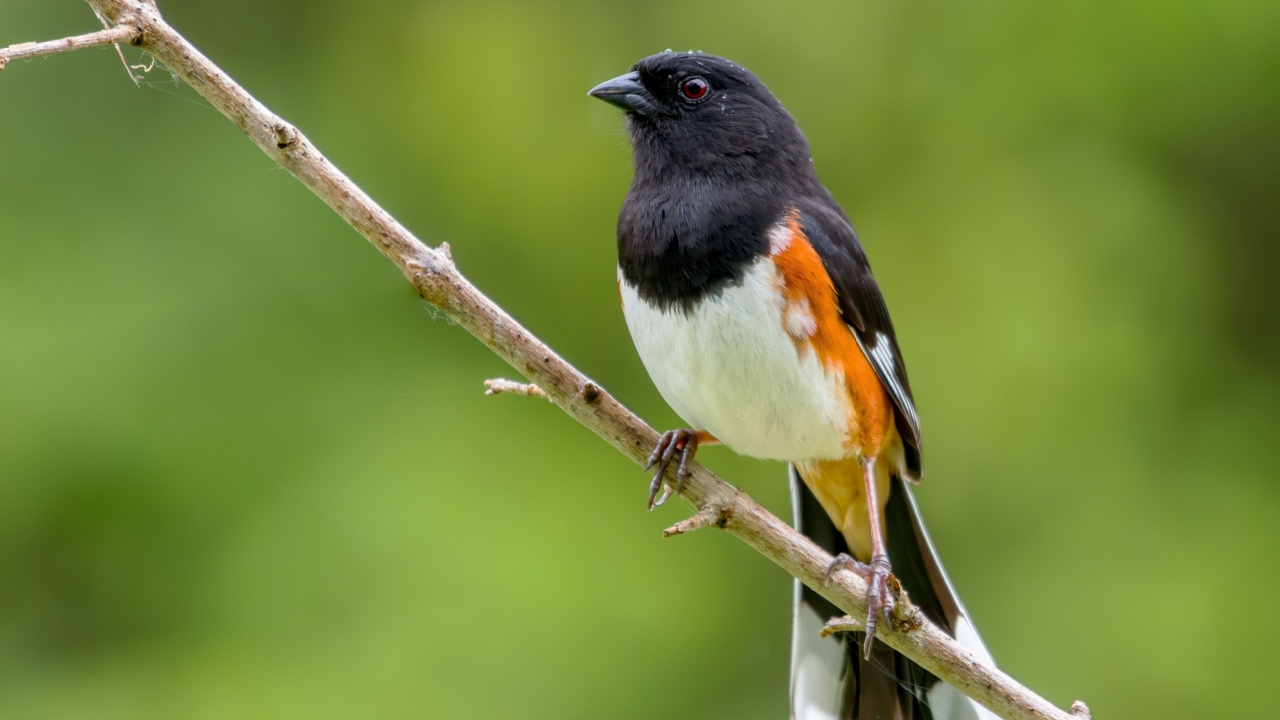
Image Credit: Shutterstock.
Often heard before it is seen, the Eastern Towhee has a distinctive call that sounds like it’s saying “drink your teaaaa!”. This large sparrow is a striking bird with a black head and back (brown in females), rusty-red sides, and a clean white belly. They are commonly found in overgrown fields, forest edges, and areas with thick underbrush.
Eastern Towhees spend most of their time on the ground, using a comical two-footed scratching hop to dig through the leaf litter in search of insects, spiders, seeds, and acorns. They may visit feeders, especially ground feeders or trays, for seeds like black oil sunflower and cracked corn. To make your yard attractive to them, provide plenty of shrubbery and dense ground cover for foraging and safety.
Quick Tips to Attract:
- Create brush piles or allow for dense shrubbery.
- Offer seeds in ground-level feeders.
- Avoid clearing all leaf litter from under your shrubs.
- Listen for their signature “drink your tea” call.
7. Red-headed Woodpecker
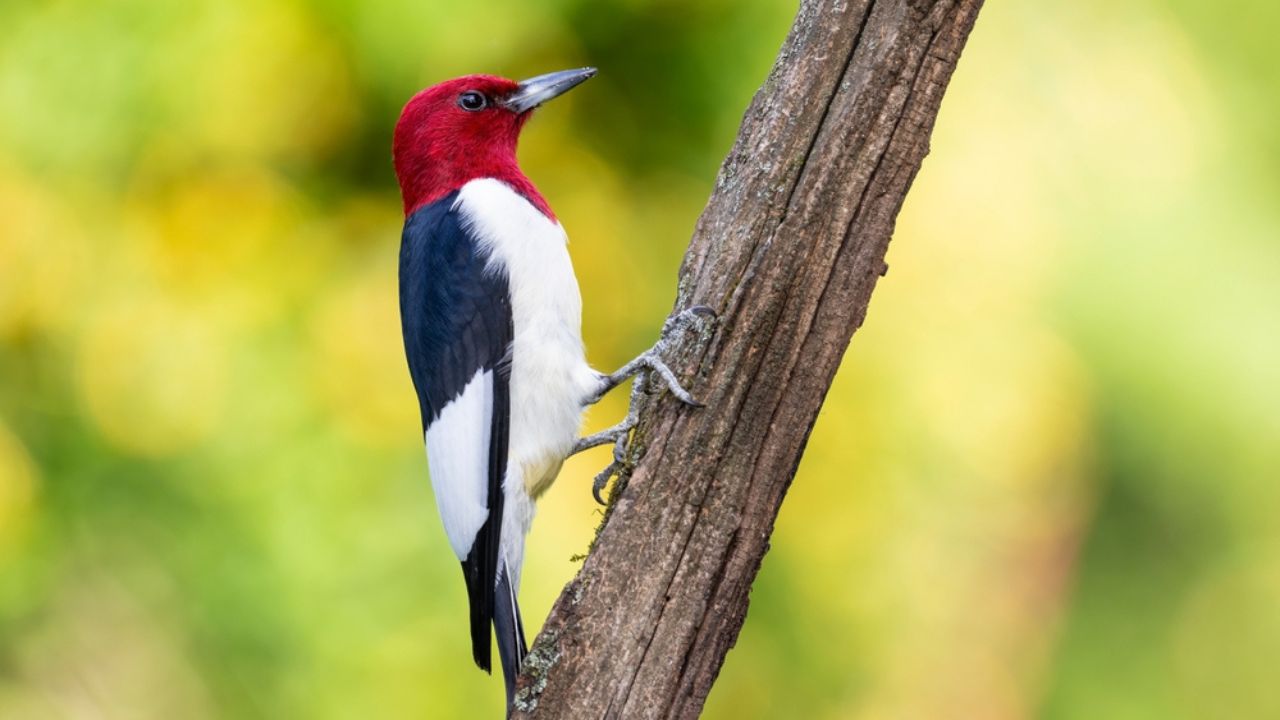
Image Credit: Shutterstock.
With its entirely crimson head, stark white body, and black wings with large white patches, the Red-headed Woodpecker is an incredibly bold and beautiful bird. Unlike many other woodpeckers, the sexes look identical. Unfortunately, their populations have declined, making a sighting a special event. They prefer open woodlands, groves of dead trees, and swamps.
These woodpeckers have a diverse diet. They are skilled at catching insects in mid-air, but they also eat nuts, seeds, and fruit. They are known to store food, wedging acorns or nuts into crevices for later. You can attract them by offering suet in feeders, especially during the winter. Leaving dead trees or snags standing (if it is safe to do so) provides critical nesting and foraging habitat.
Quick Tips to Attract:
- Offer suet, especially in block feeders.
- Leave dead trees or large branches standing if safe.
- Plant nut-producing trees like oaks and beeches.
- They may also visit feeders for sunflower seeds or cracked corn.
8. Northern Flicker
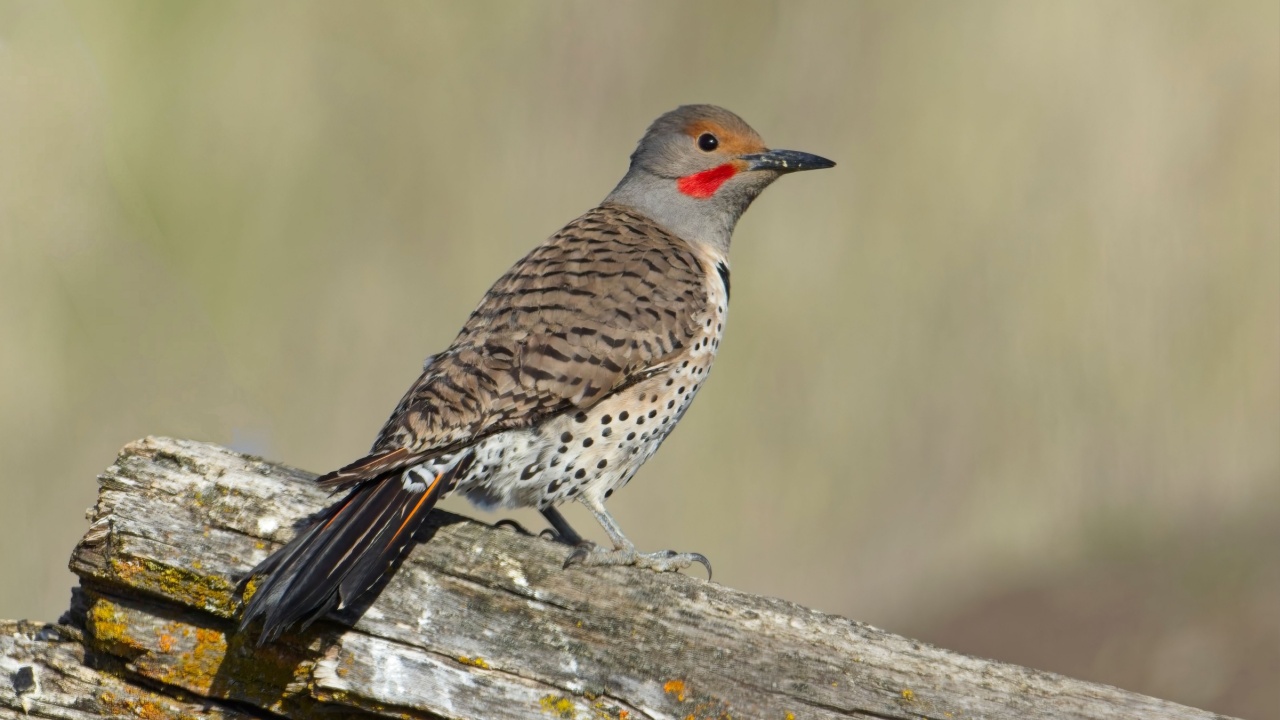
Image Credit: Shutterstock.
A type of woodpecker, the Northern Flicker is quite distinct from its relatives. It has a beautifully spotted breast, a black crescent on its chest, and a brown, barred back. In flight, it flashes a bright white rump patch.
Eastern birds have yellow under the wings and tail, while western birds have red. A key behavior is that they spend much of their time foraging on the ground. Flickers love ants. They use their long, barbed tongue to lap up ants from anthills in lawns and fields. They also eat other insects, as well as fruits and seeds. While they can cling to suet feeders, they are just as likely to be seen hopping around your lawn. Maintaining a natural yard without pesticides will ensure a good supply of their favorite food.
Quick Tips to Attract:
- Avoid using lawn pesticides to preserve ant populations.
- Offer suet in a cage feeder.
- Provide a birdbath, as they love to bathe.
- They may be attracted to nesting boxes built to their specifications.
9. White-crowned Sparrow
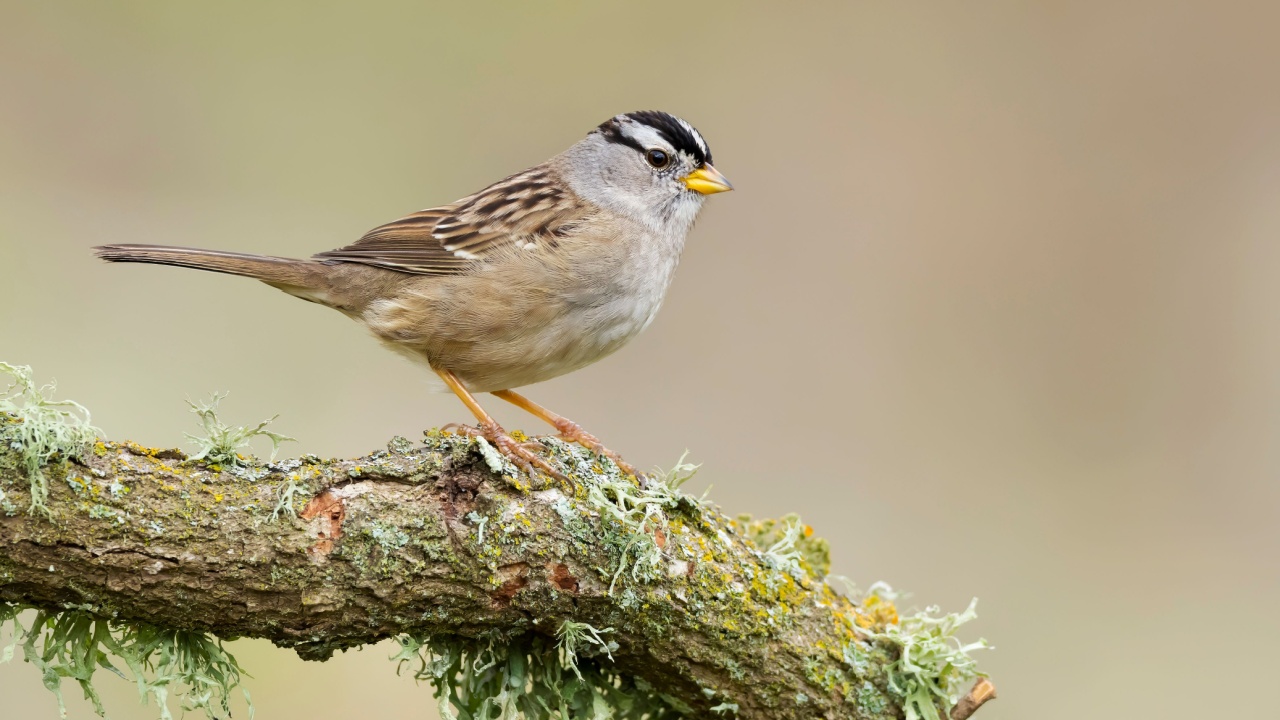
Image Credit: Shutterstock.
The White-crowned Sparrow is an elegant and crisp-looking bird, easily identified by its bold black-and-white stripes on the head and a clear, grayish breast. Immature birds have brown-and-tan head stripes.
These birds are often seen during migration in spring and fall, and some populations spend the winter in the United States. They forage on the ground near the cover of shrubs and bushes, looking for seeds from weeds and grasses, as well as insects. White-crowned Sparrows will readily visit backyard feeders, especially those that offer millet, sunflower seeds, and cracked corn on a platform or tray feeder close to the ground. Maintaining some shrubbery will give them the sense of security they need to visit your feeders.
Quick Tips to Attract:
- Use tray or ground feeders with millet and sunflower seeds.
- Plant dense shrubs to provide cover near feeding areas.
- Listen for their clear, whistling song, especially in the spring.
- Keep a clean birdbath available.
10. Ruby-throated Hummingbird
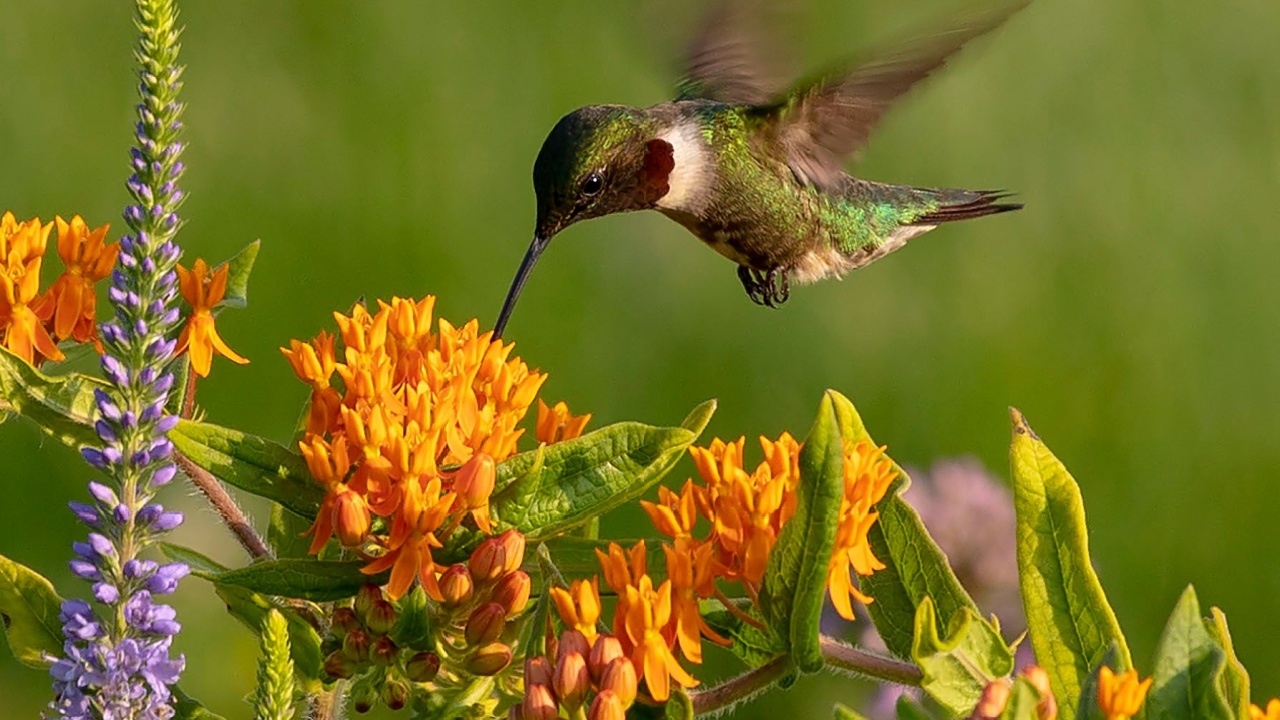
Image Credit: Shutterstock.
The Ruby-throated Hummingbird is a tiny marvel of energy and iridescence. The male has a metallic green back and a brilliant, fiery red throat (gorget) that can look black in certain light. Females lack the red throat and have a whitish breast. They are the only hummingbird species that regularly breeds in eastern North America. Their diet is high-octane fuel: nectar from flowers and tiny insects. They are famously attracted to red, tubular flowers.
You can attract them by planting species like cardinal flower, bee balm, and trumpet honeysuckle. A hummingbird feeder filled with a simple sugar-water solution (1 part white sugar to 4 parts water) is also a sure way to bring them in. Be sure to keep the feeder clean to prevent mold.
Quick Tips to Attract:
- Hang hummingbird feeders with a 1:4 sugar-to-water solution.
- Plant red, orange, and pink tubular flowers.
- Provide a water source with a mister or dripper.
- Avoid red dye in your nectar solution; it is unnecessary and potentially harmful.
11. Yellow Warbler
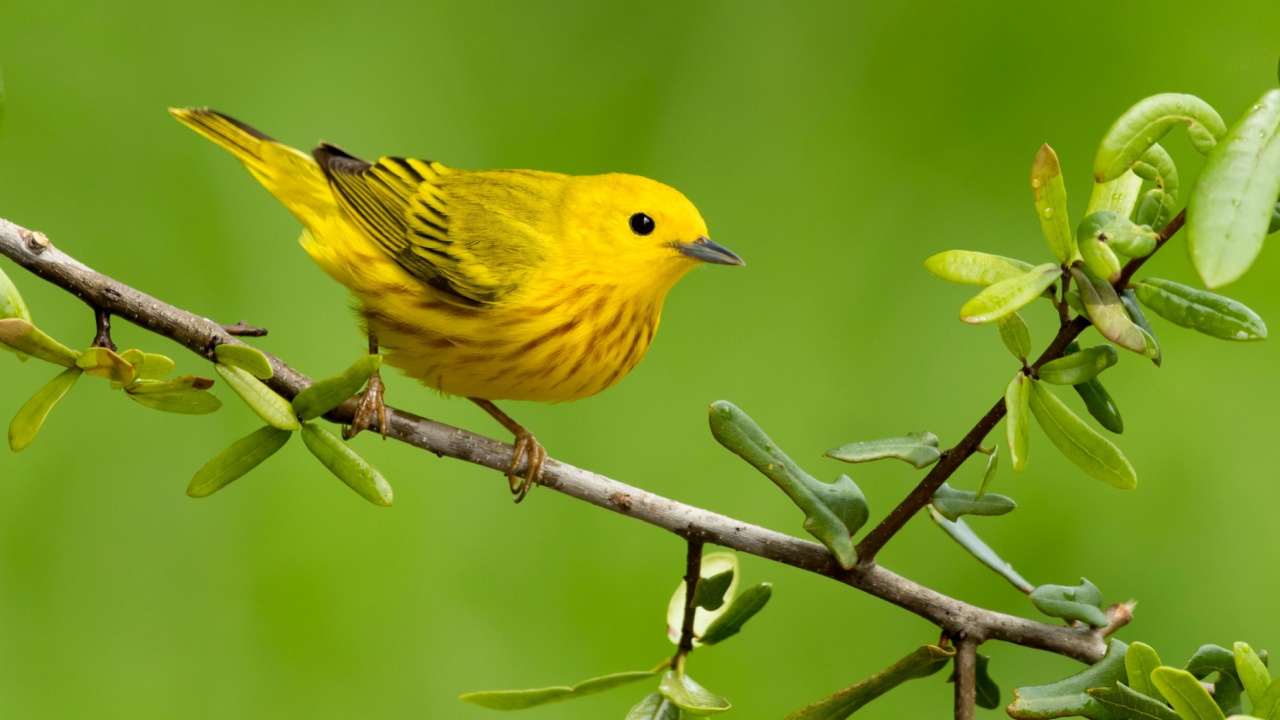
Image Credit: Shutterstock.
One of the most brightly colored members of the warbler family, the Yellow Warbler is often described as a splash of sunshine. Males are a uniform bright yellow with faint reddish streaks on their breast. Females are a slightly duller yellow overall. These small, active birds are typically found in wet, shrubby habitats, like willow thickets along streams.
Yellow Warblers are insectivores, feeding mainly on caterpillars and other small insects gleaned from leaves and twigs. Because they don’t eat seeds, they won’t visit a typical bird feeder. The best way to attract them is by creating the right habitat. Planting native shrubs and small trees, especially near a water source, can entice them to visit during migration. A birdbath can also be a major draw.
Quick Tips to Attract:
- Plant native shrubs and trees to attract insects.
- Provide a birdbath, which is highly attractive to warblers.
- Avoid pesticides in your garden.
- Listen for their sweet, cheerful song that sounds like “sweet, sweet, sweet, I’m so sweet!”
12. Northern Cardinal
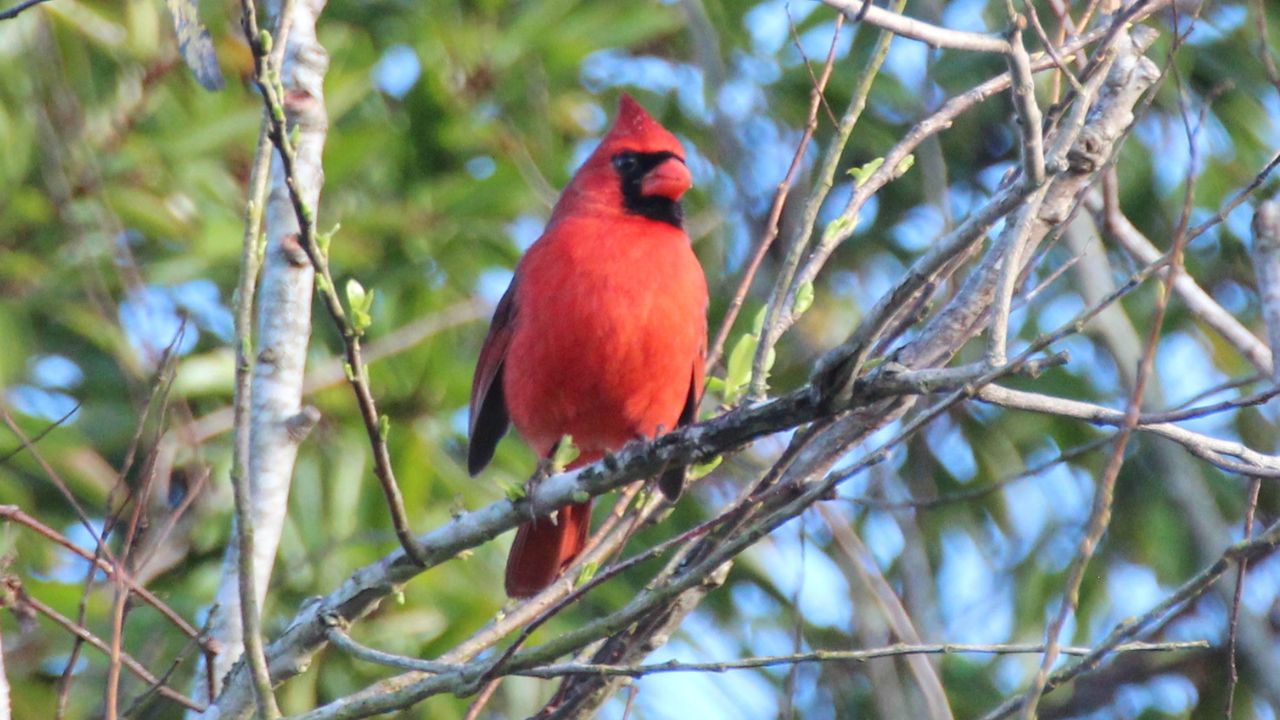
Image Credit: gary_leavens – CC BY-SA 2.0/Wiki Commons.
While a familiar sight for many, the Northern Cardinal is still a treasure in any backyard. The male’s brilliant, all-over red plumage makes him impossible to miss, especially against a snowy landscape. The female is a lovely, warm tan-brown with reddish tinges on her crest, wings, and tail. Both have a prominent crest and a stout, orange-red bill.
Cardinals are not picky eaters and are reliable visitors to feeders. They love black oil sunflower seeds and safflower seeds. Because they are larger songbirds, they prefer sturdy platform feeders or hopper feeders where they can perch comfortably. Cardinals do not migrate, so providing food year-round will make them permanent residents. They also appreciate dense shrubs like dogwood or hawthorn for nesting and cover.
Quick Tips to Attract:
- Offer black oil sunflower and safflower seeds.
- Use platform or hopper feeders.
- Plant dense shrubs and evergreens for cover and nesting sites.
- Provide a water source, especially a heated one in winter.
13. American Goldfinch
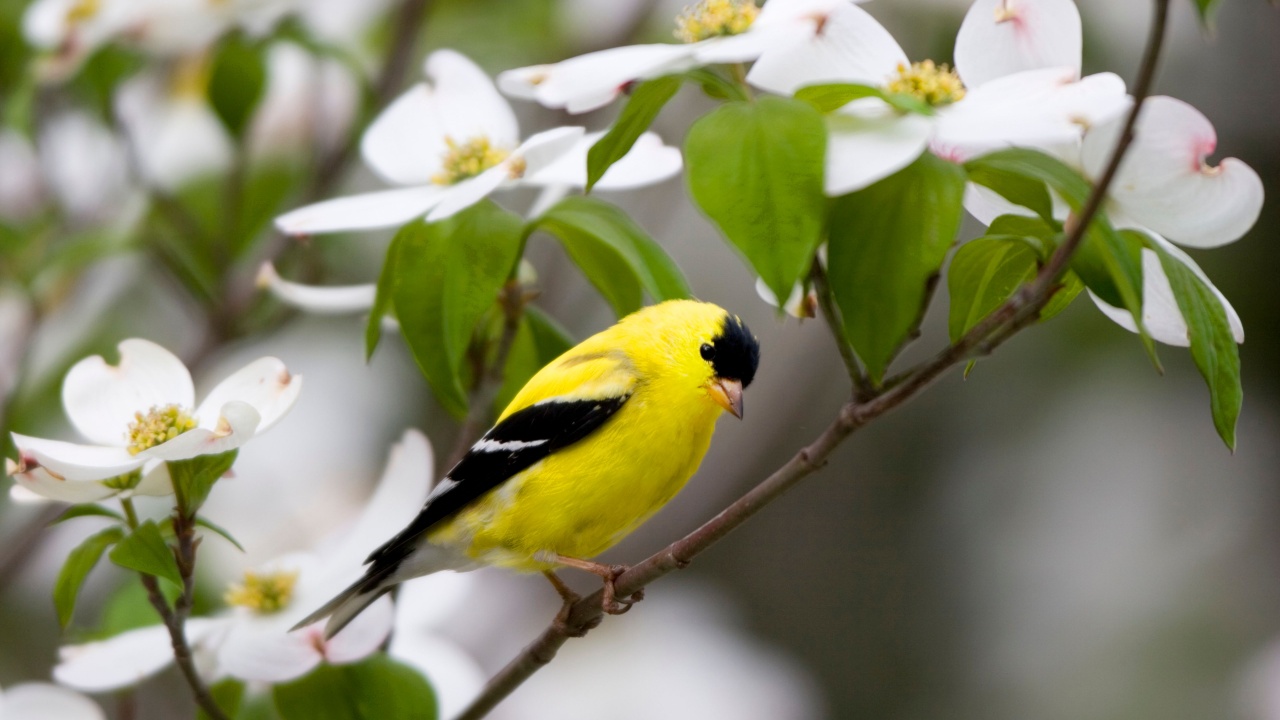
Image Credit: Shutterstock.
The American Goldfinch is a cheerful and acrobatic bird. In summer, the male is a vibrant lemon yellow with a black cap and black wings. Females are a more subdued olive-yellow.
In winter, both sexes become a duller brownish color, making them harder to identify. They are often seen in weedy fields and open areas. Goldfinches are strict vegetarians, and their diet consists almost entirely of seeds. They are famous for their love of thistle (nyjer) seeds, so a special thistle feeder with small ports is the best way to attract them. They also eat seeds from sunflowers, asters, and coneflowers. Planting these flowers in your garden will provide a natural food source that they adore.
Quick Tips to Attract:
- Hang a thistle (nyjer) seed feeder.
- Plant seed-bearing flowers like sunflowers, coneflowers, and asters.
- They often travel in flocks, so you may attract a whole group.
- Provide a birdbath for drinking and bathing.
14. Black-capped Chickadee
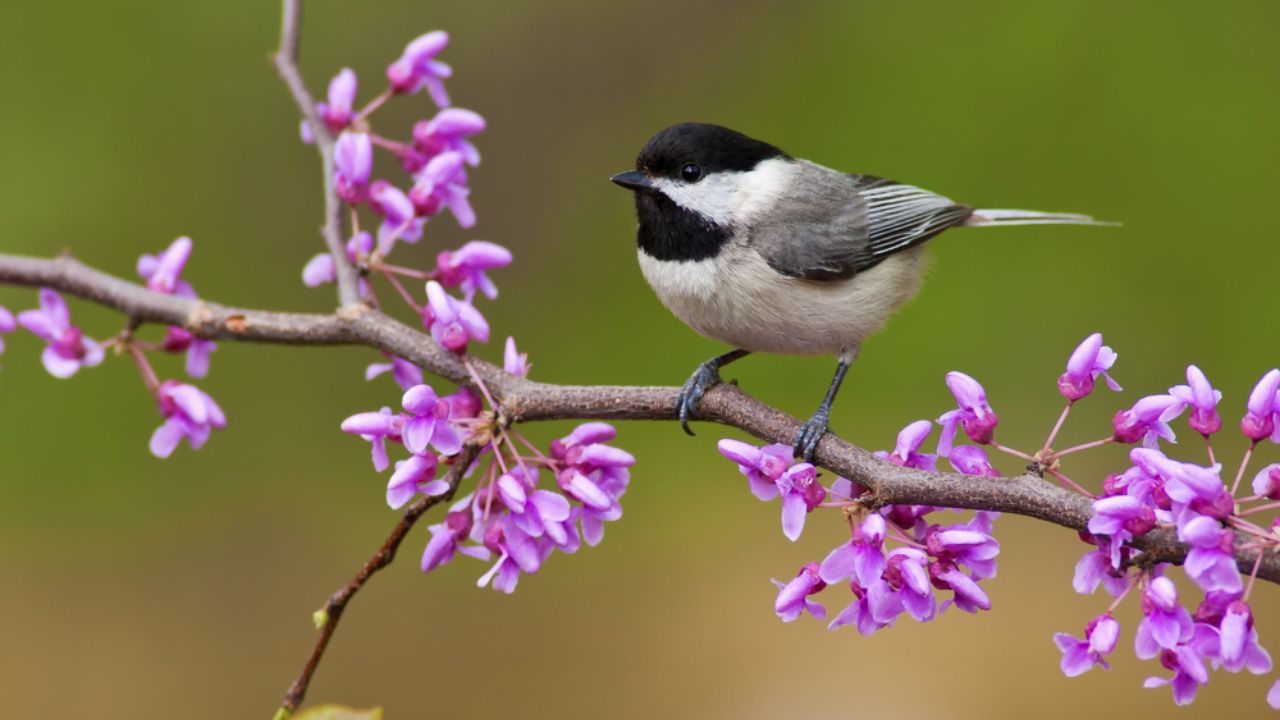
Image Credit: Shutterstock.
The Black-capped Chickadee is a tiny bird with a big personality. Easily identified by its black cap and bib, white cheeks, and gray back, this curious and friendly bird is a favorite at feeders. They are incredibly acrobatic, often seen hanging upside down from branches to find food.
Chickadees have a varied diet of seeds, berries, and insects. At feeders, they love black oil sunflower seeds, suet, and peanuts. They will grab a single seed, fly to a nearby perch, hold it between their feet, and peck it open. Providing a mix of food types will keep them coming back. They are cavity nesters, so leaving snags or putting up a nest box can encourage them to stay and raise a family.
Quick Tips to Attract:
- Offer black oil sunflower seeds, suet, and peanuts.
- They will use almost any feeder type, from tube to platform.
- Provide a birdhouse built to their size specifications.
- Their “chick-a-dee-dee-dee” call is easy to recognize.
15. Painted Bunting
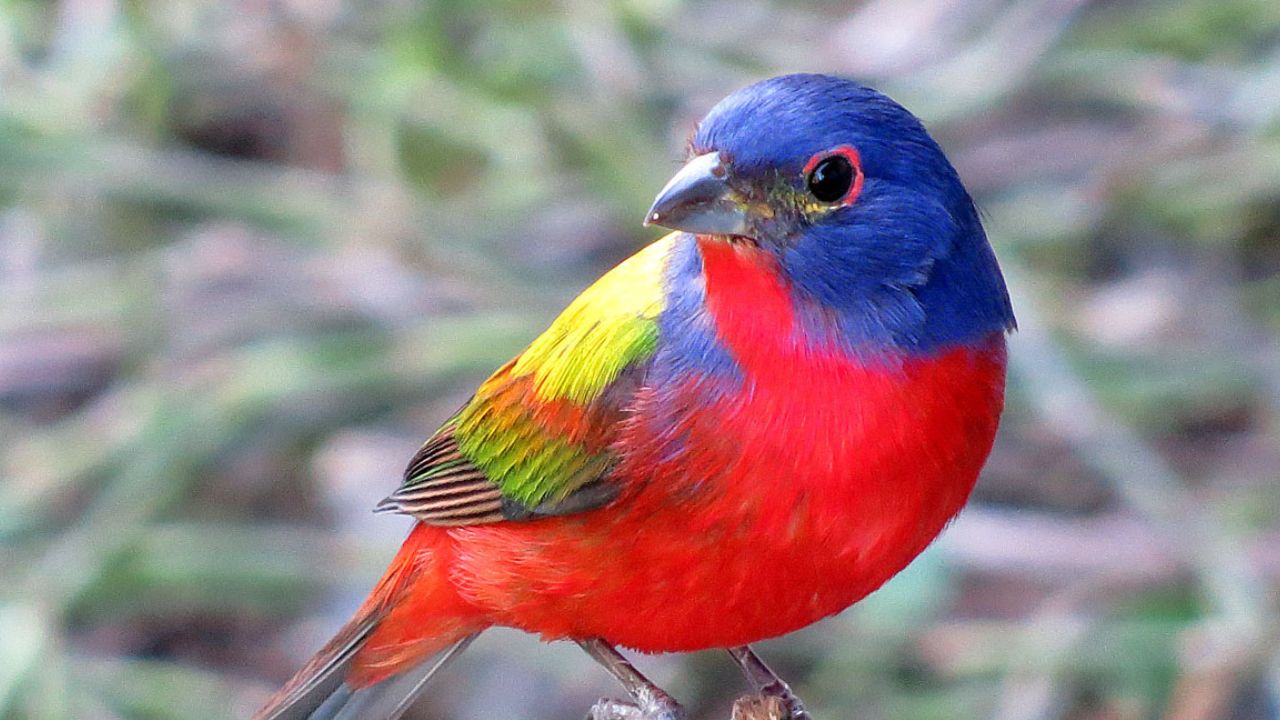
Image Credit: Don Faulkner – CC BY-SA 2.0/Wiki Commons.
The male Painted Bunting is arguably the most colorful bird in North America, boasting a stunning combination of a blue head, green back, and red rump and belly. Females and young birds are a uniform, bright greenish-yellow. Seeing one is a truly unforgettable experience. They breed in two distinct populations: one along the southeastern coast and another in the south-central states.
These birds forage for seeds on or near the ground, often in dense, brushy habitats. They are particularly fond of white millet. During migration or in their wintering grounds (which include parts of Florida and the Gulf Coast), they may show up at feeders. To attract them, offer millet in a ground feeder or a caged feeder that excludes larger birds. Maintaining a bit of “messy” brush and providing a water source also helps.
Quick Tips to Attract:
- Offer white millet in ground or caged feeders.
- Maintain dense shrubs and brush piles for cover.
- Provide a reliable, clean water source.
- Be patient; these birds can be shy and are a rare treat at feeders.
Backyard Birding Made Fun
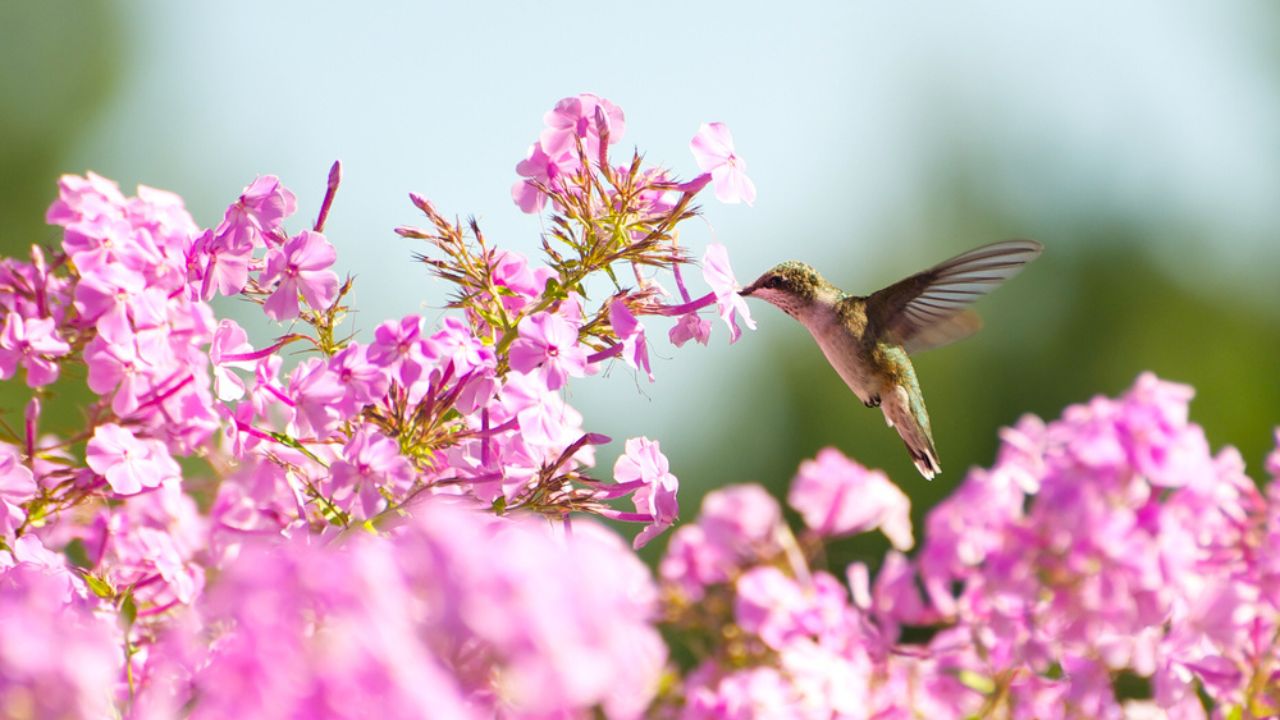
Image Credit: Shutterstock.
Spotting a rare bird in your own yard is an incredibly rewarding experience. Now that you know what to look for, you can take simple, actionable steps to make your garden a haven for these beautiful creatures. Start by adding one or two key plants, like a serviceberry tree for waxwings or a patch of coneflowers for goldfinches. Set up a feeder with black oil sunflower seeds, a favorite for many species, or a specialized thistle feeder. Most importantly, add a source of clean water.
A simple birdbath can be the single most effective way to attract a wide variety of birds, including those who don’t eat seeds. Consider joining a local birdwatching club or using an app like Merlin Bird ID to help you identify the birds you see and hear. Every small change can make a big difference, transforming your backyard into a dynamic stage for nature’s most colorful performers.